
Rewarding the Umpire: Nigeria’s Latest Exercise in Forgetting
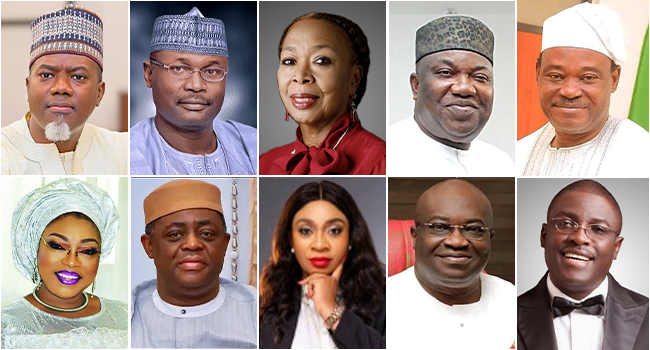
President Bola Ahmed Tinubu has submitted 32 names to the Senate for ambassadorial confirmation. Among them are former governors, media aides, a former minister, spouses of former governors and Mahmoud Yakubu, the former chairman of the Independent National Electoral Commission. While many of these nominations are questionable, Yakubu’s nomination in particular demands our attention and raises some uncomfortable questions.
In February 2023, Mahmoud Yakubu presided over a presidential election that millions of Nigerians believe was deeply flawed. This is not a fringe opinion. Major political parties, civil society organizations, and ordinary citizens who participated in that election have expressed serious concerns about its credibility. The Labour Party accused INEC of complicity in rigging. The PDP called for Yakubu’s resignation over alleged manipulation of results. Human rights organizations petitioned Western nations to impose visa bans on him for what they described as electoral subversion.
Now, less than three years after that election and barely two months after leaving the position of INEC Chairman, he is being nominated as an ambassador.
The timing raises obvious questions. Yakubu oversaw the election that brought Tinubu to power. Now Tinubu is nominating him for a diplomatic position. It is difficult to view this sequence of events without skepticism. To many Nigerians, this looks like a reward for services rendered, a transaction dressed up as a national honor.
During the 2023 election cycle, INEC promised that the Bimodal Voter Accreditation System would ensure transparency and that results would be transmitted electronically from polling units. On election day, that system failed spectacularly. Results could not be uploaded as promised. Polling units across the country reported irregularities. Yet results were declared at the collation center in Abuja while these concerns remained unaddressed.
The Supreme Court upheld Tinubu’s victory, but a court ruling does not erase the lived experiences of Nigerians who watched the process unfold. It does not address the testimonies of election observers or answer questions about why the promised electronic transmission failed. A legal verdict is not the same as public trust, especially when that trust has been so thoroughly eroded.
This ambassadorial nomination sends a message about what Nigeria values. It suggests that loyalty matters more than accountability, that positions of honour are rewards for political service rather than recognition of merit or diplomatic expertise. It tells Nigerians who questioned the integrity of that election that their concerns are irrelevant, that the system will continue to operate as it always has, and that those who facilitate power will always land softly.
The rest of the ambassadorial list follows a similar pattern. There are political allies, former aides, businessmen-turned-
We speak often of nationhood in Nigeria, but we do not build on the things that might make us a nation. We avoid difficult conversations about our history. We bury uncomfortable truths. We refuse to hold institutions accountable when they fail us. And when those institutions fail us spectacularly, we promote the people who led them.
This is not unique to this administration. It is a pattern that runs through Nigerian governance, a cycle that perpetuates itself because there are no real consequences for those who benefit from it. The same names rotate through government positions, moving from one appointment to another, insulated from accountability by their proximity to power.
There is a reason why so many Nigerians are cynical about democracy. There is a reason why voter turnout continues to decline, why young people disengage, why so many have given up on the idea that their participation matters. When the man who oversaw a disputed election is nominated as an ambassador by the president whose victory he declared, it becomes difficult to maintain faith in the integrity of the system.
Memory is dangerous because it demands accountability. It asks questions that those in power would prefer to avoid. And Mahmoud Yakubu’s nomination is part of a long tradition of forgetting, of moving forward without addressing what happened, of treating justice as optional and truth as negotiable.
Some of us choose to remember. We remember the promises of transparency that were not kept. We remember the millions of Nigerians who believed their votes would count. We remember the accusations, the frustration, the sense that something fundamental had been broken. We remember because if we do not, then history becomes whatever those in power say it was.
The Senate will likely confirm Mahmoud Yakubu. The process will move forward. He will represent Nigeria in some foreign capital, and life will continue. But his nomination remains what it is: a statement about the kind of country Nigeria has chosen to be. A country where difficult questions go unanswered, where accountability is selective, and where memory is treated as inconvenient rather than essential.
This is the reality we live with. And until we are willing to confront it honestly, to demand better from our institutions and our leaders, it is the reality that will persist.
In the meantime, I’ll say congratulations Mahmoud Yakubu… You worked so hard for it.