

Nasarawa State Charts New Course for Food Systems Transformation with New Agriculture Policy
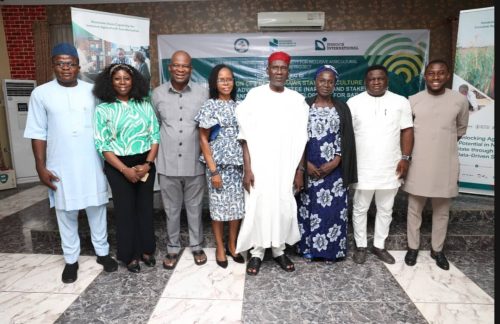
In a bold step toward ensuring food and nutrition security, the Government of Nasarawa State has initiated the development of a new State Agricultural Policy (SAP) and a State Agricultural Investment Plan (SAIP). Supported by technical partners including JESNOC and AGRA, this initiative seeks to reposition agriculture as a cornerstone of prosperity, resilience, and inclusive economic development.
The move comes at a time when the Federal Government of Nigeria has declared a state of emergency on food security, calling on partners to support national and sub-national reforms. Nasarawa’s effort aligns with this broader national ambition and reflects a growing recognition of the role that state-level action plays in closing the gap between food supply and demand, especially under the National Agricultural Technology and Innovation Policy (NATIP).
“We want to ensure that agriculture drives growth and opportunity across all our communities,” said Alhaji Tanko Tunga, Commissioner for Agriculture and Natural Resources.
He added that “This partnership with AGRA and JESNOC is foundational to our vision for an agricultural renaissance in Nasarawa. The new policy will help us plan better, invest smarter, and deliver real value to our farmers.
We are determined to make this a practical tool—one that empowers our farmers, attracts strategic investment, and secures food security and economic growth for our beloved state.”
Unlike traditional policy documents that often remain on paper, the SAP and SAIP are being developed as practical tools for action. The SAP will provide a long-term strategic vision for the state’s agricultural sector, while the SAIP will detail costed, prioritized interventions needed to implement that vision.
Together, they are expected to ensure that investments in agriculture are guided by data, aligned with needs, and capable of delivering measurable outcomes.
The frameworks offer a clear pathway for the state to move from fragmented interventions to a coordinated, well-funded roadmap for transformation.
The reform process is set to address longstanding bottlenecks in Nasarawa’s agricultural value chain, from input supply and production to storage, processing, and market access. It aims to reduce post-harvest losses, promote value addition, and improve logistics—ultimately creating stronger, more stable food systems that benefit both rural producers and urban consumers.
Central to the reform is a commitment to sustainability. With agriculture increasingly affected by climate change, the policy will embed climate-smart practices and promote responsible land use.
It will also prioritize innovations such as solar-powered irrigation, improved soil management, and the digitalization of extension services to help farmers make informed decisions and adapt to shifting environmental conditions.
The plan places smallholder farmers at the center of the transformation. By expanding access to improved seeds, fertilizers, financing, and training, the government seeks to increase productivity while also boosting incomes, particularly for women and youth in agriculture.
The approach also opens the door to private sector participation through clearly defined investment priorities and public-private partnership opportunities.
“This is not just a government-driven plan—it is a call to investors, agribusinesses, and innovators to co-create a stronger agricultural future for Nasarawa,” said a private sector representative involved in stakeholder consultations.
The Nasarawa Investment and Development Agency (NASIDA) is closely involved in the process, ensuring that agricultural development is integrated into the broader state economic strategy and positioned to attract long-term investment.
This initiative is part of a growing national movement to empower states to lead agricultural reform. Similar policy efforts are underway in Kaduna and Niger states, with technical support from AGRA and other partners.
By strengthening state capabilities, these efforts aim to ensure that food systems reform is not only driven from Abuja but also rooted in local realities.
“Nasarawa’s initiative is a critical piece of a wider puzzle,” said Idris Rufus, AGRA Nigeria Country Director, adding that “We are supporting states like Nasarawa to build strong institutions and partnerships that drive real food security outcomes. This policy process is not just about planning—it is about embedding innovation, resilience, and inclusive growth. With clear strategies and costed actions, the SAP and SAIP provide a practical roadmap for sustainable agricultural transformation.”
READ ALSO: Israel, Iran hostilities: FG sues for restraint, cites threat to global peace
This collaborative, ecosystem-based approach echoes the broader strategy of partners like AGRA and beyond, which supports scalable, data-driven reforms that serve smallholder farmers and strengthen markets from the ground up.
As Nasarawa moves toward finalizing its SAP and SAIP, the focus will shift to implementation. Ensuring that the policy translates into action will require strong monitoring systems, continuous stakeholder engagement, and sustained investment.
“Finally, we are seeing a policy that puts us, the farmers, first. Access to better seeds, fertilizers, and even training can make all the difference in our yields and our livelihoods,” said Elizabeth Alfa, a smallholder rice farmer from Karu LGA of Nasarawa, noting that . “This gives me real hope for a more prosperous future for my family and our community,” she added.
The collective ambition is clear to build a food system that is inclusive, resilient, and capable of feeding both the present and future generations of Nasarawa State.