
Lekki Port launches cargo transhipment to Ghana, Togo, others
BY TEMITOPE ADEBAYO
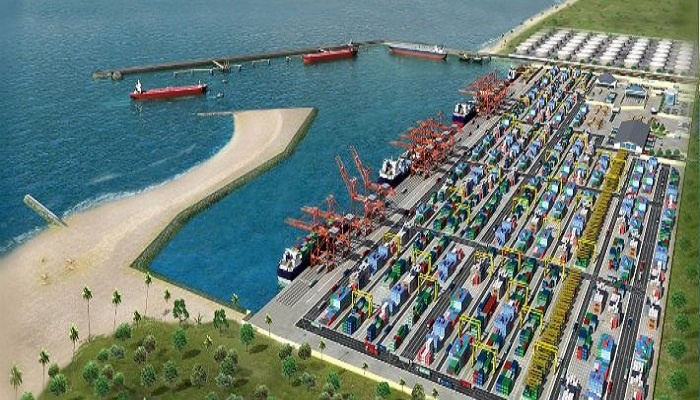
The $1.5 billion Lekki Deep Seaport has commenced full-scale international cargo transshipment to key West African countries, including Ghana, Togo, Benin Republic, and Côte d’Ivoire, in a move set to boost Nigeria’s profile as a regional maritime hub.
This milestone was confirmed by the port’s management on Thursday, with projections to increase throughput from 287,000 Twenty-foot Equivalent Units (TEUs) in 2024 to 500,000 TEUs by the end of 2025.
Speaking with journalists in Lagos, the Deputy Chief Operating Officer, Daniel Odibe, disclosed that Lekki Port currently operates at only 20 per cent of its 1.2 million TEU capacity, attributing the underperformance to macroeconomic challenges, including the removal of fuel subsidy and the sharp depreciation of the naira, which led to a slump in imports throughout 2024.
READ ALSO: Austin Gets Hot During Willie Nelson’s Fourth Of July Picnic
“Cargo volumes fell as a result of the naira’s depreciation and subsidy removal, but we are now seeing gradual recovery,” Odibe said. “From just 54,289 TEUs in our debut year in 2023, we handled 222,000 TEUs between January and June 2025, and we’re on course to hit 500,000 TEUs by year-end.”
Odibe added that transhipment volumes have grown significantly, with Lekki Port now handling between 10 to 12 vessels monthly and expanding connections to landlocked countries through neighbouring ports.
“Lekki Port is now transhipping cargoes to Togo, Ghana, Benin Republic, Abidjan, and even landlocked nations. We are picking up again, and as the Naira stabilises, we expect volumes to rise further,” he said.
He also noted that vessel turnaround time at the port is currently 48 hours, while trucks exit the terminal in just one hour and 25 minutes, a performance benchmark that aligns with global efficiency standards.
In his remarks, Managing Director of Lekki Port, Wang Qiang, represented by Chief Operating Officer Young Qiang, reaffirmed the port’s commitment to international best practices.
“We are raising the bar and deploying global standards to ensure Lekki Port remains the deepest and most efficient seaport in West Africa,” he said. “Our investment in technology, operational efficiency, and trade facilitation is already leaving a giant footprint on Africa’s maritime map.”
With rising transhipment activity and growing cargo volume, Lekki Port is positioning itself as a critical driver of regional trade and economic integration across West Africa.



Related to this topic: