
Fubara: Timidity, Calmness Or Nonchalance?

By SHEDDY OZOENE
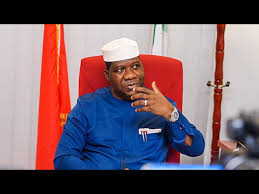
Since his swearing-in as governor of Rivers State, Siminalayi Fubara has faced a cascade of challenges. The state has lurched from one crisis to another—some minor, others serious, and a few outright grave.
In most of these crises, public perception has cast the governor—locked in a deadly political contest with his predecessor, now Minister of the Federal Capital Territory, Nyesom Wike—as the victim. The heavy hand of godfatherism appears to have tightened relentlessly around his neck.
Even as a sitting governor, Fubara has reportedly suffered physical intimidation and repeated public humiliation by his political godfather. As if that were not enough, President Tinubu compounded the absurdity last year by declaring a state of emergency in Rivers State, leading to the suspension of Governor Fubara, his deputy, and the State House of Assembly for six months.
The official justifications ranging from vague threats to national security to concerns about pipeline vandalism—were, at best, unconvincing. For most Nigerians, the overriding factor remains the political feud between Governor Fubara and his predecessor, Nyesom Wike.
But this essay is not merely about the catalogue of absurdities that has defined Rivers State since the current administration took office. Rather, it is about how Governor Siminalayi Fubara has been responding to them.
Judging by how other governors have reacted to bullying and high-handed persecution by godfathers, one is compelled to observe that Fubara has adopted a philosophy marked by detachment, unusual restraint, and apparent non-intervention—even in the face of existential political threats.
His attitude could be described as political nonchalance, or is it strategic passivity? There is a consistent pattern of avoiding confrontation and downplaying danger, as though he has the belief that time, institutions, or fate will ultimately handle the matter.
Governor Fubara appears to operate under an unwritten doctrine of political restraint—a belief that even the gravest political threats will ultimately neutralise themselves without direct engagement.
This governing philosophy, which some have begun to call the Fubara Doctrine, prioritises patience and faith in institutions over aggressive political manoeuvring. But is this calmness or crass nonchalance? Does the governor sufficiently appreciate the weight of the mandate bestowed on him by the people of Rivers State?
It is unsettling to contemplate the possibility that he may not care—one way or the other—what becomes of his office.
Someone once called his attitude ‘strategic silence’; to me, it appears cavalier. The outcomes, so far, do not dignify him or the office he holds in trust for the people of Rivers State.
The political disagreement between Governor Fubara and his predecessor has grown from minor squabbles into a full-blown conflict that now tests the resilience of Nigeria’s democratic process. What was once a mentor–protégé relationship has deteriorated into open hostility, with growing fears of impeachment hanging over the governor.
The causes of the disagreement are multifaceted, including differences in governance style and policy direction. Still, many believe that Nyesom Wike’s domineering personality and appetite for control are major drivers of the crisis. Just when it seems a peaceful resolution is within reach, Wike often rekindles the tension.
The governor’s decision to decamp to the All Progressives Congress (APC)—the party of the President under whom Wike serves—ignited the current unrest. One might have expected Wike to welcome the move. Instead, it seemed to enrage him further. How dare Fubara make such a consequential decision without a green light from his political master?
During his so-called “thank you” visits to local government areas last yuletide, Wike made a series of inflammatory statements and thinly veiled threats that unsettled many Nigerians. He openly questioned the stability of Rivers State and the security of the sitting governor’s tenure.
Shortly after returning to Abuja and resuming duties at the FCT Ministry, the Rivers State House of Assembly—dominated by Wike loyalists—served Governor Fubara a notice of impeachment. The allegations are as predictable as they are trumped up but the Assembly’s threat was potent all the same. And how did the governor respond? Practically not at all, save for a reported meeting with President Tinubu in faraway France. The few statements from him and actions he took are, at best, timid. There was no robust defence in the public space, no attempt to rally public opinion, no visible counter-strategy.
At the grand finale of the 2026 Port Harcourt International Polo Tournament, Governor Fubara went further, dismissing the impeachment notice as a “love letter.” Calmness, perhaps—or a cavalier attitude?
Many observers struggled to understand the humour. The remark appeared flippant and frivolous, trivialising a matter of grave constitutional and political consequence. While inner strength and composure are admirable, this response came across as dismissive—brushing aside the seriousness of an impeachment threat.
The ongoing impeachment threat against him is a perfect example of misreading power. If the crises resolve themselves – as they seem to be doing presently with the refusal by the State’s Chief Judge to set up a Probe panel as instructed by the House of Assembly, plus the obvious intervention of the Presidency – history may credit his survival to his ‘strategic patience”. If they do not, it will surely be blamed on his timidity and fatal complacency. In any case, nobody should leave their political survival to the intervention of institutions they have no control over.
That Fubara is Wike’s political godson is well known. What is baffling, however, is the failure of both men to find a way to resolving their disagreement. Claims that Fubara failed to “carry the political structure along” are grossly inadequate. Some may argue that Fubara’s attitude is a reaction to Wike’s recalcitrance and President Tinubu’s seeming indulgence. Even so, this does not excuse the laissez-faire posture of a sitting governor faced with a constitutional crisis.
Since October 2023, Rivers State has been engulfed by political absurdities affecting not only the executive and legislature but also the judiciary. These developments do little credit to either Wike or Fubara. Wike governed the state for eight years; it is time for him to step aside and allow his successor to govern effectively. Conversely, Governor Fubara must confront the realities of leadership with greater resolve. He should not undermine the state, by action or inaction—in an attempt to project calm.
Ultimately, Governor Fubara owes the people of Rivers State a duty to defend the mandate entrusted to him, however inconvenient or uncomfortable that task may be. In doing so, he must also avoid projecting an attitude that appears to trivialise the grave threats facing that mandate. When respected figures like former Governor Peter Odili speak out in his defence, they stake their reputation and integrity. Governor Fubara, in turn, has a duty to show that such sacrifices are neither misplaced nor in vain. Whether or not he survives the present impeachment plot, is beside the point./


Related to this topic: