
We are our memories
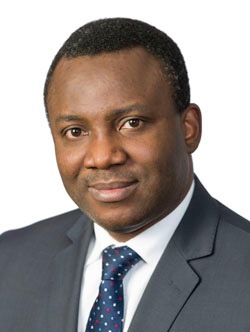
Kenneth Amaeshi
What will life be like if all memories were lost? That’s the true meaning of what it means to be born again literally. This might be a carnal interpretation of what is meant to be deeper than the flesh can afford.
However, in this case, one’s memory becomes a tabula rasa (i.e. a blank slate), as if it was reset to function at birth, when we did not have anything to remember.
The first encounter with life outside of the womb and in the world becomes one that we will never know or remember, no matter how much we try or desire it.
At the time of birth, we pass through life as unconscious beings until a point in time when our minds start to appreciate and register our encounters with the world in our memories.
There is no fixed time to this. We meet it when we meet it, and then know it for the first time, as a recording device.
Unsurprisingly, our memories are both selective and feeble. Some experiences are captured – sometimes involuntarily – whilst others elude us, irrespective of how much we cherish them.
The involuntary functioning of our memories makes one wonder if we are truly in charge of our minds, consciousness, and existence.
In order to appear as masters of our destinies, we sometimes resort to artificial and make-shift arrangements to capture our experiences and refresh our memories.
That’s exactly what diaries and photo albums do. They capture snippets of life and living.
In recent times, social media have gone rogue and become rampant. The likes of Facebook, LinkedIn and Instagram, have arisen to help us track our timelines, albeit with some palpable and real risks.
The risks lie in the vulnerability we encounter in the process of being both transparent and real. In such risks, the line between private and public lives are blurred, making one vulnerable to the uncontrollable barrage of possible annihilation in the Sartrean sense of nothingness.
And in so doing, the soul is constantly challenged and in some instances truly traumatised by unintended and unanticipated consequences.
That’s what it means to live in the social media world. But social media currently remain virtual, while life is lived in actuality.
Virtual reality is non-life, in the sense that it is not real. Nonetheless, it is a good repository of our historical being. It is historic because whatever is captured in virtual reality no longer exists.
It becomes the past. The past exists only as the past. It can neither be touched nor felt. It can only be remembered as a figment of the mind.
We live in the now and the future will never come, because tomorrow never comes. The now or the present becomes the tenuous point in which the future flows into the past.
We only access the past through our memories. However, our memories are challenged. They cannot truly record every second of our existence. Can you remember everything you have done today, for instance? I doubt it.
Nonetheless, the mind has found a way to normalise things and only focus on the exceptions.
This is part of our adaptation and survival strategy. We often aim to routinise familiar experiences to make them fairly stable and predictable, whilst grappling with the exceptionalism of the unfamiliar.
The exceptions are intrigued by their novelty; but how long they last is a function of many things beyond the scope of this reflection.
Vivid memories encapsulate our being. They create and recreate the past; and in such recreations the past becomes the present and in the recreation of the past, the present is simultaneously extended and diminished.
It is extended in the sense that it re-manifests (i.e. called back from the past); but it is diminished in the sense that it can never be true to actuality. It is just a memory of the past; a decaying idea.
However, the memory in its decaying process can become the present, albeit an inferior version, but in the becoming, it is swiftly relegated to the past, given the slipperiness of the present.
As such, memory appears and disappears in equal measure, and the decaying process continues ad infinitum.
A good analogy here is to sandwich ourselves between two mirrors. The images are endless but become inferior as they extend into infinite regress.
Notwithstanding, our value of life is linked to how much we remember – i.e. our memories. Whenever we become memory-less, we also cease to exist in the real sense.
I remember when my dad once lost his memory. He was alive but lacked the capacity to recollect. We spoke, but he could not remember any of that the next time we spoke. It was a very painful experience.
It is as painful as much as the memory currently allows me to remember it. So many thoughts crossed my mind. It was at that point that I recognised and firmly believed we are our memories.
Memories require some form of consciousness. Consciousness is, unfortunately, not a given. Most time we sleep, we lose consciousness and wallow in the realm of unconsciousness.
Do we truly exist in such periods? Is death a form of unconsciousness? If it is, why the hue about it?
Whether we accept it or not, the deep sense of being is the consciousness that we exist with others. It is this consciousness that informs our being. It creates both attachment and detachment.
We are attached to those we love and appreciate and detached from those people and things we would like to forget. Life and living become a plethora of attachments and detachments. Forgetting and memory become the quintessential characteristics of our common humanity.
Despite the clamour for life, we cease to exist to ourselves at the point we lose our memory. Then, we become a vegetable with considerable level of unconsciousness.
No one wants to be here. That’s why some people clamour for euthanasia or assisted dying. But will this lack of memory, whenever it occurs, persist into death or will our memories be restored at death?
For those who believe in life after death, especially the Christians, their memories will judge them in the end. Then their lives will, probably, be played back to them as a film.
Perhaps, then, they would truly come to terms that we are our memories! But what if our memories do not exist or are not refreshed at and after death?
Despite the oddities and challenges of our memories, remembering, and forgetting, life can only be lived once in this world.
It is the best world we can ever get, irrespective of our wishes and desires; so, let’s make the best of the moment and the past, as much as our memories permit. In the end, we are truly our memories!