

Tinubu Approves ₦712bn Overhaul of Lagos Airport
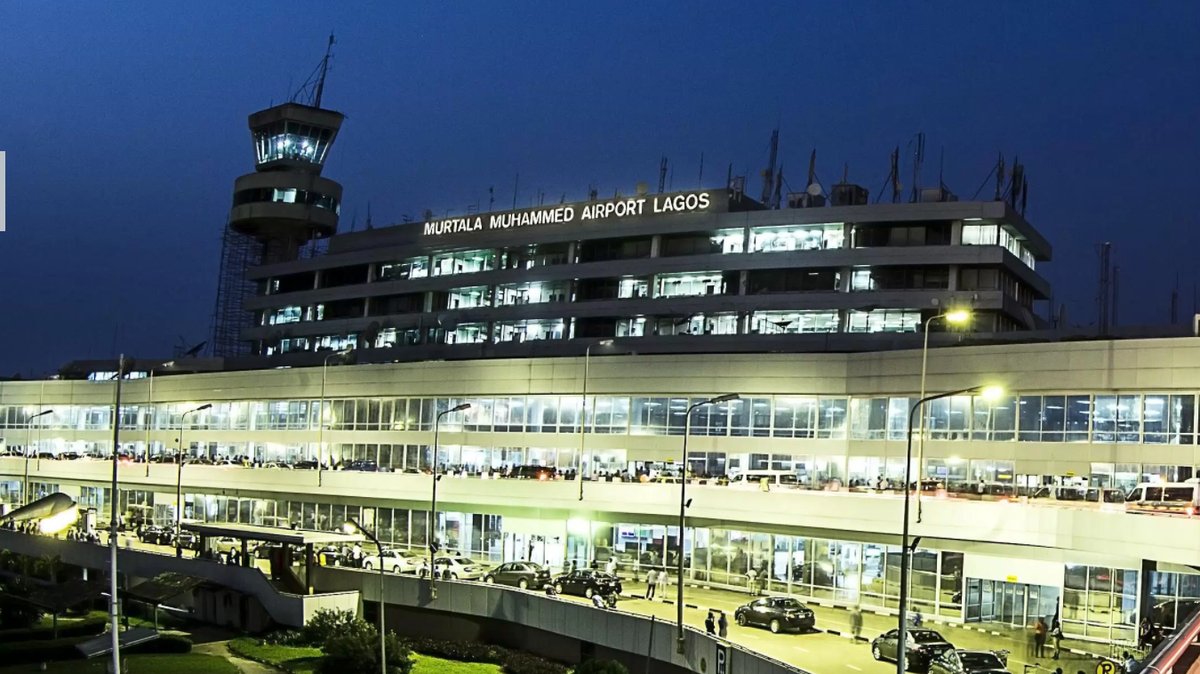
Nigeria’s aviation sector is undergoing one of its most ambitious infrastructure transformations in decades, following the Federal Executive Council’s approval of a ₦712.26 billion rehabilitation of the international terminal at the Murtala Muhammed International Airport.
The sweeping upgrade, approved on July 31, 2025, targets Terminal One of the country’s busiest gateway and forms the centrepiece of a broader ₦900 billion aviation modernisation programme championed by President Bola Ahmed Tinubu’s Renewed Hope Agenda.
Commissioned in 1979, the Lagos airport has evolved into one of Africa’s busiest hubs, serving as the primary international gateway to Africa’s largest economy. However, sustained passenger growth has long outpaced its designed operational capacity, placing pressure on ageing infrastructure and prompting successive expansions, including the construction of a second international terminal.
Under the new agreement awarded to China Civil Engineering Construction Corporation, the firm that previously delivered Terminal Two, the original terminal will be stripped to its structural core and rebuilt with modern mechanical, electrical and passenger-handling systems.
The scope of work extends beyond cosmetic upgrades. Plans include structural reinforcement, new façade and glazing systems, reconfigured passenger circulation areas, and the replacement of obsolete HVAC, electrical and plumbing installations. Airside capacity will also be expanded through apron enlargement, taxiway upgrades and new access bridges to ease aircraft movements and improve turnaround efficiency.
On the landside, the project addresses chronic traffic bottlenecks that have long plagued access to the airport. Dedicated arrival and departure ring roads, modernised parking facilities and upgraded entry points are being introduced to streamline vehicular flow and enhance the passenger experience.
To sustain operations during the rebuild, the Federal Airports Authority of Nigeria (FAAN) is nearing completion of an 8,000-square-metre temporary departure terminal, reported to be over 90 per cent complete. The interim facility is designed to prevent operational disruptions while construction intensifies.
FAAN Managing Director Olubunmi Kuku has said the authority is prioritising safety, accessibility and passenger comfort throughout the transition, even as movement patterns within the airport continue to shift.
Minister of Aviation and Aerospace Development Festus Keyamo has framed the investment as a strategic repositioning of Nigeria’s aviation credibility, aimed at strengthening safety standards, improving service quality and attracting greater airline connectivity and capital flows into Lagos.
With Nigeria’s gross domestic product expanding by 3.98 per cent in the third quarter of 2025 and external reserves strengthening in recent months, policymakers argue that modern aviation infrastructure is critical to sustaining trade, tourism and investment inflows.
The scale of spending, however, has drawn mixed reactions. While many industry stakeholders consider the overhaul long overdue, some critics have raised questions about cost transparency and fiscal prioritisation at a time of broader economic adjustments.
Yet, for airlines and passengers moving through Lagos, where tens of thousands transit weekly, the consensus is that capacity expansion and infrastructure modernisation are essential if Nigeria is to compete with leading African hubs in Addis Ababa, Nairobi and Johannesburg.
As construction accelerates into 2026, the airport’s familiar corridors are being redrawn into what officials describe as a next-generation gateway. Temporary structures, heavy equipment and reconfigured access roads now define the landscape, visible markers of a ₦712 billion wager that aviation modernisation can anchor Nigeria’s ambition to reclaim its status as West Africa’s premier air transport hub.


Related to this topic:

LIRS Eyes AI to Help Lagos Residents File Taxes

Oluremi Tinubu’s Warri Visit Signals Renewed Federal Engagement