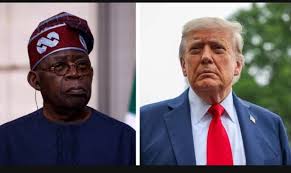

The US Strike in Sokoto: Implications For The Fight Against Terrorism

By Sheddy Ozoene
The recent United States air strikes on ISIS-linked camps in Sokoto State did not occur in a vacuum. They came against the background of a nation stretched to its psychological and institutional limits by terrorism, kidnapping, and unchecked criminality. In a country where citizens have grown numb to daily violence—from bombings to mass abductions—the strikes marked a moment of rupture: uncomfortable, humiliating to some, but ultimately revealing.
For once in a long while, terrorists were met with force—decisive, intelligence-driven, and effective. While the final casualty figures are yet to be confirmed, the outcome was unmistakably devastating.
Nigeria today is a traumatised country. Terrorism has mutated from ideological insurgency into a profit-driven enterprise. Boko Haram once sought territory; today’s armed groups seek both territory and people. Kidnapping has become a business model, thriving on fear, weak intelligence, compromised checkpoints, and a state that reacts far more often than it anticipates.
The Sokoto bombing, and others like it, underline a grim reality: insecurity is no longer episodic; it is systemic. Roads are unsafe, farms abandoned, villages emptied, and citizens reduced to carrying ransom money as a travel essential. This is not normal—and it should never have been normalised.
Against this backdrop, the U.S. bombing of ISIS camps—carried out with Nigerian approval, intelligence coordination, and with no reported civilian casualties—stands out precisely because it contrasts sharply with years of ineffective local responses.
Some view the strikes as a slap on Nigeria’s sovereignty. That concern is not without merit, but it is only one dimension of a far more complex reality. For many Nigerians, the intervention is welcome for several critical reasons.
First, it confirms the true nature of the threat. For too long, official euphemisms have obscured reality. These attacks are not merely “banditry” or “farmers–herders clashes”; they are manifestations of transnational terror networks, reinforced by foreign fighters and ideological affiliations with ISIS. The strike acknowledges this truth at the highest operational level.
Second, it demonstrates what serious counterterrorism looks like. Sixteen GPS-guided munitions, deployed by MQ-9 Reaper drones after extensive reconnaissance, achieved in hours what years of checkpoints and routine patrols failed to accomplish. In doing so, it exposes the troubling gap between Nigeria’s defence spending and its operational effectiveness.
Third, the strike disrupts cross-border terror pipelines. The targeted camps reportedly served as staging grounds for Sahelian infiltration. Neutralising them is not merely about Sokoto or Kebbi; it is about preventing Nigeria from becoming the next major theatre in the cascading collapse of the Sahel.
Fourth, it punctures the culture of impunity. Armed groups have long operated with the confidence that the Nigerian state lacked either the will or the capacity to confront them decisively. The strikes send a clear message: some lines, once crossed, now attract overwhelming consequences.
Finally, even if briefly, the action restored public confidence. In a country where official reassurances have lost credibility, the precision and outcome of the strikes offered rare psychological relief—proof that terror camps can be identified, targeted, and destroyed.
Yet no honest analysis can ignore the discomforting questions raised by a foreign power striking targets on Nigerian soil. However coordinated, such action touches the sensitive nerve of sovereignty. Nigeria must never aspire to become another Libya, where external intervention replaced internal capacity.
But sovereignty is not merely territorial; it is functional. A state that cannot protect lives, secure borders, or dismantle terror networks gradually forfeits moral authority over its monopoly of force. In that sense, the U.S. strike is less an assault on Nigeria’s sovereignty than an indictment of its prolonged security failure.
President Trump’s framing of the attacks as primarily targeting Christians has rightly been disputed by Nigerian officials. Terror in Nigeria does not discriminate; Muslims and Christians alike are victims. Still, dismissing the religious dimension entirely would be equally dishonest. Extremist groups exploit identity fault lines, and denial has only worsened the problem. What matters now is not rhetorical defensiveness, but operational honesty.
Foreign bombs cannot secure Nigeria. They can only buy time. The real test is whether this moment leads to sustained intelligence reform, genuine accountability in defence spending, decisive action against collaborators, meaningful progress toward state policing, and the abandonment of failed negotiation doctrines with violent groups.
If the U.S. strike becomes a one-off spectacle, it will change nothing. But if it forces Nigeria to confront terrorism with clarity, coordination, and courage, then it may yet prove to be a welcome development—born of national embarrassment.
One final point must be stated plainly: America did not act out of charity. It acted out of interest. Nigerians must now act out of necessity.
If external pressure has shaken the state into motion, citizens must ensure that the momentum does not fade once the world looks away. Terror thrives in silence, denial, and inertia. The Sokoto strikes shattered all three—if only briefly.
The challenge now is to ensure that Nigeria does not return to business as usual.
Sheddy Ozoene (sheddyozoene@yahoo.com) is Editor-In-Chief of People&Politics.