
Senate Queries FG’s Economic Team Over Persistent Poor Capital Releases
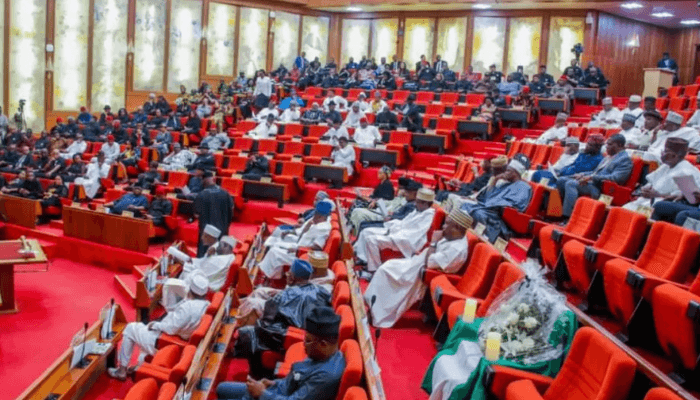
The Nigerian Senate has expressed strong dissatisfaction with the federal government’s economic team over what it described as persistent poor budget implementation, taking particular aim at the low release of capital votes to ministries, departments, and agencies (MDAs).
The lawmakers voiced their concerns on Thursday during an interactive session between the Senate Committee on Appropriations and members of the President’s economic team.
The meeting, presided over by the committee’s chairman, Senator Solomon Adeola, focused on the implementation of the N58.472 trillion 2026 budget, as well as the mandate to complete the capital components of the 2024 and 2025 budgets by March 31, 2026.
Responding to inquiries about the funding status of the 2024 and 2025 capital budgets, Wale Edun, the Minister of Finance and Coordinating Minister of the Economy, maintained that the two budgets were still being funded. However, the lawmakers were visibly dissatisfied with the explanation.
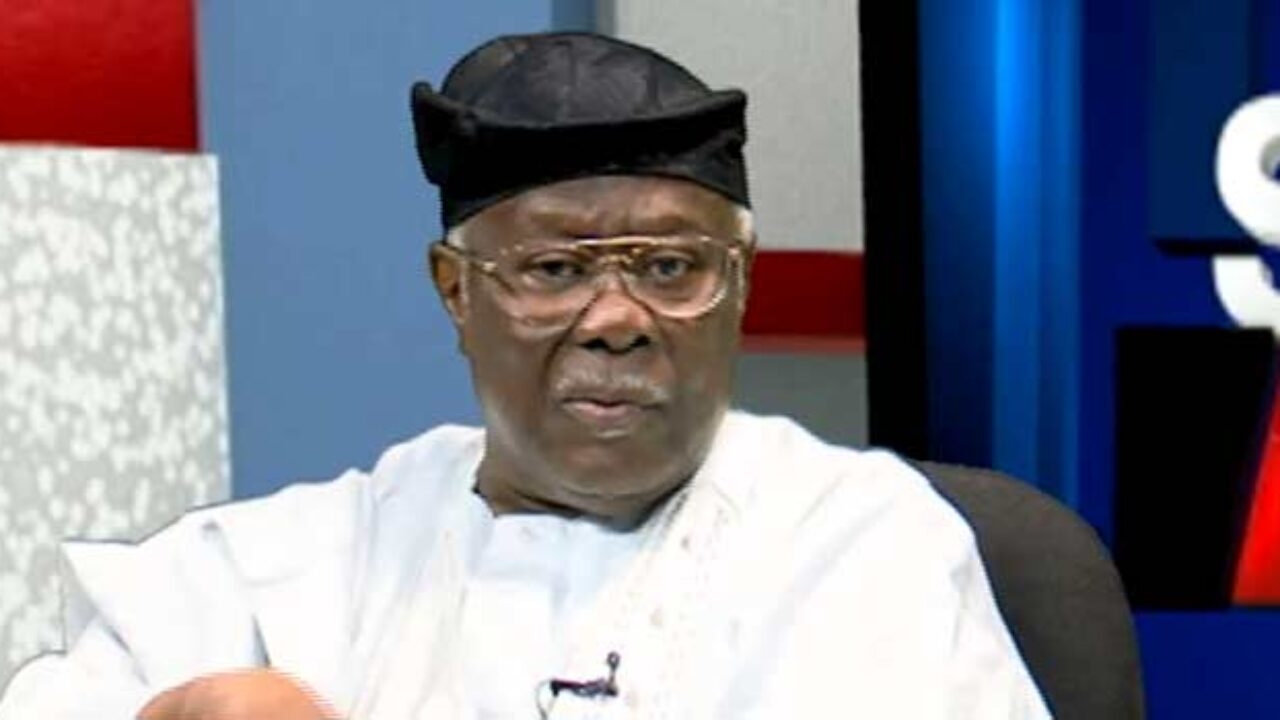
Zacch Adedeji, the Chairman of the Nigeria Revenue Service (NRS), told the committee that unrealistic financial projections were largely to blame for the sluggish implementation.
“Budget funding must come from realistic projections. Efficiency is not about the size of the budget but about how much can actually be implemented.
“If you think you have ten units and spend accordingly, that is manageable. But if you assume you have one hundred and spend based on that assumption, you may run into serious problems if the funds do not materialise,” Adedeji argued.
Senator Adeola pushed back against this justification, pointing out that the revenue projections heavily criticized by the NRS chairman were, in fact, crafted and submitted by the executive arm.
“This document before us originated from the executive. The projections and challenges came from the executive arm, not the legislature.
“The gap between projected and realised oil revenue is wide. For example, how do we explain 18 percent performance in one year and projections of 36.5 percent the next year when actual performance is still below expectations,” Adeola countered.
The committee chairman further questioned the path forward regarding the N58.472 trillion 2026 budget, asking whether it should be reduced or adjusted considering the high level of debt financing.
He suggested that disposing of certain assets to pay down the national debt could reduce the overall debt stock and lower future borrowing costs.
Offering reassurances to the Senate panel, the Minister of State for Finance, Doris Uzoka-Anite, pledged that the execution of the capital components for both the 2024 and 2025 budgets would be wrapped up before the March 31, 2026 deadline.
“Regarding the 2025 budget, funding processes are beginning. Payments for outstanding 2024 capital projects start today,” Uzoka-Anite revealed.
She also confirmed that the financial management system is back online.
“For 2025, MDAs have been asked to upload their cash plans by Monday, after which payments will commence. We are ready to start, but the MDAs must complete their documentation requirements.”
Following the public segment of the hearing, the committee went into a closed-door session with the economic team that lasted for approximately two hours.
Other top government officials present at the session included the Minister of Budget and Economic Planning, Atiku Bagudu, and the Accountant-General of the Federation, Shamseldeen Ogunjimi.