

Senate Moves Elections By 60 Days For Ramadan Fast
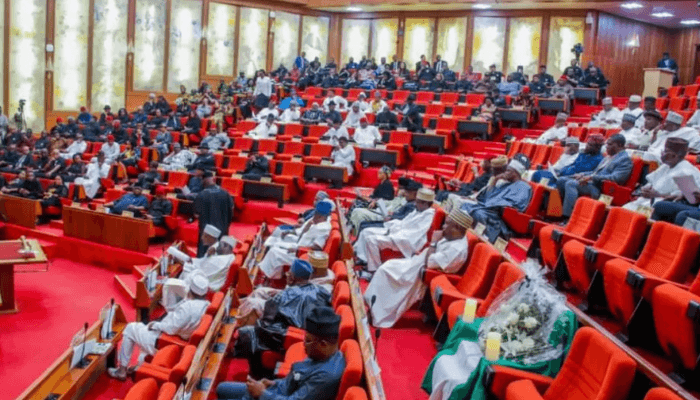
The Senate on Tuesday passed an amendment to the Electoral Act 2022, reducing the mandatory notice period for general elections from 360 days to 300 days.
The forward shift in election timetable is primarily to ensure that the 2027 Presidential and National Assembly elections do not coincide with the Muslim holy month of Ramadan.
Senate Leader Opeyemi Bamidele moved the motion to rescind and recommit the bill after noting that the original 360-day requirement could force the Independent National Electoral Commission (INEC) to schedule the polls during Ramadan.
He warned that elections held during the fasting period could negatively impact voter turnout, logistical arrangements, stakeholder participation, and the overall credibility and inclusiveness of the process.
The amended Clause 28 now requires INEC to publish election notices “not later than 300 days” before the poll date, specifying the election date and nomination procedures.
The commission had already announced February 20, 2027, for the Presidential and National Assembly elections, and March 6, 2027, for governorship and state assembly polls.
Also, the Upper legislative chamber passed the Bill without real time electronic transmission of election results from polling units to INEC Results Viewing, IREV portal. This caused a rowdy session following tense deliberations and a contentious debate over Clause 60 (3) that deals with the issue.
These followed a motion titled “Rescission and Re-Committal of the Electoral Act, 2022 (Repeal and Enactment) Bill, 2026 moved by the Senate Leader, Senator Opeyemi Bamidele (APC Ekiti Central) and seconded by chairman, Senate Committee on INEC, Senator Simon Lalong (APC Plateau South) during another emergency plenary by the upper legislative chamber.
Rising under Order 52(6) of the Senate Standing Orders, the Senate Leader, Opeyemi Bamidele, moved the motion to reverse the earlier passage of the bill and return it to the Committee of the Whole for fresh deliberations.
He explained that the development follows the announcement of next year’s elections timetable by the INEC after consultations with the leadership of the National Assembly, informing that stakeholders had raised concerns that the proposed date conflicts with the provisions of the amended law, particularly the requirement that elections be scheduled not later than 360 days before the expiration of tenure.
Bamidele noted that upon critical review of the passed bill, the 360-day notice requirement prescribed in Clause 28 could result in the scheduling of the 2027 Presidential and National Assembly elections during the Ramadan period.
He added that elections during Ramadan could affect voter turnout, logistics, stakeholder participation, and the overall inclusiveness and credibility of the process.
The Senate Leader also highlighted discrepancies in the bill’s Long Title and multiple clauses, including Clauses 6, 9, 10, 22, 23, 28, 29, 32, 42, 47, 51, 60, 62, 64, 65, 73, 77, 86, 87, 89, 93, and 143.
Before the passage of the Electoral Act (Amendment) Bill, there was a rowdy session as the former Minority Leader, Senator Enyinnaya Abaribe (ADC Abia South) called for division over Clause 60(3), which permits both electronic and manual transmission of election results.
But the Deputy Senate President, Senator Barau Jibrin, citing Order 52(6), argued that it would be out of order to revisit any provision on which the Senate President had already ruled.
The Senate Leader then reminded lawmakers that he had sponsored the motion for rescission, underscoring that decisions previously taken by the Senate are no longer valid, adding that consistent with his motion, Senator Abaribe’s demand was in line.
But the Senate President noted that the call for division was merely an attempt by Senator Abaribe to publicly demonstrate his stance to Nigerians and therefore sustained the point of order, after which Abaribe rose in protest and was urged to formally move his motion.
Rising under Order 72(1), Abaribe called for a division on Clause 60(3), specifically concerning the provision that if electronic transmission of results fails, Form EC8A should not serve as the sole basis, calling for the removal of the proviso that allows for manual transmission of results in the event of network failure.
After the call for vote, 55 senators voted in favour of the Senate position last week, while 15 lawmakers asked for the adoption of the House of Representatives’ earlier version which permits ‘real-time’ transmission of election results.
Meanwhile, in the House of Representatives, opposition lawmakers staged a walk out of plenary presided over by the Deputy Speaker, Benjamin Kalu, in protest against certain proposed amendments to the Electoral Act.
The lawmakers accused the leadership of the All Progressives Congress (APC) in the House of attempting to undermine credible, free and fair elections by diluting provisions on electronic transmission of results.
The emergency session was convened to amend certain sections of the Electoral Act earlier passed by the House in December last year.
At the centre of the controversy were Clauses 36 and 60 of the amendment bill. Clause 60 permits the use of Form EC8A for transmission of results where there is a hitch in electronic transmission, a provision the opposition strongly rejected, insisting on total electronic transmission without exceptions.
Briefing journalists after the walkout, Minority Leader Kingsley Chinda, flanked by other opposition lawmakers, said they were compelled to register their dissatisfaction with what transpired on the floor.
Chinda maintained that Section 60, which deals with electronic transmission of results, must provide exclusively for electronic transfer to prevent manipulation.
He argued that in the event of any conflict between manually collated results using Form EC8A and electronically transmitted results, the electronically transmitted version should prevail.
He alleged that their proposals were rejected by APC members, stressing that the opposition would not support any amendment that creates room for electoral malpractice.
On Section 84 relating to primary elections, the Minority Leader said political parties should be allowed to determine their preferred mode of selecting candidates, whether direct or indirect primaries, without being compelled by law.
However, the House spokesman, Akin Rotimi, described the session as historic in Nigeria’s democratic and parliamentary practice.
Rotimi explained that both chambers of the National Assembly met on February 17, 2026, to deliberate on the Electoral Act amendment, necessitating the emergency sitting.
He said a joint conference committee of the Senate and the House had earlier considered areas of disagreement but could only deliberate on provisions already contained in the versions passed by both chambers.
According to him, the extraordinary session became necessary to address new considerations arising from recent guidelines issued by the Independent National Electoral Commission (INEC).
Rotimi noted that consultations by leadership and the conference committee informed the provisions adopted during plenary, adding that the process strictly followed the House Standing Orders.



Related to this topic:

Tinubu Removes Egbetokun, Appoints Tunji Disu as New IGP
Nigeria urges ECOWAS parliament to fast-track AfCFTA laws