Restructure Nigeria: A Second Founding for a Nation Without a Moral Covenant
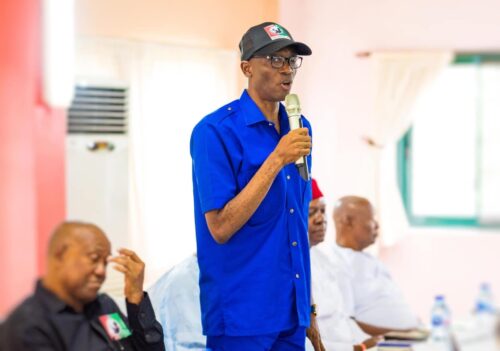
I was in a conversation a few days ago where the topic of restructuring Nigeria was front and center. During this exchange, Valentine Ozigbo spoke extensively on nation building and his insights profoundly influenced this reflection on what makes nations endure and how Nigeria might chart a different course. The background to my politics and activism is the struggle for the Middle Belt of Nigeria, so I fit right in with this discourse, especially having worked with the Middle Belt Forum as an executive in my twenties.
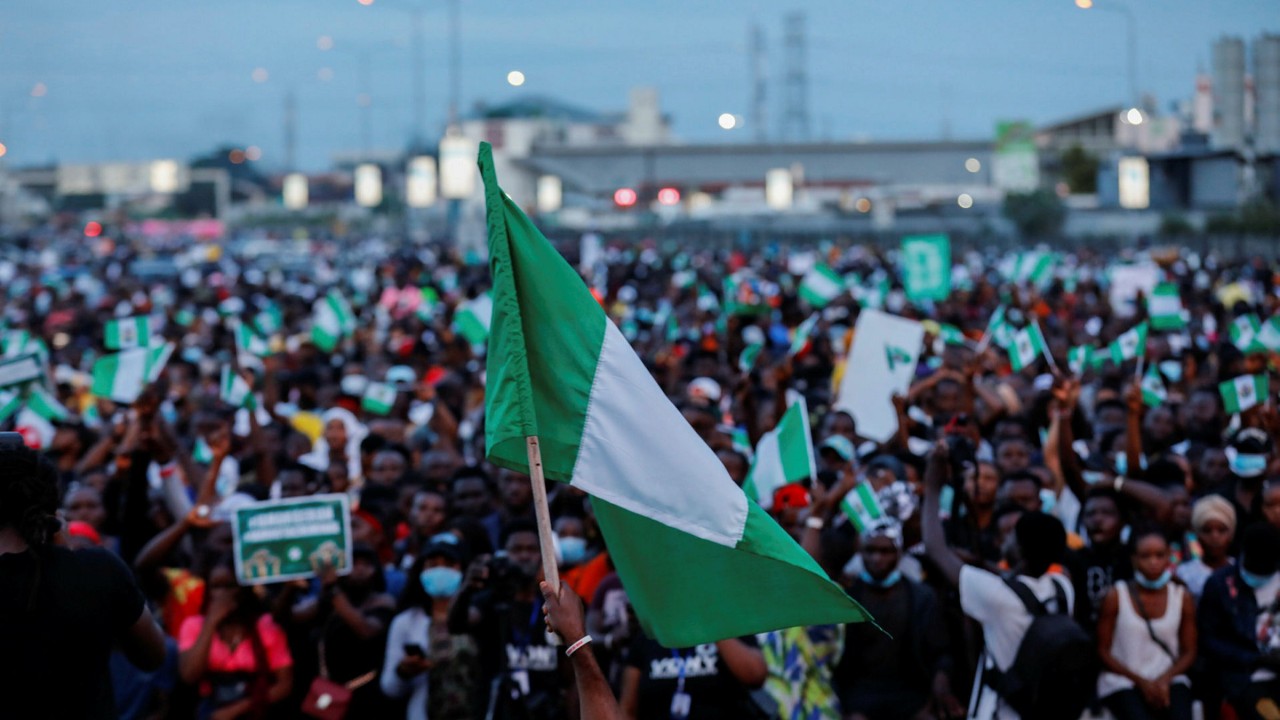
At the surface, Nigeria suffers three deficits: governance failure, inept citizenship, and a culture that celebrates nostalgia and the status quo. But these are not the primary problems. They are symptoms of a deeper metaphysical dislocation, a nation without a shared meaning, moral purpose, or civilizational direction. Every serious nation answers three fundamental questions: Who are we as a people? What moral order stands above power? What is demanded of us beyond self-interest? Nigeria became a state without a founding moral covenant. Independence in 1960 was a missed “Kairos”, a flag without a foundation. Where this shared story is missing, power replaces purpose, ethnicity replaces trust, religion becomes a tool rather than a compass, and the state becomes a prize rather than a trust.
The question of what makes a nation is fundamental to understanding our predicament. Successful heterogeneous nations like America, Canada, and Singapore have achieved nationhood not through enforced uniformity but through institutional arrangements that balance unity with diversity. China anchors itself in civilizational continuity and national rejuvenation. Russia draws on spiritual tradition as a cultural spine. Indonesia established Pancasila as a plural moral charter. India relies on deep civilizational memory and moral philosophy. Singapore built itself on ethical discipline, meritocracy, and public service. The lesson is clear: no complex nation survives by accident. Every enduring society anchors itself to a unifying moral or civilizational logic. Without a shared metaphysical minimum, politics becomes pure transaction.
Nigeria requires its own metaphysical minimum, a small set of non-negotiable agreements: sanctity of human life, equal moral citizenship, justice above identity, limits on power and accountability, truth as a public good, subsidiarity and human scale, dignity of labor and merit, and intergenerational responsibility. These principles would form the moral foundation upon which genuine nationhood could be built. The principles undergirding successful nationhood include subsidiarity, whereby governance occurs at the most local level practicable; competitive federalism, where regional units innovate and learn from each other; fiscal responsibility that ties expenditure to revenue generation; and a unifying national identity built on civic rather than ethnic foundations. These principles create investment in the national project because citizens see tangible returns from their contributions and maintain agency over their immediate circumstances.
The Nigerian project lacks precisely these foundations. Our current arrangement represents a fundamental departure from the federalism that characterized Nigeria’s most dynamic period. Between independence and the first military coup, Nigeria operated a genuine federal system with powerful regional governments. The Northern, Western, and Eastern regions competed vigorously in education, agriculture, and infrastructure development. The Western Region’s free primary education program, the Eastern Region’s industrial initiatives, and the Northern Region’s agricultural schemes demonstrated how competitive federalism drives progress. Each region generated its own revenue, retained significant portions, and remitted agreed percentages to the center. This arrangement incentivized productivity and innovation.
The military era dismantled this architecture, creating an increasingly centralized state with an ever-multiplying number of constituent units paradoxically possessing diminishing power. From four regions, we have thirty-six states, yet these states function essentially as administrative extensions of the federal government, dependent on monthly allocations from Abuja. This dependency has eviscerated initiative and entrenched a rentier mentality where states wait for federal transfers rather than developing their internal capacity. A unitary center plus deep diversity is structurally unstable. If the diagnosis is metaphysical, the remedy cannot be cosmetic. Restructuring at this point is functional survival.
Can we survive on the current trajectory? I believe not. The foundation of the Nigerian state, as currently constituted, rests on the flawed premise that national unity requires centralized control and that diversity necessitates fragmentation into ever-smaller units. This premise produces the worst of both worlds: we have neither the cohesion that centralization theoretically offers nor the dynamism that genuine federalism enables. Some regions are demonstrably not pulling their weight, and this reality crashes the entire system because our structure lacks mechanisms for accountability or course correction. When non-performing units receive the same federal largesse as productive ones, we subsidize inefficiency and penalize initiative.
Restructuring Nigeria along regional lines offers a healthier alternative rooted in the principles that make heterogeneous nations successful. Returning to a system of regional governments would restore the competitive dynamism that characterized Nigeria’s first republic. Regions would necessarily focus on developing their comparative advantages because their prosperity would depend on their productivity rather than political access to central resources. A region rich in agricultural potential would invest in agricultural infrastructure and education. A region with mineral resources would develop extraction and processing capabilities. A region with human capital would build educational and technological institutions.
This competition would be healthy rather than zero-sum because regions would learn from each other’s successes and failures. The current system, where states compete primarily for federal appointments and allocations, produces destructive political competition. Regional federalism would redirect competitive energies toward productive ends. Moreover, regions would possess the scale necessary for meaningful development projects while remaining manageable enough for genuine democratic accountability.
The economic benefits would be transformative. Regions controlling their resources would have every incentive to maximize productivity and minimize waste. Fiscal responsibility would become imperative rather than optional. The current arrangement, where the federal government controls the majority of revenue and redistributes it through opaque formulas, breeds corruption and inefficiency. Regional governments directly accountable to their populations for both revenue collection and expenditure would face market-like discipline.
No single bloc can reset Nigeria alone. The South provides primary alignment on structural change. The Middle Belt serves as the hinge zone, both moral and geographic. The Core North must be invited to choose enlightened self-interest.
Beyond economics, restructuring would strengthen the Nigerian project by making it genuinely federal rather than merely nominal. Citizens would develop dual loyalties: to their region, which directly shapes their daily lives, and to the nation, which provides security, common citizenship, and coordination on truly national matters. This mirrors successful federal systems globally. The key insight is that strong regional identities need not weaken national commitment when institutional arrangements channel regional energies toward productive competition rather than destructive conflict.
Our current system is not written in stone. We created it through constitutional choices, and we can remake it through constitutional revision. The path forward requires acknowledging that the over-centralized structure imposed during military rule and maintained through democratic dispensations serves Nigeria poorly. Restructuring toward regional federalism, grounded in the principles of subsidiarity, competitive federalism, and fiscal responsibility, offers the prospect of a Nigeria where diverse peoples thrive together precisely because they have space to flourish separately, united by mutual benefit rather than enforced uniformity.