

Regulatory Failure: How FIFA and CAF orchestrated the AFCON final chaos
By Kachi Okezie, Esq.
“Mané provided the leadership missing from the VIP boxes. His actions act as a powerful mitigating factor that, under any fair assessment, should nullify calls for harsh punitive action.”
The stadium lights of an AFCON final are meant to illuminate the pinnacle of continental excellence. Instead, the final between Senegal and Morocco cast a harsh glare on a crumbling foundation of sportsmanship and the systemic paralysis of football’s governing bodies. While the post-match discourse has fixated on Senegal’s dramatic decision to walk off the pitch, this narrow focus is a convenient distraction.
To obsess over the protest while ignoring the provocation is to mistake the smoke for the fire. The chaos witnessed by millions was not an organic eruption; it was the predictable, slow-motion car crash of institutional negligence. As FIFA and CAF deliberate on disciplinary sanctions, they are not merely judging two nations—they are sitting in judgment of their own failure to govern.
Morroco conduct throughout the tournament did not emerge from a vacuum. It was a cultivated atmosphere of gamesmanship that bordered on the pathological, escalating with every match that passed without a whistle from the regulators. We saw repeated, blatant intrusions onto the field of play and the systematic harassment of opposing goalkeepers—including the calculated snatching of towels during matches against Nigeria and others.
These were not “passion-fuelled” incidents; they were clear violations of the FIFA Disciplinary Code. Yet, CAF and FIFA remained silent. By failing to issue sanctions in the early rounds, the governing bodies signalled that the rules were optional.
This regulatory vacuum created a sense of impunity. When a child is never told “no,” their tantrums inevitably grow more destructive. In this context, the silence of the authorities transformed the pitch from a theatre of sport into a gladiator pit where the boundaries of acceptable behaviour had been erased.
In legal terms, CAF and FIFA bear a form of vicarious liability. When an organising body neglects to enforce its own statutes, it assumes responsibility for the resulting disorder. Senegal’s walk-off must be understood as a reaction to contributory negligence.
The hostile reception of the Senegalese team and the deafening boos at the post-match press conference were the harvest of seeds planted by CAF’s own inaction.Furthermore, the narrative of “Senegalese indiscipline” is dismantled by the conduct of their leadership.
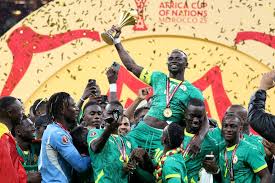
Captain Sadio Mané’s intervention—his calm, measured effort to bring his teammates back to the pitch—saved the final from total collapse. Mané provided the leadership missing from the VIP boxes. His actions act as a powerful mitigating factor that, under any fair assessment, should nullify calls for harsh punitive action.
The history of football discipline is littered with moments where a rigid application of the rules would have resulted in a “manifest injustice.” It’s trite law to suggest that the environment of a match can fundamentally alter the culpability of the players, a principle seen clearly in the case of Zinédine Zidane in 2006. While Zidane was sent off for his headbutt in the World Cup Final, FIFA took the unprecedented step of sanctioning Marco Materazzi for the verbal provocation. This established that the initiator of hostility shares the legal burden of the reaction.
Morocco’s unpunished misconduct throughout the tournament served as the spiritual equivalent of that slur, making a reaction from the Senegalese camp almost inevitable. Similarly, the 2007 Euro qualifier between Denmark and Sweden highlighted the “Duty of Care” organisers owe to players. When a fan attacked a referee, the ensuing legal battle emphasised that if the host or organiser fails to provide a secure environment, they lose the moral authority to punish those who feel unprotected.
When CAF failed to stop interference with Senegal’s warm-ups and staff, they breached this duty of care. This mirrors the 2014 Serbia vs. Albania case, where the Court of Arbitration for Sport (CAS) eventually ruled that a security failure and a hostile environment were the primary causes of a match abandonment. In all these instances, the courts recognised that the “Primary Violation”—the walk-off or the physical act—could not be separated from the “Institutional Negligence” that preceded it.
Under modern sports law, efforts to restore order—like those of Sadio Mané—are viewed as Active Mitigation. In the same way that Alan Mullery’s 1968 dismissal led to a broader discussion on refereeing failures, Mané’s role as a “stabiliser” highlights that the players were doing the job the officials abandoned.
FIFA enters this debate with a heavy burden of history, marked by past corruption and accusations of selective enforcement. A ruling that disproportionately hammers Senegal while giving Morocco a pass would confirm the worst suspicions: that rules are a sword for the powerful rather than a shield for the fair.
Fortunately, Articles 7 §2 and 8 §2 of the FIFA Disciplinary Code contain “manifest injustice” clauses. These exist precisely to prevent the robotic application of rules when doing so would produce a patently unfair result. They allow the committee to acknowledge that the sustained provocation and the failure of officials to protect the players are more significant than the technical breach of a walk-off.
The AFCON final fallout should not end with a cheque written to a treasury in Zurich. It should end with a new standard of accountability. If CAF and FIFA wish to preserve the integrity of the African game-or of any other for that matter-they must realise that they are the primary defendants in the court of public opinion. Sanctioning Senegal in a vacuum would be a misdiagnosis of a terminal illness. The disorder was not caused by a team leaving the pitch; it was caused by the referees and administrators who left their posts long before the opening whistle.
Finally, attempting to spin this unfortunate episode as a blight on African football as a whole is simply disingenuous. It is not. Rather, it is the direct consequence of a gross dereliction of duty by the two governing bodies, which they alone must put right. That will require an unambiguous acknowledgement of their failings, followed by prompt action to restore order, and demonstrate a willingness henceforth to enforce their own rules—consistently, and without favour.
Kachi Okezie, Esq., is a sports lawyer.