
Premium Times Academy Strengthens Nigeria’s Business, Financial Reporting Capacity
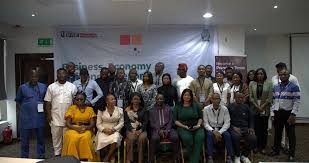
Premium Times Academy, the capacity-building arm of Premium Times Services Limited, has concluded a two-day intensive training for journalists across the country, focusing on strengthening capacity in business, financial and economic reporting.
The Lagos session, held between 26 and 27 November with support from the Central Bank of Nigeria (CBN), brought together 25 participants and exposed them to modern reporting techniques centred on data, policy analysis and ethical standards.
The curriculum covered key areas such as monetary policy tools, macroeconomic indicators, recent CBN reforms, Nigeria’s economic structure, open-source data utilisation, fact-checking and verification methodologies. Facilitators included financial analysts, consultants, CBN officials and senior media practitioners, giving journalists a holistic view of the country’s financial and economic landscape.
The CEO of the Centre for Financial Journalism, Ray Echebiri emphasised the importance of deep understanding of the financial system when covering business and economic issues.

Echebiri urged journalists to produce fact-driven, well-analysed stories capable of educating the public and enhancing the quality of economic debates. His session also examined monetary policy, banking regulation and the role of financial regulators in stabilising the economy.
Premium Times’ editor-in-chief, Musikilu Mojeed, trained participants on the use of open-source data for business and economic reporting. He stressed that credibility in financial journalism depends on accuracy, transparency and data-backed analysis.
He encouraged journalists to always trace data to original sources, analyse long-term trends and avoid relying solely on secondary information, warning that such shortcuts can easily result in misinformation.
Another facilitator, Zeal Akaraiwe, CEO of Graeme Blaque Advisory, focused on data interpretation and presentation.
He advised journalists to present financial reforms and economic developments in balanced, contextualised ways that avoid misleading the public. According to him, the media plays a crucial role in shaping public understanding of economic policy, making it essential for reporters to use data responsibly.
Ethical reporting also formed a major part of the training. Mr. Mojeed reminded journalists of the profession’s core values, including truthfulness, fairness, accuracy and impartiality.
He noted that many practitioners are unfamiliar with the Code of Ethics for Nigerian Journalists, which weakens public trust. Upholding global ethical standards, he said, is essential for restoring confidence in the media and ensuring responsible economic reporting.
Participants also received exposure to fact-checking approaches from David Ajikobi, the Nigeria Editor at Africa Check.
He warned journalists about the rising threat of disinformation, articularly in economic and political reporting, and encouraged them to interrogate claims, verify sources and minimise bias in their work. Any gap in a financial or economic story, he noted, can easily be exploited for misinformation.
In a presentation representing the CBN’s Banking Supervision Department, deputy director Fidelis Odia discussed the central bank’s regulatory duties, including monetary policy implementation, financial stability oversight, risk management and foreign exchange supervision.
He explained the ongoing banking recapitalisation initiative aimed at strengthening the sector in support of Nigeria’s ambition to build a $1 trillion economy.
He described capital as the lifeline of financial institutions, enabling them to absorb losses and remain resilient.
The training concluded with the presentation of certificates to participants. By equipping journalists with data-driven tools, deeper policy knowledge and stronger ethical grounding, Premium Times Academy aims to enhance the overall quality of business and economic reporting in Nigeria and strengthen public understanding of financial issues influencing national growth.


Related to this topic:

US military airstrikes didn’t violate Nigeria’s sovereignty – Tuggar