
Poor Funding Complaints Flood Budget Defence Sessions As NASS Grills Ministers, CEOs

As members of the Nigerian Senate and its House of Representatives counterparts begin to receive the 2026 budget presentation by Chief Executive Officers (CEOs) of Ministries, Departments and Agencies (MDAs) of federal government, poor funding of the 2025 budget have continue to feature in the exercise.
Recall that budget defence exercise is an annual ritual characterized by scrutiny of how the former budget fared.
In the 2026 budget defence, one common denominator in the exercise is continuous lamentations by ministers, directors-general and other chief executive officers in almost all the spheres including the paramilitary.
They all complain of inadequate funding from approved figures and how they received a paltry sum out of what was budgeted just as they beg government to release more funds from what is approved.
The list includes ministry of Works, Auditor-General’s Office, Nigeria Correctional Service (NCoS), National Institute of Sports (NIS) among others.
For instance, Minister of Works, David Umahi on Wednesday highlighted funding constraints to optimal performance of the ministry
He said that only N210.318 billion, about 9.7 per cent of the expected capital releases for 2025, has been paid so far.
He added that contractors are owed approximately N2.2 trillion for certified work carried out between 2024 and 2025.
Umahi disclosed these while presenting the Ministry’s 2026 capital budget to the Senate and House of Representatives Committees on Works, with the capital estimate standing at N3.244 trillion.
He promised. that the ministry will prioritise the completion of major highways and four “legacy” projects initiated by the Presidency.
Mr. Umahi listed key legacy projects, including the Lagos–Calabar Coastal Highway and the Sokoto–Badagry Superhighway, assuring lawmakers that delivery would be phased, with some sections scheduled for commissioning by May 29, 2026.
He noted that about 70 per cent of unfinished 2025 projects were carried into the 2026 plan, adding that new phases would be funded in stages to ensure timely completion.
At the presentation by the office of the Auditor-General, members of the House of Representatives decried it’s poor funding warning that the action could worsen corruption and weaken accountability systems.
Reps Decry Poor Funding of Auditor-General’s Office, Warn of Rising Corruption
The House of Representatives Wednesday expressed concern over what it described as inadequate funding of the Office of the Auditor-General for the Federation (OAuGF), warning that persistent underfunding of the nation’s apex audit institution could worsen corruption and weaken accountability systems.
The concern was raised by the House Committee on Public Accounts during the ongoing consideration of the 2026 budget proposal of the Auditor-General in Abuja
While reviewing the proposed N15.88 billion allocation to the OAuGF for 2026, the committee observed that the amount represents about 0.027 per cent of the N58.4 trillion Federal Government budget for the year, which lawmakers described as grossly inadequate.
The lawmakers noted that the Office is constitutionally mandated to audit over 1,000 Ministries, Departments and Agencies (MDAs), as well as several government funded institutions nationwide, making its responsibilities enormous.
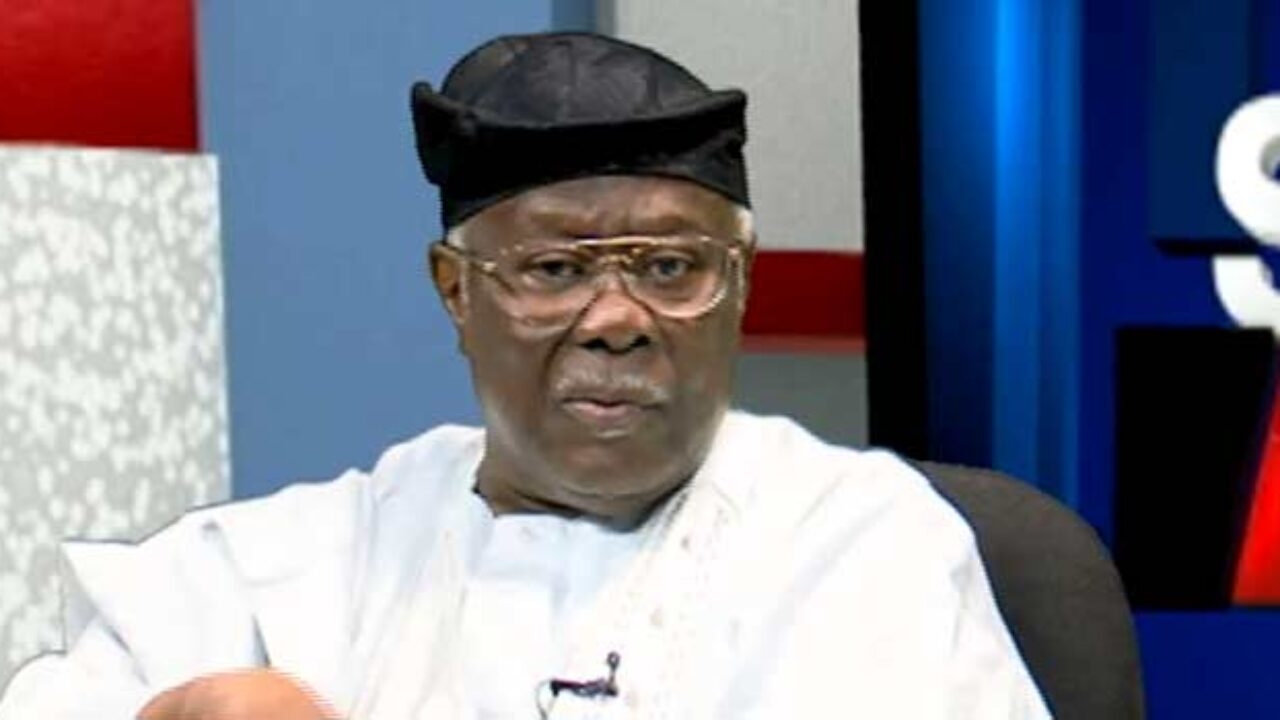
Chairman of the Committee, Rep. Bamidele Salam said it was unrealistic to expect the Auditor General’s Office to effectively scrutinise a proposed expenditure of N58.4 trillion with such limited funding.
Salam revealed that budgetary constraints in previous years had severely affected the operations of the Office, noting that it was only able to audit five foreign missions out of about 100 Nigerian missions abroad.
He further disclosed that in the 2025 fiscal year, only four per cent of the capital allocation to the Office was released, significantly impairing its operational capacity and limiting its oversight effectiveness.
A breakdown of the 2026 budget estimate shows that N5.3 billion is proposed for personnel costs, N5.6 billion for overheads, and N4.8 billion for capital expenditure, which the committee said remains insufficient.
The committee noted that inadequate and delayed release of funds, particularly capital allocations, would continue to hinder the Office from deploying modern audit technology, recruiting and retaining qualified professionals, and improving institutional efficiency in line with global standards.
The lawmakers therefore urged the Federal Government and relevant stakeholders to prioritise adequate appropriation, budgetary autonomy and timely release of funds to the Office of the Auditor-General for the Federation to strengthen its capacity to effectively perform its constitutional mandate and prevent corruption, waste and mismanagement of public resources.
NCoS Seeks N198.85bn for 2026 Budget As Awaiting Trial Inmates Account for 64% of Prison Population
The Nigeria Correctional Service (NCoS) has revealed that awaiting trial inmates constitute 64 per cent of the country’s custodial population, highlighting persistent congestion across correctional facilities nationwide.
Controller General of NCoS, Sylvester Nwakuche, disclosed this while presenting the agency’s 2025 budget performance and 2026 estimates before the House of Representatives Committee on Reformatory Institutions in Abuja on Wednesday.
Nwakuche stated that as of February 9, 2026, Nigeria’s total inmate population stood at 80,812, comprising 51,955 awaiting trial inmates, 24,913 convicted inmates and 3,850 detainees under other categories.
He described the Service as a key institution in the criminal justice system responsible for safe custody, rehabilitation and reintegration of offenders.
Reviewing the 2025 budget performance, the Controller-General said the Service received a total appropriation of ₦184.63 billion covering personnel, overhead and capital expenditure.
Out of the ₦124.31 billion approved for personnel costs, ₦112.68 billion, representing 90.6 per cent, was released and fully utilised for salaries, pensions and health insurance contributions under the Integrated Payroll and Personnel Information System.
He added that recurrent overhead releases stood at 73.7 per cent, with ₦27.28 billion, representing 71.7 per cent of funds received, spent on inmate feeding nationwide.
However, outstanding obligations for food rations stood at ₦10.75 billion, while ₦6.49 billion was spent on operational costs including staff training, fuelling of operational vehicles, electricity, security services and facility maintenance.
Nwakuche expressed concern over low capital funding performance, noting that only ₦3.22 billion, representing 22.2 per cent of the ₦14.50 billion capital budget, was released and utilised, leaving ₦11.27 billion in unreleased funds for critical projects such as custodial centre construction, security equipment procurement and ICT upgrades.
Despite not being a revenue generating agency, the Controller-General disclosed that the Service realised ₦84.65 million as internally generated revenue in 2025 and currently operates with a staff strength of 33,024 personnel deployed across the country.
Presenting the 2026 budget proposal, Nwakuche sought ₦198.85 billion to cover personnel costs, recurrent overhead, inmate feeding, operational expenses and capital expenditure for custodial and non-custodial operations nationwide.
He said ₦138.30 billion was proposed for personnel costs, while ₦50.40 billion was earmarked for recurrent overhead, including ₦14.83 billion for feeding an estimated inmate population of 91,100 at ₦1,125 per inmate daily.
He further appealed for an additional ₦90.38 billion to boost capital funding and requested ₦37.99 billion to support non-custodial measures across the 774 local government areas.
Nwakuche also sought legislative approval to clear outstanding liabilities, including ₦30.38 billion in promotion arrears and ₦25.16 billion owed to contractors.
Chairman of the House Committee on Reformatory Institutions, Hon. Chinedu Ogah, called for urgent reforms in Nigeria’s correctional system, including improved funding, modern infrastructure and presidential assent to the Correctional Service Trust Fund Bill, noting that many facilities built over a century ago have deteriorated and require urgent attention.
Public complaints commission begs Senate to increase its 2026 budget
The Chief Commissioner, Public Complaint Commission (PCC), Bashir Abubakar, on Wednesday urged the National Assembly to increase the 2026 budget allocation to the commission to enable it to carry out its mandate.
The made the appeal while defending the commission’s 2026 budget before a joint sitting of the Senate Committee on Ethics, Privileges and Public Petitions and, the House of Representatives in Abuja, yesterday.
Abubakar said the proposed 2026 budget comprised of N50.362 billion, capital expenditure, N30.261 billion for overhead, and N28.393 billion for personnel cost, bringing the total of budget size to N109.917 billion.
The commissioner explained that the commission has over 4000 staff and inherited a lot of issues relating to staff salaries and welfare.
He explained that the current leadership of PCC was sworn in on Sept. 25, 2024, alongside other federal commissioners.
He added that at the time he assumed office, the 2025 budget proposal had already left the presidency for the National Assembly, adding that the commission inherited serious challenges.
According to him, those challenges triggered industrial action, including a three-week closure of the commission and demonstrations by staff to the National Assembly over funding shortfalls.
“These issues arose largely from grossly inadequate financial backing for the commission. He emphasised that poor funding had severely affected staff welfare and operational stability in all its 36 states’ offices and the FCT.
“Upon assumption of duty, the leadership reviewed the commission’s accounts to identify solutions, particularly concerning unpaid staff benefits and other pressing financial obligations.
“The Director-General of Budget promptly wrote to the National Assembly seeking urgent financial intervention.
“By legislative approval, the commission received an intervention fund of N40 billion; however, only N2 billion has been accessed to date.
“As we speak, deficits still stand at about N16 billion in outstanding wage awards, promotion arrears, and minimum wage adjustments yet to be implemented,” he said.
Abubakar explained that although the original 2025 budget proposal was N109 billion, the commission operated on an inherited N14.460 billion budget throughout the fiscal year.
He told the lawmakers that releases for January, February, and March were approximately N1.205 billion monthly, totaling N3.615 billion for the first quarter of 2025.
“The same pattern applied in the second and third quarters,” he added.
He noted that the overall performance of 2025 budget was only about 25 percent when assessed against projected needs.
The PCC commissioner, however, disclosed that the commission had received a total number of 714,648 cases from January to December 2025.
He explained that out of the number, 658,670 cases were successfully resolved, while 55,978 were still pending.
The Chairman, Senate Committee on Ethics, Privileges and Public Petitions, Neda Imasuen assured PCC that the committee would see how it can increase the budget allocation to enable PCC serve Nigerians well.
According to Imasuen, PCC has offices nationwide, the number of complaints and cases they handle because it’s free is enormous.
Imasuen disclosed that the committee was working with PCC to amend the Act establishing the commission.