
Peter Obi Critiques Solar Transition at Presidential Villa
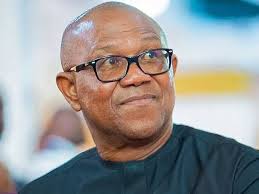
Former presidential candidate Peter Obi has criticized the Federal Government’s plan to disconnect the Presidential Villa from the national electricity grid in favor of a solar mini-grid system.
Speaking on Monday, February 16, 2026, the former Governor of Anambra State described the move as a “gross neglect” of the national infrastructure that ordinary Nigerians rely on.
Obi’s remarks followed confirmation from the State House Permanent Secretary, Temitope Fashedemi, that the seat of power is expected to achieve a full “cutover” to independent solar power by March 2026.
The transition to solar energy at the Presidential Villa has been a multi-year project, with ₦10 billion allocated in the 2025 budget for the “Solarisation of the Villa” and an additional ₦7 billion proposed in the 2026 Appropriation Bill.
Government officials have defended the expenditure as a necessary fiscal measure to curb rising energy costs. The Director-General of the Energy Commission of Nigeria, Mustapha Abdullahi, recently noted that the Villa’s annual electricity bills had reached an unsustainable ₦47 billion.
Furthermore, the State House has alleged consistent overbilling by the Abuja Electricity Distribution Company (AEDC), claiming that the ongoing testing phase for the solar project revealed charges for electricity that was never supplied.
Despite these fiscal justifications, Obi argued that the decision represents a disconnect between the leadership and the governed. He recalled President Bola Tinubu’s 2022 campaign pledge to provide steady electricity within his first four years or face rejection at the polls.
According to Obi, the decision to exit the national grid suggests a lack of confidence in the administration’s own power sector reforms. He noted that while government institutions should lead efforts to strengthen the grid for the benefit of all citizens, the current strategy appears to insulate the political elite from the systemic failures of the nation’s power infrastructure.
The national grid has faced significant stability challenges over the past year, recording approximately 12 collapses in 2025 and two major failures in January 2026 alone. These disruptions continue to affect industrial productivity and household welfare across the federation.
While the government maintains that the Aso Rock solar project is a pilot for broader renewable energy adoption, critics like the Catholic Secretariat of Nigeria (CSN) have echoed Obi’s concerns, describing the move as a “symbolic act of surrender” to the sector’s long-standing inefficiencies.
Economic data indicates that the power sector remains a primary bottleneck for Nigeria’s development. The World Bank estimates that the country loses approximately $28 billion annually due to unreliable electricity.
While the Presidential Villa moves toward energy independence, the Manufacturers Association of Nigeria (MAN) reports that industrial firms spent over ₦1 trillion on self-generation in recent years to stay operational.
The disparity between the independent power solutions available to the presidency and the erratic supply available to the public has become a focal point for political and civil society debate.
As the March 2026 deadline for the full solar migration approaches, the Federal Government has signaled that it will maintain a few generating units for emergency backup but intends to rely primarily on the new 17-billion-naira infrastructure.
For the opposition, the project remains a metaphor for a “generator mentality” that accepts public infrastructure failure as a given rather than a problem to be solved for the entire populace.
The outcome of these power sector dynamics is expected to feature prominently in the lead-up to the 2027 general elections, as citizens measure the administration’s progress against its initial energy delivery promises.


NERC and GIZ Partner to Combat Power Vandalism
Related to this topic:
Bayelsa Assembly Confirms Peter Akpe as New Deputy Governor