Opinion: A reflection on Nigeria’s macroeconomy since 1960
By Isaac Nwaogwugwu
The macroeconomic behaviour of a nation gives a big picture of the consumption and production decisions by all economic units or agents; the individual, firm, household and government and by extension the net influence of external exposure through international economic transactions.
It gives one a fairly good idea of the state of the economy consequent upon isolated choices which some may think are inconsequential to the decision of others.
It is a barometer of welfare, growth, development, redistributive justice, adaptive capacity, external balance, employability, debt sustainability, efficiency in resource allocation, international economic rating, stability of economic variables, international rating, sustainable development and viability as a host for foreign and portfolio investments.
It is a measure of the purchasing power parity of a nation’s local currency and the external value of the same.
It underscores the veracity of fiscal and monetary policies, or otherwise. It is a measure of hope for the current as well as future generations as well as dependability for foreign countries, citizens and institutions.
It defines the environment on which progress and prosperity are predicated. It shows the ability of a country to contain shocks of internal and external dimension.
As economists and statisticians would say, it is a composite index which captures vision, planning, strategy, focus, continuity, tenacity, coherency, realism, constructiveness and veracity of the country and its programmes and policies. Interestingly, macroeconomic conditions of every nation rests largely on non-economic factors such as the nature of political and administrative structure, ideology, institutions, rule of law, security, politics, diplomacy and perception of (national) values and orientations.
The Nigerian economy was at a very early stage of infancy in 1960 when the nation secured political independence from United Kingdom.
It was more or less a primitive and agrarian economy characterised by subsistence farming.
The private sector was more or less non-existent with the trading companies having the sway.
Socio-economic infrastructure was in short supply. We didn’t have a tertiary educational institution.
No polytechnics. No universities. We had just one university college in Ibadan which was later upgraded to a university status in 1963 after the Act establishing it was passed into law on December 7, 1962.
Guided by the doctrine of ‘Commanding Heights’ the government assumed an overbearing role in the economy as it planted itself in every sector, trying to do everything at the same time with policies that anchored on mixed socialist ideology.
The first five year plan presented a picture of a government driven by a well-articulated vision. Sectorial targets and strategies were clearly stated.
Agriculture, industry and socioeconomic infrastructure got priority attention of the state.
The need for a good financial architecture did not escape the minds of the astute planners.
There was commitment as the macroeconomic variable tended towards stability. Economic growth was positive and steep, inflation was highly subdued while there was a job for almost everyone that showed interest and willingness to work.
Public debt was non-existent, balance of payment was favourable. Interest rate compared well with international standard.
Indeed, a good blend of expansionary fiscal policy and restrictive monetary policy were put in place to realize the goals of the state policy as contained in the term plan.
The trade policy of the country was also restrictive.
Hence, the growth rate of money supply, the real GDP growth rate, fiscal deficit, external reserve and inflation rate were also modest.
Unfortunately the planners and the government lost sight of the relevance of data in planning and the fragility of institutions in the new Nigeria alongside contemptuous politics of the local emperors who had dressed themselves in false robes of patriotism.
The economy was thoroughly shaken at its foundation and was thus destabilised between 1966 and 1970.
The decade, 1971 – 1979 was characterised by robust revenue flow occasioned by the oil boom of this era which was accompanied by heavy spending on capital projects and special programmes such as Operation Feed the Nation.
The recurrent account recorded surpluses which financed capital spending of the government. But essentially the fiscal targets remained as obtained during the 1960s. Fiscal and monetary policies became unduly expansionary while an openended trade policy was adopted.
These resulted into high public expenditure, high money supply growth rate, high inflation rate, high trade and balance of payment deficits, modest but unpredictable external reserve and high overall budget (fiscal) deficits.
It may also be pointed out that during this period, the prime lending rate and exchange rate remained modest and stable while unemployment deepened. Economic growth was depressed as public debt rose sharply.
In general, the macroeconomic performance during this era was weak and reflected gross fiscal irresponsibility of the government.
This trend continued up to 1983 except that both fiscal and monetary policies had become very restrictive as a result of the ‘Austerity Measure’ of President Shehu Shagari between 1982 and 1983.
The period of 1984-1999 was an era of high macroeconomic volatility. The Structural Adjustment Programme and naira devaluation caused a lot of havoc in the economy.
Money supply rose from 1.2 per cent in 1986 to 60 per cent in 1992. Prime lending rate and inflation rate were 36 per cent and 57 per cent respectively by 1993. Foreign reserve crashed.
The balance of payment was in total mess. Economic growth was negative. Unemployment deepened. Overall budget position was erratic and in a perpetual state of deficit while unemployment reached an all-time high of 72 per cent in 1995.
Poverty became endemic as many were pushed below the poverty line while public debt rose sharply.
The macroeconomic environment became different between 2000 and 2015. Thanks to the new democratic dispensation.
The economy grew in a substantial and an unprecedented way as the real GDP growth rate was generally above 6 per cent.
It was in fact 9.6 per cent in 2003. Money supply was expansive and erratic.
Inflation rate was generally above two digits while the external debt declined sharply as a result of liquidation of the Paris Club debt. Prime lending rate also remained very high while the external value of the naira plummeted.
Government expenditure as percentage of GDP rose while overall fiscal deficit became much more entrenched in the nation’s fiscal system.
However, the nation’s balance of payment became stable while its external reserves soured to $51.335 as at 2007 and further to S60.5 in 2008.
All those gains have been reversed between 2015 and now as all the macroeconomic indicators are in tatters.
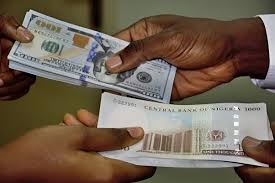
The naira currently trades at over 470 per dollar while public debt has climbed to an all-time high of over 30 trillion naira.
External reserve is tending towards a miserably level of 30 billion dollars which is not even enough to sustain the nation’s six-month import.
Inflation is surging while unemployment is at over 30 per cent.
Poverty has become a scourge and very pervasive as the country gets ridiculed as the poverty capital of the world.
Recently the economy contracted by 6.1 per cent as capital flight continues unabated.
These narratives clearly show that the economy has been moving in a circle.
It has been trapped in a quagmire of policy confusion as reflected in an uncoordinated fiscal, monetary, trade, industrial and agricultural policies.
One begins to wonder the wisdom of running from one planning concept to another after abandoning the five-year term plan.
The crisis of the Nigerian economy also seems to be equally rooted in lack of continuity, policy designs based on passion rather than reason, poor budgetary framework and implementation.
READ ALSO: Create a sound macroeconomic environment to stimulate economic growth, Experts charge Govt
All these derive from unsuitable geo-political structure, lack of vision and strategy, weak institutions, bad politics and lack of concrete ideology among others.
These issues must be addressed if we must make a headway in achieving a robust macroeconomy.
The picture today is bad as the future remains gloomy.
We have been struggling since independence to give life to the nation’s macroeconomic variables but have only succeeded in reversing whatever gains we made.
As it were, in spite of our vast natural and human resource endowment, we have just been a country busy going nowhere.