

OpenAI Enters Healthcare Frontier with “ChatGPT Health” to Revolutionize Personal Medical Management
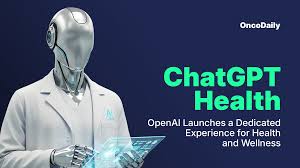
In a landmark development poised to redefine the intersection of artificial intelligence and personal healthcare, OpenAI has officially launched “ChatGPT Health,” a dedicated module designed to help users manage, interpret, and organize their medical information with unprecedented ease.
The announcement, made via a company blog post on January 8, 2026, marks the AI giant’s most significant foray into the sensitive and highly regulated healthcare sector. The new feature aims to combine the generative capabilities of ChatGPT with users’ personal health data to provide personalized, context-aware guidance, moving beyond generic wellness advice to specific, data-driven insights (Nairametrics, 2026).
According to OpenAI, the launch is a direct response to user behavior, with internal data revealing that health-related queries have become one of the most common uses of the platform. The company disclosed that over 230 million people globally already turn to ChatGPT for wellness questions every week, necessitating a more specialized, secure, and accurate environment for such sensitive interactions.
A Unified Health Dashboard
The core value proposition of ChatGPT Health lies in its ability to integrate with third-party health applications and medical records. OpenAI revealed that the system allows users to securely connect external data sources, including Apple Health, Function, and MyFitnessPal. By aggregating data from wearables, electronic health records (EHRs), and fitness apps, ChatGPT Health can offer responses that are not just theoretically sound but personally relevant.
For instance, a user asking about dietary adjustments for hypertension could receive advice tailored to their specific activity levels recorded in Apple Health or nutritional intake tracked in MyFitnessPal. This interoperability addresses a long-standing fragmentation in digital health, where user data is often siloed across disparate apps and clinical portals.
However, OpenAI was quick to set boundaries regarding the tool’s capabilities. “Health is designed to support, not replace, medical care. It is not intended for diagnosis or treatment,” the company stated in the announcement. “Instead, it helps you navigate everyday questions and understand patterns over time—not just moments of illness—so you can feel more informed and prepared for important medical conversations” (Nairametrics, 2026).
This positioning as a “support tool” rather than a “diagnostic tool” is critical for avoiding regulatory hurdles and managing liability. By framing ChatGPT Health as a preparatory aid for doctor visits or a lifestyle manager, OpenAI sidesteps the stringent requirements of being classified as a medical device, while still offering significant utility to the consumer.
Privacy First: A “Walled Garden” for Health Data
Recognizing that privacy is the single biggest barrier to the adoption of AI in healthcare, OpenAI has architected ChatGPT Health as a distinct environment with enhanced security protocols.
To assuage fears of data misuse, the company emphasized that “Health operates as a separate space with enhanced privacy to protect sensitive data.” Crucially, OpenAI explicitly stated that conversations within the Health module are not used to train their foundation models. This “walled garden” approach ensures that a user’s sensitive medical history does not inadvertently become part of the collective knowledge base of future AI versions.
Furthermore, the system includes proactive safeguards. If a user begins a health-related inquiry in the standard ChatGPT interface, the system is programmed to suggest moving the conversation to the specialized Health environment to ensure these additional privacy protections are active. This UI design choice reflects a “privacy-by-design” philosophy, ensuring users are constantly aware of the context in which they are sharing sensitive information.
Built with Clinical Oversight
To counter the “hallucination” problem where AI confidently generates false information, OpenAI has invested heavily in clinical validation. The company disclosed that ChatGPT Health was developed in collaboration with more than 260 physicians across 60 countries.
These medical professionals were tasked with a rigorous review process, examining over 600,000 model outputs to stress-test the system for safety, accuracy, and tone. “This collaboration has shaped not just what Health can do, but how it responds: how urgently to encourage follow-ups with a clinician, how to communicate clearly without oversimplifying, and how to prioritize safety in moments that matter,” OpenAI explained (Nairametrics, 2026).
This global collaboration suggests that ChatGPT Health is not just a US-centric product but one designed with an understanding of diverse medical contexts and terminologies. The sheer scale of the review process involving hundreds of thousands of outputs demonstrates the lengths to which tech companies must now go to earn trust in the medical domain.
Market Context and Strategic Implications
The launch of ChatGPT Health comes at a time of explosive growth for OpenAI. As of December 2025, the platform boasts over 800 million weekly active users, a massive leap from the 400 million reported earlier in the year. With over 1 million business customers utilizing “ChatGPT for Work,” the company is aggressively expanding its utility across every sector of the economy (Nairametrics, 2026).
By entering the health space, OpenAI is placing itself in direct competition with other tech giants who have long eyed the $12 trillion global healthcare industry. Google, with its Med-PaLM 2 model and Fitbit integration, and Apple, with its comprehensive Health ecosystem on iOS and WatchOS, are formidable incumbents. However, OpenAI’s advantage lies in its conversational interface. While Apple Health excels at data tracking and visualization, it lacks the generative capability to explain what that data means in plain English or to answer complex follow-up questions—a gap ChatGPT Health aims to fill.
For example, while Apple Health might show a spike in heart rate variability, ChatGPT Health could potentially explain the implications of that spike in the context of the user’s recent marathon training and sleep data, providing a narrative layer to raw analytics.
Availability and Regional Restrictions
Despite the global nature of the development team, the initial rollout of ChatGPT Health is limited. OpenAI stated that the feature is currently being offered to a “small group of early users” on a waitlist basis. Eligibility extends to users with ChatGPT Free, Go, Plus, and Pro plans, but with significant geographical exclusions: users in the European Economic Area (EEA), Switzerland, and the United Kingdom are currently barred from joining the waitlist (Nairametrics, 2026).
This exclusion likely stems from the stringent General Data Protection Regulation (GDPR) in Europe and similar data sovereignty laws in the UK and Switzerland. AI handling of health data under GDPR requires incredibly complex compliance measures regarding data portability, the “right to be forgotten,” and automated decision-making transparency—hurdles OpenAI may still be clearing.
Additionally, specific high-value features like direct medical record integrations (connecting to hospital EHR systems like Epic or Cerner) are currently limited to the United States. Integrations with Apple Health are, naturally, restricted to iOS devices.
However, OpenAI has signaled a rapid expansion plan, intending to broaden access to all web and iOS users “in the coming weeks” as they refine the user experience and likely navigate regulatory landscapes in other jurisdictions.
Innovation Streak
This announcement is part of a broader wave of innovation from OpenAI in early 2026. The company recently introduced “ChatGPT Pulse,” a personalized daily updates assistant, and has expanded its “deep research” tools and autonomous agent systems for premium subscribers. These features collectively point to a future where ChatGPT acts not just as a chatbot, but as a proactive personal agent capable of managing complex aspects of a user’s life, from work research to health management.
As the lines between consumer technology and medical care continue to blur, ChatGPT Health represents a significant step towards the democratization of health literacy. By putting a privacy-focused, medically-validated AI in the pocket of 800 million users, OpenAI could fundamentally change how the average person interacts with their own biology—shifting the paradigm from reactive treatment to proactive, informed wellness management.