
Oluremi Tinubu’s Warri Visit Signals Renewed Federal Engagement
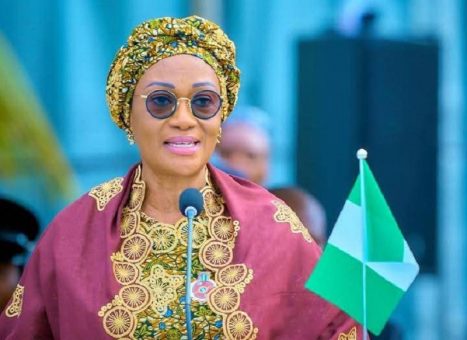
The forthcoming visit of Nigeria’s First Lady, Senator Oluremi Tinubu, to the Warri Kingdom on Thursday has sparked significant expectations among the Itsekiri people, with community leaders framing the event as a pivotal moment for regional advocacy.
The visit, which is being viewed as more than a mere ceremonial engagement, has prompted the Itsekiri Leaders of Thought (ILOT) to emphasize the strategic importance of strengthening ties between the ethnic nationality and the current federal administration to address long-standing developmental gaps in the Niger Delta.
In a formal statement released in Warri, the ILOT highlighted the First Lady’s distinguished legislative record as a three-term senator and her maternal heritage within the Warri Kingdom as foundational elements for a productive partnership.
The group, led by Chairman Chief Edward Ekpoko and Secretary Sir Amorighoye Sunny Mene, noted that these deep-seated ties provide a unique platform for the First Lady to champion the socioeconomic interests of the Itsekiri nation within the presidency.
This sentiment reflects a broader trend of sub-national groups seeking direct channels to federal power to bypass traditional bureaucratic bottlenecks that often stall regional growth.
A central theme of the leaders’ address was the appreciation for President Bola Tinubu’s recent administrative appointments, which they characterized as a significant step toward inclusive governance.
The group specifically pointed to the selection of Itsekiri indigenes for high-profile roles in the energy sector, including Engr. Omatsola Ogbe as the Executive Secretary of the Nigerian Content Development and Monitoring Board (NCDMB) and Mrs. Oritsemeyiwa Eyesan as the Chief Executive of the Nigerian Upstream Petroleum Regulatory Commission (NUPRC).
Community leaders argue that such appointments ensure that those with local contextual knowledge are positioned at the helm of agencies critical to the nation’s oil and gas infrastructure, which is largely situated within Itsekiri territories.
Beyond the celebration of federal appointments, the ILOT utilized the lead-up to the visit to present a clear developmental roadmap for the region.
The group identified several “catalytic” infrastructure projects that remain vital to the economic survival of the coastal communities. Chief among these is the Koko–Ogheye–Lagos Highway, a project designed to provide a direct coastal link between the Niger Delta and Nigeria’s commercial hub.
Advocates of the highway argue that its completion would drastically reduce transit times for maritime logistics and stimulate trade in the Delta’s riverine corridors, which have historically been isolated due to poor land connectivity.
Similarly, the leaders emphasized the urgency of the Omadino–Ugborodo Road. This project is viewed as essential for linking the deep-sea communities where significant upstream petroleum activities occur to the mainland.
For the Itsekiri nation, these roads are not merely transit routes but are seen as economic lifelines that could facilitate the diversification of the local economy away from a sole reliance on crude oil extraction toward sustainable fisheries, commerce, and tourism.
The ILOT has called upon the First Lady to use her influence to ensure these projects receive the necessary budgetary priority and executive oversight to reach completion.
The cultural significance of the visit has also been underscored, with the ILOT calling on Itsekiris at home and in the diaspora to mobilize for a grand reception.
Organizers believe that a massive turnout will serve as a visual testament to the unity of the Itsekiri people and provide an opportunity to showcase their rich maritime heritage to a national audience.
The leaders expressed confidence that the visibility generated by the First Lady’s presence will help recalibrate the national narrative regarding the Itsekiri’s contribution to Nigeria’s stability and economic prosperity.
Furthermore, the visit is being interpreted as a move toward stabilizing the often-volatile socio-political landscape of the Niger Delta.
By engaging directly with traditional institutions like the Warri Kingdom, the federal government signals its respect for local structures, which is often a prerequisite for maintaining the peace necessary for oil and gas operations.
The ILOT’s statement suggests that the Itsekiri people are prepared to offer continued cooperation in exchange for visible federal commitment to their welfare and infrastructure.
As the Warri Kingdom prepares for the high-profile arrival, the focus remains on the tangible outcomes that follow the rhetoric of a “new phase of engagement.”
The community leaders have made it clear that while the homecoming of the First Lady is a source of pride, the ultimate metric of the visit’s success will be the acceleration of the Koko-Ogheye and Omadino-Ugborodo projects.
For the residents of the riverine areas, the visit represents a rare window of opportunity to align local aspirations with the “Renewed Hope” agenda of the federal government.
The conclusion of the visit is expected to lead to further dialogues between the Palace of the Olu of Warri and the Presidency.
Community stakeholders are optimistic that the symbolic bridge built by Senator Tinubu’s visit will eventually manifest in the physical bridges and highways needed to transform the Itsekiri heartland into a vibrant economic zone.


Related to this topic:

Federal Government Reforms Agricultural Insurance and Cooperatives
Tinubu’s Revenue Remittance Order Signals Shift in Fiscal Policy