
NUPENG Seeks Tinubu’s Clarification on Oil Revenue Order

SAMUEL MOBOLAJI
The Nigeria Union of Petroleum and Natural Gas Workers has called on President Bola Ahmed Tinubu to urgently convene a broad-based stakeholders’ meeting to clarify a new executive order on the oil and gas sector, warning that uncertainty over the directive is heightening tension across the industry.
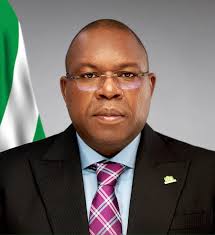
In a statement signed by its President, Prince Williams Akporeha, the union said workers across upstream, midstream and downstream operations are concerned about the policy’s implications for job security, labour agreements and the implementation of the Petroleum Industry Act.
According to NUPENG, the absence of detailed engagement has triggered anxiety among petroleum workers seeking clarity on how the order may affect employment conditions, restructuring processes and operations at the Nigerian National Petroleum Company Limited and other operators.
Describing the oil and gas industry as the backbone of Nigeria’s revenue base and foreign exchange earnings, the union stressed that any executive directive affecting the sector carries wide-ranging consequences for regulatory frameworks, investment flows, local content development and industrial relations.
It urged the President to clarify whether the order amends or expands provisions of the Petroleum Industry Act, how it affects collective bargaining agreements, and what it means for indigenous participation and employment opportunities in the sector.
NUPENG warned that misinterpretation of the directive could destabilise operations, reiterating its commitment to industrial peace but emphasising its constitutional mandate to protect workers’ welfare.
The union’s demand for clarity comes as the Federal Government signals a shift in revenue management strategy following reforms expected to boost inflows into the Federation Account.
At the latest meeting of the Federation Account Allocation Committee in Abuja, Minister of State for Finance, Dr Doris Uzoka-Anite, said structural changes to petroleum revenue management and newly implemented tax reforms are set to significantly strengthen monthly allocations to federal, state and local governments.
Central to the anticipated revenue growth is a presidential executive order issued on February 13, 2026, mandating the full remittance of oil and gas revenues into the Federation Account, suspending certain deductions at source and directing that gas flare penalties be paid directly into the common revenue pool.
The reforms are expected to increase distributable income, raise 13 per cent derivation transfers to oil-producing states and improve cash flow predictability across the three tiers of government. Retrospective audits of past deductions may also generate one-off recoveries.
However, Uzoka-Anite cautioned that injecting higher revenues into the economy in bulk could intensify inflationary pressures and complicate monetary management, particularly as Nigeria navigates a period of price instability and exchange rate volatility.
“We should consider staggered FAAC distribution rather than a single bulk injection,” she said, noting that fiscal and monetary authorities must coordinate closely.
Options under review include phased disbursement of audit recoveries and the creation of a stabilisation buffer to warehouse part of incremental inflows, thereby reducing pro-cyclical spending and smoothing liquidity shocks.
The minister urged subnational governments to channel higher allocations toward capital and productive investments in infrastructure, agriculture and energy, rather than recurrent expenditure, to expand supply capacity and moderate inflation over time.
With oil and tax reforms poised to lift Federation revenues, policymakers now face a delicate balancing act: maximising fiscal gains from improved remittance discipline while preserving macroeconomic stability and maintaining industrial harmony in the country’s most strategic sector.