
NLC hits Abuja streets, demands urgent government action to killings, kidnapping
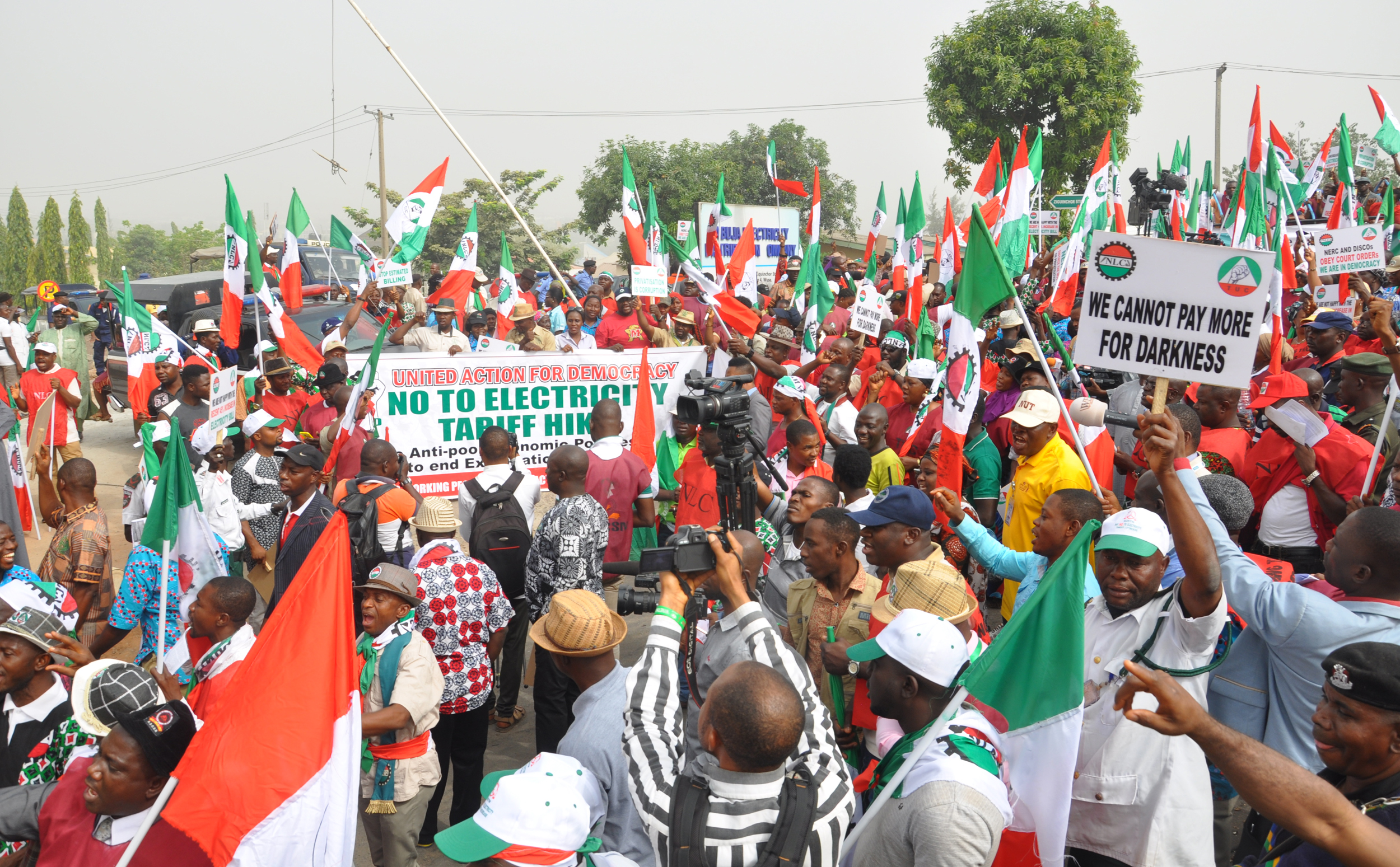
The Nigeria Labour Congress on Wednesday took its protest against killings and kidnappings to the streets of Abuja, demanding urgent and decisive government action to halt the worsening insecurity across the country.
The labour centre said the nationwide protest was meant to press the federal government to act swiftly to reclaim communities overrun by criminals and restore public confidence, warning that continued delays were costing lives and livelihoods.
The demonstration was staged at the NLC Secretariat in Abuja, where workers and allies converged amid heightened security, even as the NLC President, Comrade Joe Ajaero, and other senior labour leaders held a closed-door meeting.
The meeting followed earlier engagements between NLC leaders and President Bola Tinubu ahead of the protest, but labour said discussions had not diminished the urgency of taking action against insecurity.
Although workers, affiliate unions, civil society groups and journalists began arriving at the venue before 7:30 a.m., the protest itself did not commence until after 11 a.m., as participants waited for formal directives from the union leadership.
Present at the protest ground were leaders of the NLC, officials of affiliate unions and civil society organisations, including Omoyele Sowore and members of the Revolution Now Movement, who joined workers in solidarity.
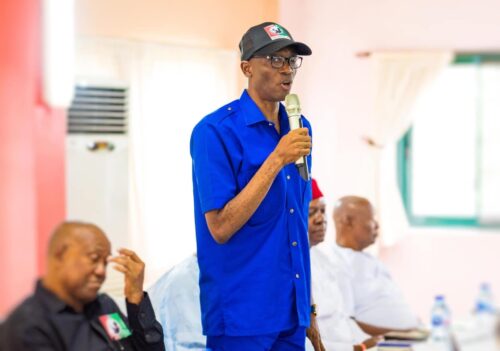
Addressing the gathering, Deputy General Secretary of the NLC, Comrade Ismail Bello, said the protest transcended labour interests and spoke to the survival of the Nigerian state.
“What we are doing today is not just for the benefit of workers alone; it is for the benefit of all Nigerians,” he said.
Bello noted that citizens had entrusted government with the responsibility of securing lives and property, adding, “As citizens, we have surrendered our sovereignty to government in the hope that they will secure lives, protect citizens and run the economy in a way that benefits the majority of our people, not just a few politicians.”
He said Nigerians had paid a heavy price for prolonged insecurity, with entire communities displaced and livelihoods destroyed, stressing that health workers, teachers, transport workers and others had been among the worst affected.
According to him, labour was drawing attention to the scale of the damage caused by insecurity, saying, “We are reminding the world of the calamity that has befallen many communities and many workers. The damage is enormous, and it has to stop.”
Bello also insisted that workers were within their constitutional rights to protest peacefully, warning against intimidation.
“We are here on the streets reminding government that nobody can gag us from exercising our right to freedom of association and freedom of assembly,” he said.
While calling for decisive action against kidnappers and criminal elements, the Deputy General Secretary argued that failure to punish perpetrators had emboldened insecurity.
“People must return to normalcy. They should live in their communities. Children should return to school. Teachers and students must be protected. Our constitution guarantees that. All government needs to do is to deploy all the powers and machinery of governance to recover all spaces that have been taken over by criminals.”
Head of the International Department of the NLC, Comrade Uche Ekwe, said the protest was aimed at strengthening the government’s resolve to confront insecurity.
“If government is truly committed, we want to strengthen their hands..Those funding insecurity must be arrested and dealt with. If they think they are powerful, they should face the Nigerian people.”
According to the NLC, insecurity has persisted in Nigeria for nearly two decades, marked by terrorism, banditry and kidnapping, with devastating consequences for workers and the economy.
Labour disclosed that since 2009, over 2,295 teachers have been killed by insurgents and bandits, while more than 19,000 teachers have been displaced in Borno, Yobe and Adamawa states. Over 910 schools were destroyed, forcing about 1,500 learning centres to shut down or become internally displaced persons’ camps.
In the health sector, the NLC said 35 per cent of healthcare facilities were destroyed by terrorism, while 50 per cent became inaccessible in the North-East.
It added that dozens of health workers had been kidnapped or killed between 2021 and 2024, worsening the already critical shortage of medical professionals.
Labour further blamed socio-economic injustice, widening inequality, corruption and poor funding of education and health sectors for fuelling insecurity, noting that Nigeria lost an estimated ₦300 billion during the 30 days of the JOHESU strike alone.
As part of the way forward, the NLC demanded, among others, that Chapter Two of the Constitution be made justiciable, the establishment of security trust funds with transparent management, accelerated prosecution of corrupt officials, judicial reforms, protection of public spaces and measures to reduce inequality through wage justice.
According to Congress, it was “the starting point of reclaiming Nigeria from the jaws of insecurity and beginning genuine national healing.”

Prev Article