
Nigerian Women Are Using Nollywood Films to Dismantle the Misogyny That Nollywood Films Helped Create
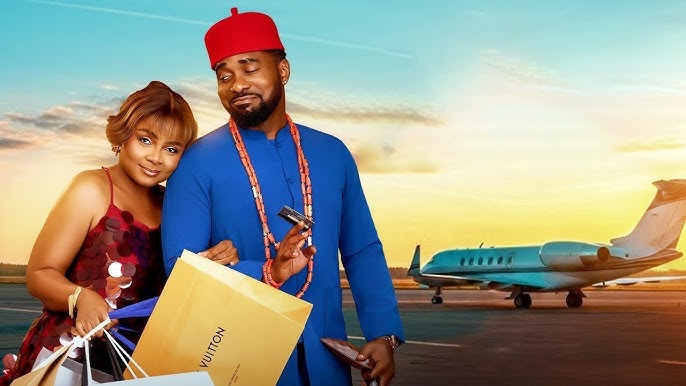
The surge in female-led Nollywood success stories reveals far more than box office dominance.
This year, Bimbo Ademoye’s “Where Love Lives” amassed over 6 million views within 72 hours, while Omoni Oboli’s “Love In Every Word” accumulated 4.3 million views in its first 72 hours and reached 20 million views three weeks after release. Funke Akindele’s “Behind The Scenes” crossed the ₦500 million mark within two weeks of release, and Kemi Adetiba’s “To Kill A Monkey” set new streaming records for Nigerian productions on Netflix. But these numbers tell only half the story.
The real revolution lies in what these women are dismantling on screen, the very misogyny that cinema helped build. Early 2000s Nollywood reinforced female stereotypes and patriarchal attitudes through its films, depicting women as femme fatales, toxic mother-in-law figures, and portraying heterosexual love as the ultimate goal for women. Women in Nigerian movies suffered negative characterization as wicked stepmothers, prostitutes, and gold diggers, with Nollywood showing no genuine deviation from the trite pattern of portraying woman as sex objects whose main, if not only goal in life, is to attract and gratify men. This cultural programming reinforced the ingrained socio-cultural practices restricting women’s rights.
Behind these toxic narratives existed brutal realities actresses endured. Actress Bukky Fagbuyi revealed that industry figures threatened her success if she refused to offer sexual favors or enter relationships with them. Veteran actress Moji Afolayan disclosed she was blacklisted by movie marketers after refusing their sexual advances, with a meeting held among marketers to stop calling her for jobs. Another actress, Ada Uli stated that sexual harassment drove her out of Nollywood temporarily. Female directors now create narratives that directly challenge these patterns.
Bimbo Ademoye’s “Where Love Lives” explores domestic violence, blackmail, and female solidarity, showing women supporting one another rather than competing for male approval or social status. This directly challenges the “home wrecker” trope, which places responsibility for infidelity almost entirely on the so-called home wrecker, while the cheating husband’s agency is minimized and the betrayed wife assigns most of the blame to the third party. Instead, the film centers female relationships as sources of strength and mutual protection when facing abuse and manipulation.
In “Everybody Loves Jenifa,” Funke Akindele portrays Jenifa as running a foundation that empowers women and addresses domestic violence and crime, centering female agency around community service rather than male validation. The film shows Jenifa discovering that her neighbor Lobster is involved in domestic violence, making abuse visible and condemnable rather than normalized.
Where older Nollywood films suggested women should endure bad marriages for respectability, Jenifa actively intervenes, positioning domestic violence as a community issue requiring collective action rather than private shame. “Behind The Scenes” follows Aderonke, a real estate entrepreneur whose generosity begins to strain her personal life, exploring themes of self-sacrifice, responsibility, and boundaries.
This narrative directly confronts “black tax”; the expectation that successful women must financially support extended family indefinitely, transforming what older films would have presented as noble feminine duty into a legitimate boundary issue. The protagonist isn’t punished for her ambition or success but for failing to protect herself, a radical reframing that validates women’s right to set limits without being labeled selfish or unfeminine. This narrative sophistication stands in stark contrast to films that blamed women for sexual attention or framed harassment as flattering pursuit.
Amaka Igwe challenged narratives in her film “Violated” where the rape victim Peggy found restitution and her rapist met his comeuppance, sacked from his job and abandoned by his wife. Stephanie Okereke Linus’s film “Dry” became “the first Nollywood film to orally humanize the Nigerian woman” through Dr. Zara’s monologue declaring “Before I am a woman, I am a human”. These foundational films established templates that contemporary female directors now expand.
Actress Azeezat Shorunmu explained she “escaped the advances and bullying of male producers by staying true to myself and principles” through scriptwriting, which “gave me a voice and a level of influence that allowed me to take more control over the roles I chose”. When women control production, distribution, and audience relationships, they escape predatory gatekeepers while fundamentally altering stories being told. The convergence of female creative leadership, digital distribution platforms, and theatrical box office dominance represents not just industry evolution but potential social transformation, offering young Nigerian women narratives where their humanity precedes their gender, their ambitions deserve support rather than punishment, and their bodies belong to themselves.
However, this great work needs to be funded because better financing for Nollywood movies can deepen positive social engineering for Nigerians. Female producers in Nollywood have consistently centered stories that interrogate patriarchy, challenge harmful gender norms, and humanize women beyond limiting stereotypes.
With stronger funding, these producers can expand the scale and reach of narratives that promote gender equity, emotional intelligence, healthy relationships, and shared accountability in families and communities. Adequate resources also allow for higher production quality, research-driven storytelling, and wider distribution, ensuring these perspectives reach diverse audiences at home and abroad. Investing in the current crop of Nollywood projects is therefore not only cultural support, but a strategic intervention that uses film to reshape social values and advance more equitable norms across Nigerian society.
To conclude, this article won’t be complete without a shout out to Genevieve Nnaji’s “Lionheart” which showed the earning potential of Nollywood productions way back in 2018 and Mo Abudu who has shown us the possibilities in Nollywood with respect to scale. Nigerian women storytellers have travelled the long road to dominating the Nollywood scene, long may this continue.



Related to this topic:

Foundation Raises Alarm Over Rising Drug Abuse Among Nigerian Youths
NAPTIP Urges Nigerians to Report Child Abuse in Daycare Centers