
NASS Prioritizing The Politicized Tax Reforms

By Andrew Oota
The National Assembly has reconvene from its end of the year break and top on its agenda are the passages of two major legislations : The 2025 Money Bill and the Tax Reform Bills
The Senate and House of Representatives have commenced engaging ministries , parastatals and agencies of Government in the yearly budget defense rituals .
It has equally set January 31,2025 date for the passage of this year’s N49.7 trillion appropriations for onward submission to President Bola Ahmed Tinubu for his assent .
Chairman of the Senate committee on Appropriations Senator Solomon Olamilekan had assured that , a tentative time table had been drawn for the consideration of the budget at the committee levels ,adding that the budget defense sessions would begin tuesday (January 14,2025) while reports from various committees will be submitted between 15 and 18 January ,2025.
Similarly , the Senate’s ad-hoc committee mandated to engage and interface with the federal government on the perceived grey areas in some of the provisions of the proposed tax reforms met on Monday .
Chairman of the ad-hoc panel and Minority leader, Senator Patrick Abba Moro hinted that his committee had made substantial progress and would be heading into public hearings, where Nigerians from works of life would have opportunities to make inputs that will determine the survival , rejigging or outright disapproval of the four bills.
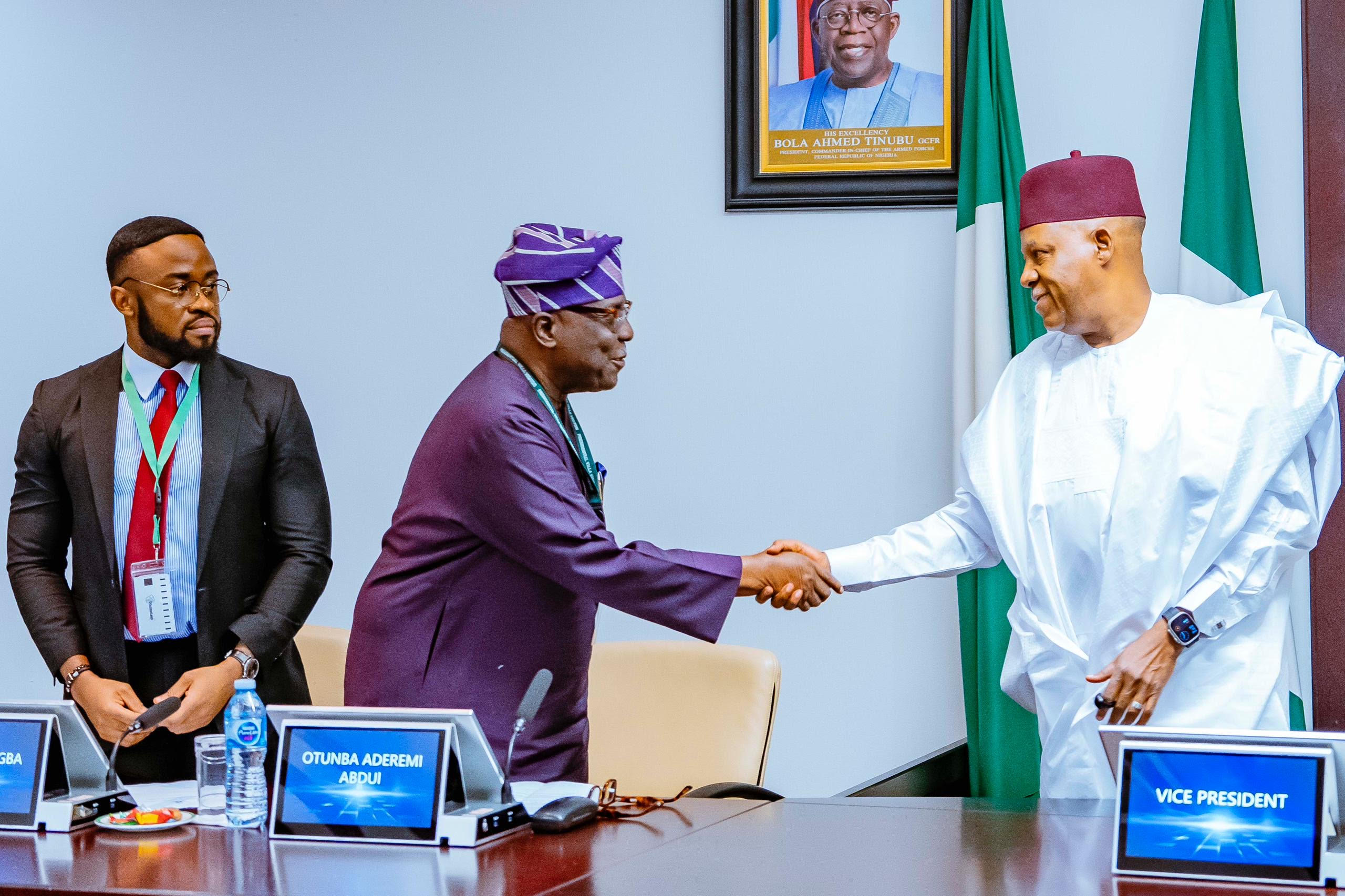
Minister of Justice and Attorney General of the Federation, Chairman of Inland Revenue Service, chairman of Presidential Fiscal Policy and Tax Reforms and the chairman of Revenue Mobilization Allocation and Fiscal Commission represents the Federal government in the interface aimed at addressing the grey areas contained in the bills.
The four bills includes: The Nigerian Tax Bill, the Nigerian Administration bill, the Nigerian Revenue Service Establishment bill and the Joint Revenue Establishment bill.
The first bill seeks to eliminate multiple taxation ,simplify tax obligations for businesses and individuals ; the summary of the second bill is that it seeks to harmonize tax administrative processes across the three tiers of Government , while the third and fourth bills seek to rename the Federal Inland Revenue Service by expanding its scope just as the fourth seeks to change the existing Joint Tax Board to be called ,Revenue Board so as to accommodate all states as well as create the office of Tax Ombudsman under the Joint Revenue Board to protect taxpayer’s interests and facilitate dispute resolutions .
While the four bills have received accolades from far and near , giving there innovative status that clearly aligns with global best practices, the derivation imbedded in the Value Added Tax has continued to raise dust in some parts of the country.
Some leaders and some Northern Governors have loudly asked the Federal Government to withdraw the bills for further consultations.
They have argued that the principle of derivation contained in the consumption tax know as Value Added Tax will be to the disadvantage of there states .
This is equally the position of the Northern lawmakers in the National Assembly, who have concluded plans for a showdown if the bills are not withdrawn.
There arguments seem not different from those of some of there Governors and leaders talking about the timing, lack of proper consultations with stakeholders, and the structure and content of the bills, especially the Value Added Tax.
But while some Northern Governors attempt to speak for there states , the former Senate Chief Whip, Senator Ali Ndume says it is a policy against Nigeria and not just a northern concern .
“It’s not against the Northern interest, but against Nigeria’s federal system.
There is an illegal commitment with the World Bank”.
Former Attorney General of Benue State , Honourable Alex Ter Adum equally dismissed the northern narrative ,he insisted that the VAT aspect of the bills will impoverish Nigerians in general.
Dr Adum told DailyTimes that ,”I don’t really want this argument reduced to the Northern and southern divisions. The Tax reform proposals are completely in disagreement with the current situation in Nigeria . The people in the North are opposed to the distribution formula because VAT is a consumption tax and if you look at the extant distribution structure ,it gives about 50 percent to equality of states which is a federal principle .
“When they say derivation, it connotes a different meaning from the consumption tax practice because derivation means the revenue is going to where it is originated and to that extent it means it is the producers that are going to get revenue from the principle of derivations. You are talking about Increment from 7 percent to 10 percent and to 15 percent with a minimum wage of N70,000 . With VAT at 15 percent it means that N70,000 is purely consumption money. So it’s not just about North “.
But for lawmakers like Honourable Babajimi Benson, representing Ikorodu Federal Constituency in Lagos State, the claims that the tax bills were aimed at stoking regional division were neither here nor there .
According to him the reforms are a progressive step towards economic growth, stressing that Nigeria needs to update her tax to engender efficiency.
“This reform is about creating a system where every state thrives based on its economic activities”.
Similarly , the Presidential Spokesperson on Policy Communications, Honourable Daniel Bwala had equally explained that the Tax Reform Bills were designed to deepen and strengthen the Tax policy and bring it to international best practices .
Dr Bwala had argued that , contrary to wrong perception , the tax reform bills will enhance accountability , provide relief for the low income earners and consolidate tax collections for development and betterment of Nigeria . His strong stand was that the bills were not designed to the disadvantage of any part of Nigeria.
Suffice to say that the intentions of the tax reforms might not have been fully understood or understood but appears to change the existing statusquo where some state Governors pay less attention internal generated Revenues through deliberate industrialization and wealth creations.
The argument about VAT , especially derivation appears akin to the fate of the aborted Third Term in 2007 when the baby was thrown away with the bath water .
Some of the clauses that died with the tenure elongation clause in 2007 would have addressed substantially today’s challenges.
The backwardness of some of the northern states in terms of revenue generation can be traced to lack of vision . The courage to stand to compete has taken back seats in most Northern States hence the fear of derivation.
The refusal of the northern states to revive moribund industries in Kaduna, Kano as well as establishment of new ones to be able to compete is the region’s greatest undoing.
And sadly , rather than think inwards about how to revive the textiles in the North West, the Benue Breweries ,Benue Burnt Bricks, Taraku Mills , the Yankari Reserve in Bauchi ; the moribund textiles in Jos ,Mambilla Plateau in Taraba etc ,which will create revenues for the states, the Governors are yet to come to terms with reality that they need to put on there thinking caps, revive the region and make it competitive.
READ ALSO: House decries N8.7bn budgetary allocation to
The fireworks will soon begin as the northern region appears bent on having its way , but the National Assembly has a duty to think and act in the overall interest of Nigeria by making the decisions that will make all states of the federation to compete.
The proposed tax increment on VAT requires a second thought giving the state of the economy.
Taxation hasn’t been responsible for any economic boom anywhere in the world , but deliberate attempts to create wealth through the enabling environment does.
To suggest that federal government takes VAT of 15 percent on each bottle of water consumed by any Nigeria is certainly a killer punch but making regions and states viable remains the way to go.

Related to this topic: