
KWARA 2027: Zoning, consensus and quality leadership — Why Sadiq Umar checks all the boxes

By Sola Shittu
As Kwara State gradually approaches the 2027 general elections and the constitutional conclusion of Governor AbdulRahman AbdulRazaq’s second tenure, political engagements across the state have moved beyond routine speculation into a phase of serious strategic thinking.
The conversation is no longer centred on if political power should rotate, but how that rotation should be managed and who possesses the temperament, competence, and political capital to lead Kwara State into its next phase of development under the All Progressives Congress (APC).
This emerging reality has placed renewed focus on Kwara North Senatorial District, whose long-standing demand to produce the next governor is not merely an emotional appeal but a deeply rooted argument based on justice, equity, political balance, and long-term stability of the state.
Kwara North and the Weight of Historical Exclusion
A review of Kwara State’s political history clearly illustrates the extent of Kwara North’s marginalisation in executive leadership.
The zone’s only touch with the governorship seat can be best described as WhatsApp’s “View once” feature in which messages disappear from the chat after the recipient opens them just one time as Kwara North’s taste of the Governorship seat occurred only during the short-lived civilian administration of Governor Mohammed Sha’aba Lafiagi, which was abruptly terminated by the military coup of November 17, 1993. His administration lasted barely one year and one month under the Social Democratic Party (SDP).
Since Nigeria’s return to democratic governance in 1999, Kwara North despite its population strength, geographical spread, and consistent electoral contributions has remained absent from the state’s highest executive office.
This exclusion has persisted not because the zone lacks qualified and experienced leaders, but because of recurring structural disadvantages and internal divisions whenever the opportunity to negotiate power arises.
This historical imbalance has continued to generate legitimate feelings of political alienation, making the 2027 electoral cycle a defining moment not just for Kwara North, but for the future cohesion of Kwara State itself.
Zoning as a Moral Argument, Not a Blank Cheque
While zoning remains a compelling moral and political argument, it must be clearly stated that zoning alone cannot guarantee good governance.
Power rotation without competence risks replacing one form of dissatisfaction with another. The governorship of Kwara State requires administrative depth, political maturity, economic understanding, and the ability to unify diverse interests.
Therefore, the real test before Kwara North is not simply the insistence on producing a governor, but the ability to present a candidate whose credentials, public record, and acceptability inspire confidence beyond regional loyalty.
The Strategic Shift Towards Consensus
Kwara North has clearly shown uncommon unity among its aspirants ahead of the APC primaries, closing ranks to prevent parallel ambitions and safeguard what is arguably its strongest opportunity in decades.
Encouragingly, the political mood within Kwara North appears to be evolving. Stakeholders are increasingly recognising that emotional rhetoric must give way to strategic consensus-building.
Consultations involving traditional rulers, party elders, youth leaders, women groups, technocrats, and opinion shapers have intensified, all aimed at identifying a consensus candidate with state-wide appeal.
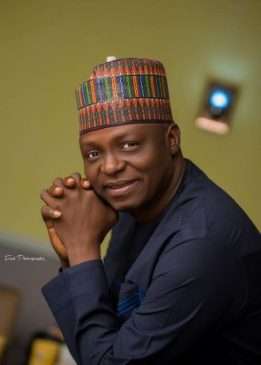
Through this gradual and organic process, Senator Sadiq Suleiman Umar (3SU) has increasingly emerged as a unifying figure not by force or imposition, but by the natural alignment of interests across political, social, and generational lines.
Notably, his acceptability has extended beyond Kwara North, resonating within Kwara Central and Kwara South, where many stakeholders perceive him as a bridge-builder rather than a sectional actor.
Origins, Identity and Cultural Legitimacy
Born on 8 June 1970, traditionally Senator Sadiq hails from a Royal Family being a prince from Kaiama in the historic Borgu Kingdom. He holds the revered traditional title of Dan Amar, meaning “the beloved prince”, of Kaiama and Lafiagi Emirates a reflection of both cultural legitimacy and enduring community trust.
This deep cultural grounding complements his modern political outlook, enabling him to navigate both traditional institutions and contemporary governance structures with ease.
Academic Excellence and Global Professional Exposure
Senator Umar’s academic background reflects early excellence and discipline. He graduated top of his class with distinction from Borgu Secondary School, New Bussa, before obtaining a Bachelor of Pharmacy degree from Ahmadu Bello University (ABU), Zaria.
He further earned a Postgraduate Diploma in Public Administration and a Master’s degree in Disaster Risk Management and Development Studies, also from ABU.
In recognition of his professional contributions, he is a Fellow of several reputable bodies, including: Fellow, Academy of Pharmacy. Fellow, African Centre for Supply Chain. Fellow, Society of Professional Disaster Risk Managers. Fellow, Association of Nigerian Public Administrators
His professional career spans public health, humanitarian response, and international development. He managed large-scale supply chain and health programmes funded by USAID and DFID, and rose to the position of Technical Director, West Africa at Axios International, overseeing complex, multi-country projects.
This experience endowed him with practical expertise in resource management, transparency, institutional reform, and performance-based governance skills indispensable to modern executive leadership.
Electoral Credibility and Grassroots Dominance
Since joining elective politics, Senator Umar has maintained a perfect electoral record. Elected to the Senate in 2019 and re-elected in 2023, he achieved decisive victories to about 70 percent of total votes cast in both elections.
Such consistency is not accidental. It reflects sustained grassroots engagement, strategic political organisation, and trust built over time. In the context of party primaries and general elections, this electoral strength represents a critical advantage for both Kwara North and the APC.
Legislative Authority and Institutional Confidence
Within the National Assembly, Senator Umar’s influence has steadily expanded. His appointments speak volumes about the confidence reposed in him: Chairman, Senate Committee on Rules and Business (9th Senate); Vice Chairman, Primary Health Care and Communicable Diseases; Chairman, Senate Committee on Trade and Investment (10th Senate) and Re-appointed Chairman, Senate Committee on Rules and Business in the 10th Senate.
He also serves on several strategic committees, including Appropriation, Finance, Power, ICT, National Planning, Petroleum (Downstream), and Local & Foreign Debt.
Development Record and Social Impact
Senator Umar’s representation is defined by tangible development outcomes. Across the five LGAs of Kwara North, he has executed over 350 constituency projects, covering:
Construction and rehabilitation of schools and classrooms; Rural roads and bridges; Rural electrification schemes; Hospitals and primary healthcare facilities; Skill acquisition and vocational centres; Distribution of farming inputs and agricultural implements; Scholarships, youth empowerment, and women-focused initiatives; Annual free medical and surgical outreaches, benefiting over 2,000 patients every year.
These interventions reflect a governance philosophy anchored on people-centred development rather than elite symbolism.
Temperament, Party Loyalty and Inclusive Politics
Beyond credentials, Senator Umar is widely respected for his measured temperament, humility, and consensus-driven approach. He has maintained a clean public record and enjoys goodwill across party and regional divides.
He remains one of the most consistent defenders and promoters of Governor AbdulRahman AbdulRazaq’s administration, underscoring his commitment to party unity, continuity, and institutional stability.
Through the 3SU Mentorship and Fellowship Programme, he has deliberately invested in nurturing young leaders and professionals across all senatorial districts, aligning with the APC’s progressive ideology and President Bola Ahmed Tinubu’s Renewed Hope Agenda.
Kwara North’s aspiration is legitimate, but its success depends on discipline and consensus. The APC’s strength lies in unity. Kwara State’s future requires leadership that can win elections and govern competently.
Irrespective of whether the party zones its ticket to Kwara North or adopts any other method to select its flag bearer, Senator Sadiq Suleiman Umar (3SU) still stands out as the most credible and strategic option when measured against the standards of experience, competence, acceptability, loyalty, and electability.
The opportunity is rare. The stakes are high and the time to act wisely is now! .