

Kidnappings, attacks spread to new areas as armed groups test Nigeria’s security limits — SBM report
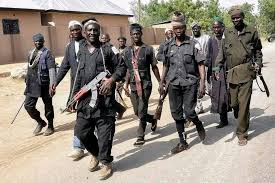
Armed groups intensified attacks across Nigeria between January 9 and 15, 2026, exploiting weak state presence, overstretched security forces, and porous borders, according to a new security assessment by SBM Intelligence.
The report said violent actors are increasingly shifting from opportunistic crime to more coordinated, insurgent-style operations, targeting security formations, highways, and civilian communities. In Adamawa State, fighters linked to the Islamic State West Africa Province (ISWAP) reportedly killed 10 Christians and set a church ablaze, highlighting renewed sectarian violence in the North East.
In the North Central region, Kogi State emerged as a major flashpoint. Armed men attacked the Obajana police division, killing an officer and injuring others in what analysts described as a significant escalation from highway kidnappings to direct assaults on law enforcement. SBM Intelligence noted that the Kabba–Okene corridor remains one of the country’s most dangerous routes, with dozens of civilians abducted in recent months.
North West states continued to record some of the highest levels of insecurity. In Sokoto, Zamfara, Katsina, and Kaduna states, bandit groups carried out coordinated raids on villages, highways, and religious gatherings, killing residents and abducting scores of people. The report highlighted growing concerns around the operational freedom of notorious bandit leader Bello Turji, whose activities have contributed to mass displacement and territorial control in parts of Sokoto State.
The North East also saw intensifying clashes between rival jihadist factions. Fighting between ISWAP and Jama’atu Ahlis Sunna Lidda’awati wal-Jihad (JAS) in the Lake Chad Basin has increasingly centred on control of taxation routes and local economies, with civilians caught in retaliatory violence and forced levies.
In southern Nigeria, insecurity showed worrying spillover effects. In Edo State, protests erupted in Ekpoma following a spike in kidnappings, while a soldier reportedly shot a civilian during a protest that later turned violent. In the South East, the killing of a medical doctor in Enugu after a kidnapping reinforced fears of targeted attacks on professionals, worsening the country’s healthcare brain drain.
SBM Intelligence warned that Nigeria’s challenges mirror broader instability across West Africa, with militant groups expanding operations in Niger, Mali, Burkina Faso, and Cameroon. The report said armed actors are adapting faster than state responses, exploiting weak coordination and reactive security measures.
Without sustained intelligence-led operations, cross-border cooperation, and protection of key transport corridors, the report warned that armed groups will continue to entrench themselves and widen their reach across Nigeria and the region.