Kalu Canvasses Three Pillar Framework For Stronger EU, Africa Partnership
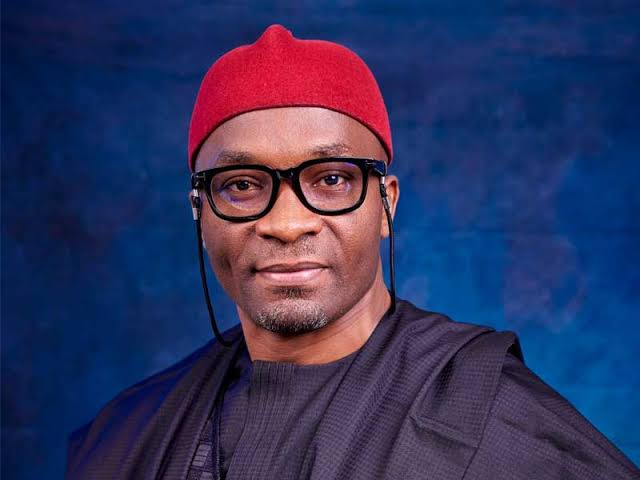
The Deputy Speaker, House of Representatives Hon. Benjamin Kalu has proposed a three pillar framework aimed at repositioning the European Union, Africa relationship for deeper, long term transformation.
Kalu spoke Wednesday while speaking virtually at the Meeting of the Conference of Delegation Chairs (CDC) of the European Parliament in Strasbourg, France with his presentation focusing on how the European Union can strengthen diplomatic engagement with Africa, particularly through parliamentary diplomacy.
He argued that the EU’s engagement with Africa has often been viewed as transactional, driven mainly by short term security interests, migration control and the extraction of critical minerals, rather than sustainable development.
To address this, Kalu proposed that the first pillar of a renewed partnership should be the elevation of the African Union (AU) as the EU’s primary interlocutor on continental issues.
He urged the EU to fully align its policies with the AU’s Agenda 2063 and to go beyond selective consultations by engaging all elected African governments.
The Deputy Speaker also called for stronger support for African led peace and security initiatives, including funding AU mandated peacekeeping missions.
The second pillar, according to the him should be a strategic shift of the EU’s Global Gateway investments towards value addition and industrialization within Africa, stressing the need for the continent to move up the global value chain.
“Africa must move from exporting raw cocoa to producing finished chocolate and from extracting lithium and cobalt to manufacturing batteries on African soil,” Kalu said.
On security, he proposed a third pillar focused on development and governance rather than an overreliance on military capacity building.
He noted that long term stability can only be achieved through sustained investments in youth employment, social services and climate change adaptation.
Kalu cited initiatives such as the EU Support to Democratic Governance in Nigeria as critical to strengthening legislative and judicial institutions, enhancing democratic resilience and supporting electoral reforms ahead of the 2027 general elections.
He also warned that failure to deliver tangible industrial transformation could push Nigeria and other African countries to seek alternative partnerships with nations offering significant infrastructure investments with fewer perceived conditionalities.
While acknowledging the successful inauguration of the Nigeria, EU Senior Officials Trade and Investment Dialogue in Abuja, Kalu expressed concern over delays in formalising legislative engagement mechanisms between both sides.
Although the second dialogue is scheduled to hold in Brussels in 2026, he lamented that the proposed Joint Parliamentary Committee and the Parliamentary Track upgrade have not been officially formalised, describing the delay as having significant political implications.i