
JED PLC Suspends Operations Following Alleged Military Assault
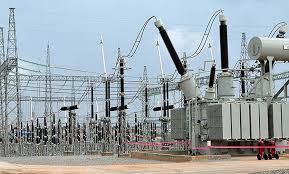
The Jos Electricity Distribution (JED) PLC has announced the temporary closure of its North Bank Injection Substation in Makurdi, Benue State, following a violent assault on its personnel by members of the Nigerian Army.
The incident, which occurred on February 12 and 14, 2026, reportedly involved a senior officer from the Nigerian Army School of Military Engineering (NASME) and several armed soldiers who forcibly entered the facility.
The suspension of operations has plunged several communities in the Makurdi North Bank axis into darkness, highlighting the volatile intersection between critical utility management and military-civilian relations.
According to a statement from JED PLC spokesperson Saratu Dauda, the assault was allegedly triggered by a power outage on the 11kV Daudu Feeder, which serves the military installation.
The company reported that a Distribution System Operator, James Ochepo, was beaten to a stupor and sustained severe head and hand injuries after being attacked by the soldiers.
Mr. Ochepo was later discovered in a pool of blood and rushed to a local hospital, where he is currently recuperating. The electricity distributor has since escalated the matter to the Department of State Services (DSS), the Nigeria Police Force, and the Benue State Government, demanding an investigation into the “barbaric” conduct of the uniformed personnel.
This confrontation underscores a recurring challenge in Nigeria’s power sector: the struggle to maintain service delivery to high-indebtedness military and security institutions.
JED PLC revealed that despite the Nigerian Army School of Military Engineering’s significant outstanding debt to the utility, the company had prioritized maintaining power supply to the facility as a matter of national security interest.
However, the escalating frequency of physical intimidation against field workers has forced the management’s hand. The decision to withdraw staff and shut down the substation is a direct response to the “untenable security risk” posed to employees who are tasked with managing a fragile and often overstretched grid.
The economic and social costs of such disruptions are profound for the affected region. Makurdi’s North Bank is a critical commercial and residential hub; the sudden blackout has disrupted small businesses, healthcare services, and water processing facilities that rely on steady electricity.
Furthermore, the incident mirrors a disturbing trend across the federation where distribution companies (DisCos) face aggression from uniformed personnel over outages or bill disconnections.
In 2025 alone, similar incidents involving the Nigerian Air Force and the Nigerian Army were recorded in Lagos and Badagry, prompting the Minister of Power, Adebayo Adelabu, to label such attacks as “economic sabotage” and a direct threat to the country’s power stability.
From a regulatory perspective, the Nigerian Electricity Regulatory Commission (NERC) has consistently emphasized that the sanctity of power infrastructure must be preserved.
The ongoing “Solarisation of the Villa” and other independent power projects for government institutions suggest a strategic shift toward energy independence for the state, yet the national grid remains the primary lifeline for most public institutions.
When security agencies bypass established dispute resolution mechanisms in favor of force, it undermines the credibility of the Electricity Act 2023, which was designed to foster a law-abiding and investment-friendly energy market.
The Nigerian Army high command has historically maintained that it does not condone the molestation of civilians and typically initiates Boards of Inquiry into such allegations.
However, for JED PLC and other DisCos, the immediate priority remains the safety of their technical staff and the recovery of service.
The company has stated that power will only be restored to the North Bank axis once there is a formal guarantee of safety for its workers and a commitment from the military authorities to prevent a recurrence.
As the legal and security agencies investigate, the incident serves as a stark reminder of the fragile state of Nigeria’s essential services and the urgent need for professional conduct within the armed forces to ensure that national assets are protected rather than paralyzed.



Related to this topic:

83-year-old Arraigned Over Alleged Land Grabbing