
Instability, prolonged transitions, coup, bane of ECOWAS democracy – Ojukwu
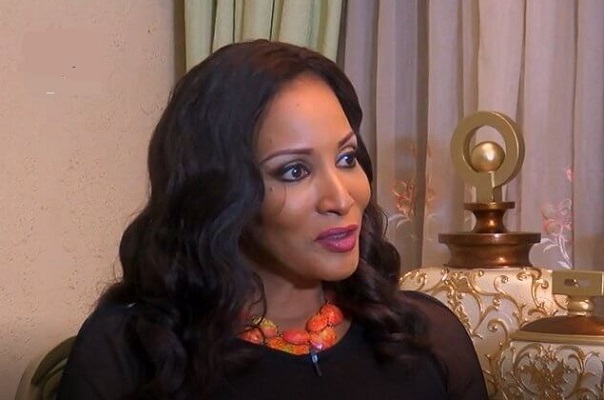
The Minister of State for Foreign Affairs, Ambassador Bianca Odumegwu-Ojukwu, has warned that instability, prolonged transitions and coups remain the major threats to democracy in West Africa.
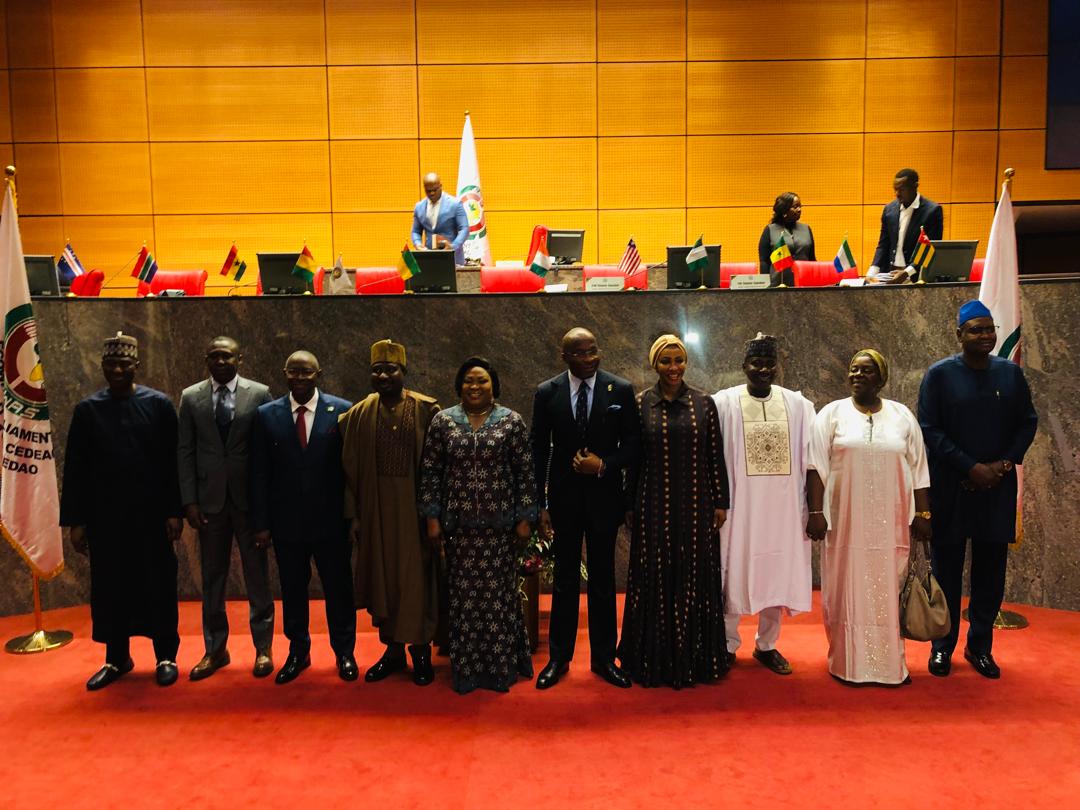
Odumegwu-Ojukwu, gave the warning on Wednesday as she opened the 95th Ordinary Session of the ECOWAS Council of Ministers in Abuja.
She said the region must confront these issues with urgency, noting that they continue to weaken public confidence and erode the gains ECOWAS has built over the past fifty years.
Ojukwu told regional leaders that political instability, governance deficits and unconstitutional changes of government “challenge not only the democratic values to which we have all subscribed, but also threaten hard-won development gains.”
She stressed that prolonged transitions and governance uncertainty in some member states pose deeper risks to regional cohesion.
In her welcome remarks, she said, “It is my great honour to warmly welcome you all to the pleasant city of Abuja for the 95th Ordinary Session of the ECOWAS Council of Ministers.”
She conveyed Nigeria’s appreciation “for your presence, your continued commitment to regional cooperation, as well as your dedication to the ECOWAS vision of peace, security, and shared prosperity for the region.”
Ojukwu recalled that 2025 marks a major milestone as ECOWAS celebrates its Golden Jubilee, noting that the commemorations offered an opportunity to reflect on decades of progress.
She highlighted achievements such as free movement, regional peacekeeping leadership, expanding integration frameworks and improved cooperation in health, infrastructure and security.
According to her, these accomplishments stand as proof of the bold vision of the founders who understood that “West Africa’s greatest strength is forged through unity, solidarity, and collective progress.”
She added that the region must now aim higher to build a future defined by peace, prosperity and broader opportunities.
But she cautioned that these gains will be at risk if instability continues to grow unchecked. She said recent political crises, deliberate prolonged transitions and exclusionary governance models undermine stability, stressing that ECOWAS must remain firm in defending constitutional order and supporting credible transitions.
“We must therefore remain steadfast in defending constitutional order, promoting inclusive political dialogue, and supporting credible transitions that reinforce stability,” she told the ministers.
She added that unity and collective resolve will be key to navigating current and emerging challenges.
Ojukwu also turned attention to economic integration, saying it remains central to the ECOWAS vision. She said the region must deepen trade, strengthen value chains and drive investment for the benefit of over 400 million citizens, especially the youth who make up about 65 percent of the population.
She reminded the ministers that the issues before them during the session cut across governance, economic integration, security, humanitarian affairs and agriculture. Their decisions, she said, will help shape the recommendations to be presented to the Authority of Heads of State and Government.
Speaking further, she urged member states to approach the session with renewed commitment, saying the moment offers a chance “to reaffirm our shared values, to consolidate the gains of the last fifty years, and to set the tone for the next half-century of regional integration.”
She called for clarity of purpose as the region works toward a more peaceful and prosperous future.
Also speaking, the President of the ECOWAS Commission, Dr. Omar Touray, called on member states to strengthen regional cooperation and promote economic integration.
In his address, he emphasized the role of strategic investments and collaboration in building a self-sufficient West Africa.
Touray welcomed delegates to the ninety-fifth ordinary session of the ECOWAS Council of Ministers. He extended gratitude to Nigeria for hosting the session, noting the country’s support and hospitality.
“Let me also appreciate the Chair of Council for his facilitation of the work of Council and for providing all the necessary support towards the organisation of this Meeting.”
He told ministers that the session would consider several important memoranda requiring their decisions.
“At this ordinary Session of Council, you will be examining various memoranda requiring your decision and noting for information,” he said, adding that items would include the annual work programme and budget of ECOWAS institutions, financial reports, and audit findings from the Auditor General and Audit Committee.
Touray highlighted key integration initiatives, saying, “With regard to our integration programme, we will be presenting memoranda on regional resilience, monetary integration, resource mobilization for the activation of the regional force for countering terrorism, as well as, the resolution of the Board of the ECOWAS Bank for Investment and Development, among others.”
He also drew attention to information items to be noted by ministers, including the ECOWAS Trade Liberalisation Scheme and progress on the single currency programme.
“Council will also be briefed on the financial situation of the West African Power Pool, our flagship regional electricity market platform that is currently facing challenges on account of debts owed by national electricity companies. We count on member states to help with the recovery of the debts owed to the Power Pool,” he said.
Touray highlighted the operationalisation of the ECOWAS Business Council, announcing, “We have identified Alhaji Aliko Dangote to be the pioneer Chairperson of the Council in view of his vast experience doing business within our subregion and across Africa.”
He said the Council would serve as a platform for dialogue and collaboration between governments, private sector actors, and ECOWAS institutions.
Furthermore, he stressed the growing momentum for intra-regional investment, saying, “I am happy to note that already, the idea of promoting intra-regional investment is gaining traction in our Member States.”
He cited initiatives such as Forum Senegal Invest, the West African Economic Summit in Nigeria, and the Invest in District Savanes forum in Cote d’Ivoire, noting that Sierra Leone has proposed a West Africa Economic Investment Summit.
Touray emphasised the importance of mobilising local capital, stating, “This appetite for intra-regional investment underscores the need to mobilise capital within our region in order to build our Community rather than wait for precarious foreign investments.”


Related to this topic:
Ojukwu Pushes Convention on Older Persons’ Rights in Geneva