
Imo and Lagos Flagged for 2024 Budget Irregularities
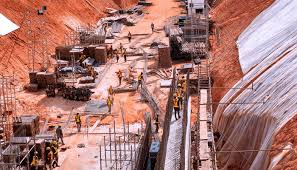
A new report by BudgIT’s civic accountability platform, Tracka, has identified Imo, Lagos, Kwara, and Abia as the leading states for “fraudulently delivered” projects within the Federal Government’s 2024 budget. The findings, released on February 4, 2026, indicate that these four states, along with Ogun, account for 57.1 percent of all projects categorized as fraudulent nationwide. These irregularities represent approximately N8.61 billion out of a total of N15.07 billion in disbursed funds linked to projects that were either diverted, substandard, or claimed as completed despite having been implemented in previous budget cycles.
The Tracka report, which concluded its year-long monitoring cycle in October 2025, reveals that Imo State recorded the highest rate of fraudulent project delivery at 17.43 percent. For the 2024 fiscal year, Imo was allocated 570 projects including Zonal Intervention Projects (ZIP) and those under the Economic Recovery and Growth Plan (ERGP)—valued at N77.02 billion. While the state’s federal allocation rose by 70.95 percent, only 42 percent of the tracked projects reached completion, with 19 specifically flagged as fraudulently executed. These findings coincide with a period of revenue growth for the state, which saw its internally generated revenue (IGR) rise 20 percent to N25.3 billion in 2024.
Lagos State followed with a 12.73 percent fraudulent delivery rate, a development that complicates its position as Nigeria’s primary fiscal hub. Despite dominating the national landscape with an IGR exceeding N815.9 billion, the state struggled with project accountability in the federal capital expenditure component. Other states noted for high irregularity rates include Kwara at 11.76 percent and Abia at 10.67 percent. In Abia, the N96.8 billion allocated for 514 projects represented a 75.34 percent increase from 2023, yet Tracka identified 15 abandoned and eight fraudulently executed projects among the subset it monitored.
The economic implications of these irregularities are significant for Nigeria’s broader fiscal transparency goals. The 2024 budget featured a N10.8 trillion capital expenditure component, which Minister of Finance Wale Edun recently claimed had reached an 80 percent implementation rate. However, Tracka’s field investigations found that only 52.1 percent of the projects were actually completed, with approximately 24 percent either abandoned, uncommenced, or fraudulently handled. This “implementation gap” suggests that official disbursement figures do not consistently translate into tangible public goods, particularly for grassroots infrastructure like health centers and rural boreholes.
The report characterizes “fraudulently delivered” projects as those where funds are diverted or where contractors receive payments for work that was already finished in prior years. This systemic failure often stems from weak monitoring and a lack of consequences for non-delivery. Historically, such fiscal leakages have contributed to Nigeria’s high debt-service-to-revenue ratio, as the government continues to borrow for projects that fail to stimulate regional economic growth or improve public welfare.
Furthermore, the concentration of these irregularities in states with high IGR and federal allocations, like Lagos and Ogun, underscores that accountability failures are often independent of financial resource availability. Ogun State, for instance, received N275.7 billion for 932 projects in 2024 but recorded both abandoned and fraudulently delivered projects despite its strong revenue mobilization. BudgIT argues that transparency in budget preparation is insufficient without direct citizen involvement in monitoring the “last mile” of project execution to ensure that approved funds reach their intended communities.
As the Federal Government moves toward the 2026 fiscal cycle, these findings have prompted calls for anti-graft agencies, such as the Independent Corrupt Practices and Other Related Offences Commission (ICPC), to probe the identified anomalies. The ICPC has already launched a nationwide tracking exercise for 760 federal road projects valued at N36 trillion to deter fraudulent procurement and enforce contractor accountability. The outcome of these tracking initiatives will be critical for Nigeria as it seeks to restore public trust and optimize its limited fiscal space to support its $1 trillion GDP target.