GenCos Repudiate NLC Allegations of Institutionalized Extortion and Deception
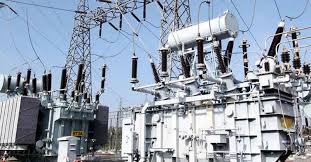
The Association of Power Generation Companies (APGC) has formally condemned allegations of “institutionalized extortion” and the existence of a “phantom subsidy” recently leveled against the sector by the President of the Nigeria Labour Congress (NLC), Joe Ajaero.
In a comprehensive rebuttal issued on February 18, 2026, the APGC characterized the NLC’s claims as a strategic misrepresentation of facts designed to mislead the public.
The association asserted that such inflammatory rhetoric undermines the critical financial interventions required to stabilize the Nigerian Electricity Supply Industry (NESI) and ignores the regulated nature of the power value chain.
The dispute follows public statements by the NLC leadership suggesting that proposed government liquidity support for the power sector was a clandestine arrangement to “settle the boys” ahead of upcoming political cycles.
Dr. Joy Ogaji, the Chief Executive Officer of the APGC, dismissed these claims as baseless, noting that the power sector is a high-stakes professional environment that does not operate on patronage.
She emphasized that the GenCos (Generation Companies) continue to operate under severe constraints, including a mounting debt profile that now exceeds ₦6 trillion in unpaid invoices for electricity already generated and consumed by the national grid.
The economic implications of this friction between organized labor and power producers are significant for Nigeria’s fiscal stability. The power sector operates on a “multi-year tariff order” (MYTO) framework, where the cost of generation must be recovered to ensure the sustainability of the grid.
When major stakeholders like the NLC label these recovery costs as “extortion,” it complicates the federal government’s ability to manage the transition toward a cost-reflective tariff. Currently, the liquidity gap in the sector forces the government to provide massive fiscal interventions; if these interventions are successfully characterized as “phantom subsidies” or “robbery,” the resulting political pressure could stall the vital flow of capital needed to maintain aging turbines and secure gas supplies.
Central to the APGC’s defense is the assertion that the GenCos are the most financially exposed entities in the electricity value chain. Under the current market rules, GenCos are entitled to approximately 60% of the market receivables from the DisCos (Distribution Companies).
However, persistent collection inefficiencies mean that GenCos rarely receive their full invoiced energy bills. Dr. Ogaji noted that rather than being “fraudulent,” the companies are effectively subsidizing the national economy by continuing to generate power despite the massive arrears.
The association has challenged the NLC and other oversight bodies to conduct a forensic audit of their books, expressing confidence that any independent examination would validate their claims of systemic underpayment rather than illegal gain.
The conflict also highlights the technical complexities of the Nigerian Energy Support Programme and the various “intervention funds” provided by the Central Bank of Nigeria and the Ministry of Finance.
These funds are often misconstrued as gifts to private entities, whereas they are designed as bridge financing to prevent a total collapse of the grid due to the insolvency of the DisCos.
For the Nigerian economy, the reliability of the grid is inextricably linked to industrial productivity; a failure to resolve the liquidity crisis would likely lead to increased reliance on self-generation, which the Manufacturers Association of Nigeria (MAN) has already flagged as a primary driver of rising production costs and inflation.
Beyond the financial data, the APGC’s statement touches on the competency of the NLC to intervene in highly technical regulatory matters.
The association argued that the labor union is straying outside its traditional mandate by commenting on the intricacies of power generation economics without the requisite expertise.
This suggests a deepening divide in the national discourse over utility pricing, where populist narratives often clash with the capital-intensive realities of infrastructure management.
The APGC maintains that the only way to “keep the lights on” is to ensure that the contracts governing the sector are respected and that the debt owed to generators is addressed through transparent fiscal policy rather than political oratory.
As Nigeria moves toward further energy market decentralization under the Electricity Act 2023, the stability of the primary generation companies remains a cornerstone of national security.
The current ₦6 trillion debt overhang serves as a major deterrent to new Foreign Direct Investment (FDI) in the sector. Investors are unlikely to commit the billions of dollars needed for new thermal or hydroelectric plants if the existing market participants are subjected to public “victimization” and “ridicule” for seeking payment for services rendered.
The APGC has therefore called for a cessation of “smear campaigns” to protect the image of the sector and ensure that Nigeria can attract the technical partnerships necessary for long-term energy sufficiency.
The immediate outlook for the sector remains tied to the government’s ability to balance the NLC’s concerns over affordability with the GenCos’ requirements for solvency.
While the NLC’s skepticism reflects the frustrations of many Nigerians regarding the erratic power supply, the APGC’s response serves as a reminder that the technical and financial foundations of the grid cannot be ignored.
The resolution of this verbal impasse will likely require a transparent, data-driven dialogue that moves beyond accusations of “robbery” toward a realistic assessment of the cost of power in a modernizing economy.


Related to this topic:

BBNaija’s Neo Threatens Legal Action after Rape Allegations