
FG to Inject N800bn into Agro-Processing, Renewable Energy Under New Industrial Policy
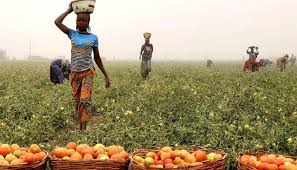
The Federal Government has unveiled plans to allocate N800 billion in credit to bolster the nation’s agro-processing and renewable energy sectors as part of its strategic push to industrialize the economy.
The initiative is outlined in the ‘National Industrial Policy 2025’ report, which was launched by the Ministry of Industry, Trade and Investment on Tuesday.
According to the policy document, the government intends to set aside between 3 percent and 5 percent of the country’s Gross Domestic Product (GDP) annually for industrial development financing.
A breakdown of the N800 billion allocation reveals that N500 billion will be directed toward agro-processing to enhance food security and value addition, while N300 billion is earmarked for the renewable energy sector to address the nation’s critical power infrastructure needs.
To ensure sustainable funding for industries, the government stated it is reinforcing and recapitalizing domestic Development Finance Institutions (DFIs).
This will be done in collaboration with continental and international partners to provide long-term funding at single-digit interest rates.
Key measures include the recapitalization of the Bank of Industry (BOI) to N3 trillion by 2026 and expanding the scope of sector-specific intervention funds from N1 trillion to N3 trillion, as detailed in the stabilization plan.
The government also introduced a 5-year implementation roadmap spanning 2025 to 2030. The plan focuses on achieving policy stability, rolling out Public-Private Partnership (PPP) frameworks, upgrading infrastructure, and expanding finance for Micro, Small, and Medium Enterprises (MSMEs).
“Leverage Public-Private Partnerships (PPPs) to fund industrial projects and combine Government support with private sector efficiency. CBN to develop mechanisms for commercial banks to improve lending to identified priority industries,” the report stated.
Beyond financing, the policy aims to integrate Nigerian firms into global value chains. The government has set a target to onboard 1,000 new exporters to the African Continental Free Trade Area (AfCFTA) markets by 2027.
This involves negotiating bilateral and multilateral trade agreements to enhance the competitiveness of Nigerian products in distribution and marketing.
The ministry emphasized that it will also foster an enabling environment for innovative financial instruments, including equity financing, venture capital, crowdfunding, and factoring, to further support industrialists and entrepreneurs.


Related to this topic:


Sponsors of Kalu’s Certificate Allegations Under Fire