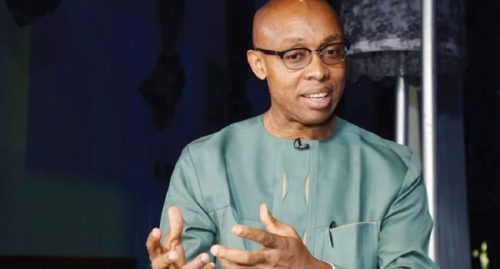

FG tackling housing deficit through urban renewal, slum upgrades — Dangiwa

Ahmed Dangiwa, minister of housing and urban development, says the federal government is addressing Nigeria’s housing deficit through a structured programme of urban renewal and slum-upgrade interventions.
Dangiwa spoke on Friday at the Africa Housing Awards and Industry End-of-Year Dinner organised by the Africa International Housing Show (AIHS).
The event brought together government officials, developers, financiers and housing stakeholders from across the continent to review progress and challenges within Africa’s housing sector.
The minister said housing could no longer be treated as a peripheral issue, stressing that it lies at the intersection of economic growth, social stability, urban resilience and human dignity.

“Across Africa today, about 54 million people live in urban slums, and the continent faces a housing shortfall of at least 50 million units, with a financing gap estimated at over $1.4 trillion,” he said.
Dangiwa warned that Africa’s housing deficit could rise to about 130 million units by 2030 if urgent solutions are not accelerated, noting that platforms such as the Africa International Housing Show are vital for advocacy, accountability and sustained policy attention.
Commending the organisers, he said the awards and end-of-year dinner were not mere ceremonies but the culmination of a year-long engagement aimed at promoting excellence and pushing governments and industry players to deliver measurable outcomes.
Speaking specifically on Nigeria, Dangiwa said President Bola Tinubu’s renewed hope agenda has repositioned housing from isolated projects to a structured national programme focused on scale and systems.
“Nigeria’s housing deficit is conservatively estimated at over 17 million units, but we are responding with scale. In the last two years, we have commenced over 10,000 housing units across 14 states and the FCT. Through our urban renewal and slum upgrade efforts, we have already impacted more than 150 communities with critical infrastructure,” he said.
The minister added that no country could solve its housing challenges alone, calling for a coordinated continental approach anchored on land governance reform, bankable housing finance, strong local building materials value chains, climate-smart construction and disciplined urban planning.
“The African housing agenda must be treated as a continental productivity agenda,” he said, pledging Nigeria’s commitment to partnerships, reforms and cross-border cooperation.
Also speaking at the event, Sankwasa Sankwasa, Namibia’s minister of urban and rural development, said his country was contending with longstanding housing challenges, particularly the widespread presence of informal settlements.
Sankwasa said about 88 percent of Namibia’s urban population lives in informal settlements, making it impossible for the government alone to close the housing gap.
He said Namibia has embarked on aggressive upgrades of sanitation, water and road infrastructure, while introducing policies that allow civil servants to access their pension contributions to build homes.
“Africa’s problems should be solved with African solutions,” Sankwasa said.


Related to this topic:

Tinubu Assures CAN of Change In Approach To Tackling Insecurity

Petrol Smuggling Through Land Borders Drops Sharply – Customs CG