
FG Reviews Shea Export Ban over Industry Concerns
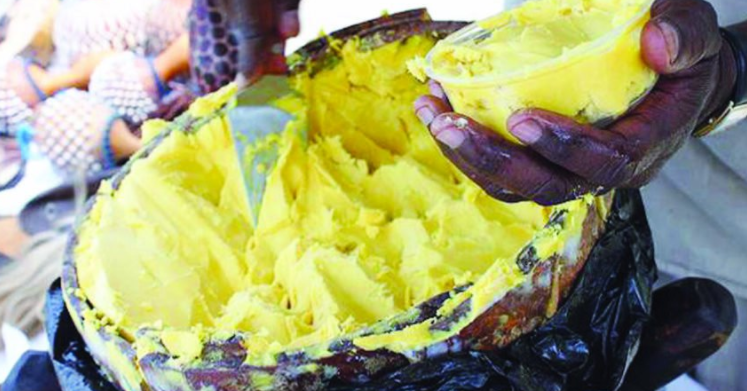
The Federal Government has assured stakeholders in the shea industry that it will review the six-month ban on raw shea nut exports following concerns over its impact on producers, exporters and foreign exchange earnings.
Minister of Industry, Trade and Investment, Dr Jumoke Oduwole, gave the assurance on Thursday in Abuja during a Stakeholders’ Validation Session on the Raw Shea Nut Export Ban in Nigeria.
The government had, on August 26, 2025, announced a temporary suspension of raw shea nut exports to promote local processing, deepen value addition and reduce the export of unprocessed commodities, with the broader ambition of positioning Nigeria as a global hub for refined shea products.
Oduwole said the ministry would present President Bola Tinubu with a factual and balanced briefing after extensive consultations across the shea value chain to determine whether the policy should be extended or deferred.
According to her, the government recognises citizens’ right to earn a livelihood and contribute to national development, assuring stakeholders that all submissions would be thoroughly examined before any final decision is taken.
“The ministry will provide the President with objective and balanced information to guide further action,” she said. “We will engage widely with stakeholders to ensure all perspectives are considered in the ongoing policy deliberations.”
She disclosed that the ministry had received formal submissions from the umbrella association and convened engagement sessions with different industry groups. The submissions were reproduced and circulated at the meeting to promote transparency and ensure a shared understanding among participants.
Providing the backstory, the six-month export ban was approved by President Tinubu in August 2025 to curb informal trade, boost domestic processing capacity and strengthen Nigeria’s position in the global shea market. The policy was projected to help the industry generate about $300 million annually in the short term through increased value addition.
Vice President Kashim Shettima had clarified at the time that the decision was not anti-trade but aimed at securing raw materials for local processors, enabling factories to operate at optimal capacity and expanding rural employment and incomes.
He also noted that although Nigeria accounts for nearly 40 per cent of global shea production, it captures only about 1 per cent of the $6.5 billion global market.
With the six months now concluded, the Federal Government is expected to announce its decision on the future of the policy.
Oduwole said relevant departments within the ministry had worked collaboratively on the review, adding that she personally examined the submissions before wider consultations. She described the range of participants at the validation session as evidence of the ministry’s commitment to inclusive policymaking.
The session brought together large and small-scale processors, exporters, aggregators and rural women active across the shea value chain.
Minister of State for Industry, Sen. John Enoh, said policy decisions must prioritise the availability of raw materials for local processors, stressing that the ministry’s mandate aligns with the President’s broader development agenda of strengthening domestic industrial capacity.
He added that available data shows improvements in processing capacity following earlier interventions, underscoring the importance of policy consistency in sustaining investor confidence and industrial growth.
Industry stakeholders, however, remain divided over the export suspension. An industry expert, who spoke anonymously, cautioned that local refining capacity must first be strengthened to avoid penalising exporters unnecessarily.
Former National President of the Nigerian Association of Chambers of Commerce, Industry, Mines and Agriculture (NACCIMA), Hon. Dele Kelvin Oye, had earlier called on the Federal Government to clarify its long-term policy direction on shea industrialisation.