
Farmers Warn of Widespread Planting Boycott as High Costs and Low Prices Cripple Profits
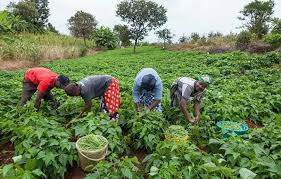
Nigeria’s upcoming planting season faces a serious threat as farmers across the country consider scaling down operations or boycotting the cycle entirely.
Mohammed Magaji, President of the All Farmers Association of Nigeria (AFAN), warned that a combination of surging input costs and collapsing produce prices has made farming a loss-making venture, leaving many agriculturalists with no choice but to stop production.
Magaji highlighted a stark disparity in the market: while a bag of NPK fertilizer currently costs approximately N80,000, farmers are forced to sell their harvest at prices as low as N23,000 to N30,000 per bag.
This imbalance has forced even large-scale farmers to reconsider; Magaji himself noted that he may reduce his cultivation from 70 hectares to just 10 or 20 this season.
He emphasized that unless the government intervenes with subsidized inputs, improved mechanization, and timely access to tractors, the economy could suffer from a significant drop in domestic food production.
Echoing these concerns, Yunusa Enemali, National President of the National Apex of Cashew Farmers, Processors and Marketing Cooperative Limited, dismissed official claims of falling inflation as “effective English” that does not reflect rural reality.
He argued that despite National Bureau of Statistics (NBS) reports showing headline inflation dipping to 15.1% and food inflation slowing to 8.89% in January 2026, the “common man” in the village sees no relief.
Enemali pointed to rising transportation costs, a lack of storage facilities, and zero social amenities in rural areas as factors that force farmers into “distress sales,” where they sell at a loss just to avoid total spoilage.
The Centre for the Promotion of Private Enterprise (CPPE) further cautioned that while consumers may celebrate lower food prices in the short term, the current trend is dangerous for long-term food security.
The group noted that a surge in imports of staples like rice and maize has dislocated the local investment ecosystem.
Without a “Farm Price Stabilisation and Farmer Income Protection Framework,” the CPPE warns that investor confidence will vanish, leading to a renewed cycle of scarcity once current inventories are depleted.
While the NBS attributes the cooling of food inflation to price drops in yams, eggs, and grains, the agricultural community remains firm: if the person producing the food cannot afford to stay in business, the nation’s food security rests on a fragile foundation.