
Ex-NUC scribe charges FG, states, universities on quantum thinking
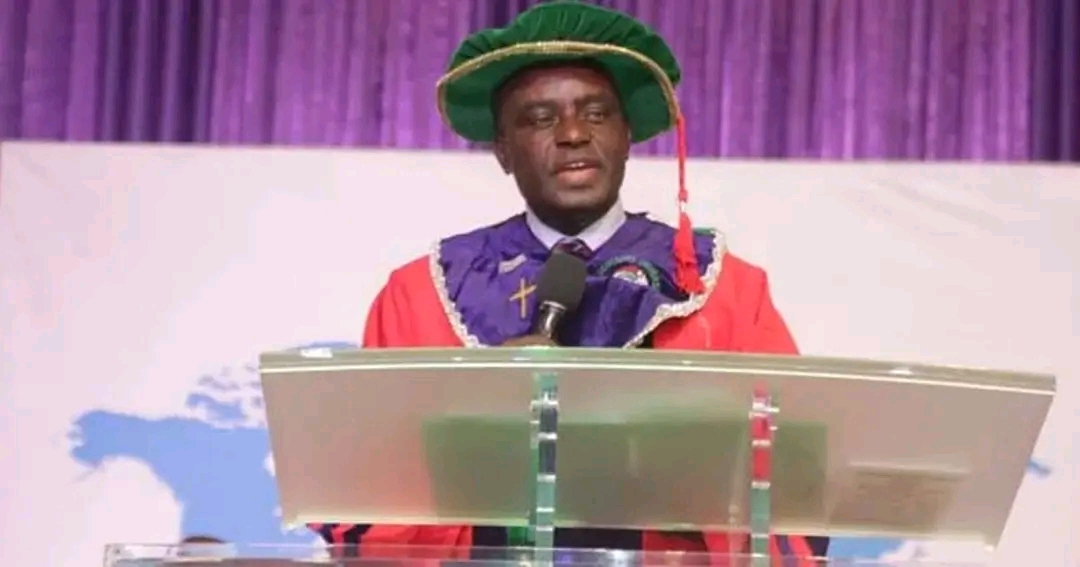
Former Executive Secretary, National Universities Commission (NUC,) Prof Peter Okebukola has advised Nigeria’s varsities to establish a Quantum Futures Institute (QFI) that would serve as an interdisciplinary hub for exploring emerging technologies and their applications.
Okebukola, as the Convocation lecturer at the Kwara State University (KWASU) Malete, charged universities’ management to keep their minds open to many possibilities; think creatively before choosing; see connections between different ideas; and be flexible to changes and ideas.
Speaking on the theme: “Universities in the Age of Quantum Thinking: Redefining Quality, Relevance and Innovation through Emerging Technologies,” Okebukola said: “Quantum thinking is not merely metaphorical flourish. It is a necessary cognitive framework for institutions operating in an era where nearly one billion jobs worldwide will undergo significant changes due to technology within the next decade.
The former NUC scribe also advised the NUC to develop an accreditation framework specifically for emerging technology programmes that recognises the rapid evolution of fields and allows for more flexibility in the 30 per cent institutional additional to the CCMAS.
He sought the joint collaboration of NUC with the TETFund to establish a National Quantum and AI Education Fund that provides competitive grants to universities demonstrating commitment to these areas, focusing on preparing a workforce capable of using the latest quantum computing technologies for scientific discovery.
For federal and state governments, he recommended a dramatic increase in research and development funding for universities, regretting that: “Currently, Nigeria invests approximately 0.2 per cent of Gross Domestic Products (GDP) in research, far below the African average of 0.5 per cent and well below the global leaders who invest 3 to 4 per cent.
“Government should establish tax incentives for private sector organisations that fund university research or establish research chairs in emerging technology areas.
“Third, building on the NUC’s 2025 partnership with France’s AFD on a 38 million euro ICT transformation project for Nigerian universities, government should actively seek additional international partnerships that bring both funding and expertise to our institutions.
“Government should mandate that a percentage of all technology procurement contracts include capacity-building components that involve Nigerian universities, ensuring that we build local expertise rather than remaining perpetually dependent on foreign knowledge,” he said.
For the private sector and development partners, he recommend the strengthening of industry-university collaboration hubs in every geopolitical zone, where companies can pose real-world problems and universities can propose research-based solutions, with successful projects leading to commercialisation opportunities.
He suggested to them to prioritise funding for digital infrastructure in universities, recognising that participation in the quantum age requires reliable internet connectivity, adequate computing power.
“Private sector organisations should strengthen the adoption of Nigerian universities as innovation partners, providing internship opportunities, hosting staff on sabbatical for industry experience, and contributing to curriculum development to ensure graduates possess industry-relevant skills,” he urged.
“For students and staff, I recommend first a mindset shift from passive knowledge consumption to active knowledge creation.
“In the quantum age, the ability to generate new insights matters more than the ability to memorise existing ones. Second, embrace discomfort with uncertainty and ambiguity, recognising that the most important problems we face do not have predetermined answers.
“Cultivate the willingness to explore multiple knowledge domains simultaneously and to make unexpected connections across fields,” he listed.
To the nation’s universities in general and KWASU in particular, he posited: “today’s challenges demand quantum approaches. Climate change, artificial intelligence ethics, pandemic preparedness, and sustainable development are not problems confined to single disciplines or predictable in their manifestations.
“Consider how quantum computing teaches us to think in terms of quantum states, parallel processing, and probabilistic outcomes rather than deterministic solutions. This represents more than technological advancement; it embodies a fundamental shift in how we approach problem-solving itself.
“Universities in the quantum age must cultivate this cognitive agility in their students and staff, moving beyond the tyranny of single-answer, single-pathway thinking to embrace the productive uncertainty that characterises our complex world,” he urged.
He urged the nation’s to harness staff from engineering, sciences, humanities, and social sciences to address complex challenges through quantum thinking approaches.
“The Institute should have dedicated funding for seed grants that support unconventional research proposals, particularly those that cross traditional disciplinary boundaries,” he instructed.
He wanted KWASU and other serious varsities to develop comprehensive Artificial Intelligence (AI) literacy programme that ensures every graduate, regardless of discipline, possesses basic understanding of AI, its capabilities, limitations, and ethical implications.
“I recommend you adopt the model of the Virtual Institute for Capacity Building in Higher Education (VICBHE). This should not be confined to computer science students but should be woven into general education requirements.”
“Third, the university should establish formal partnerships with at least three international universities that are leaders in quantum computing and Al education to facilitate staff exchanges, joint research projects, and curriculum development collaborations.
He noted that, KWASU, as having exemplified quantum leap in multiple dimensions, recalling: “when KWASU was established in 2009 as Nigeria’s 77th registered university, it embraced a mission that transcended traditional academic boundaries. The evidence of KWASU’s quantum thinking is written boldly in its achievements.
Earlier, in his welcome address, the Vice Chancellor of KWASU, Prof Shaykh-Luqman Alade Jimoh, explained that KWASU cherishes synergies that add value.
He said: “KWASU is one institution that prioritises transformative ideas and innovations that contribute to the development of society.
“This is why we always look forward to events that bring the gown in contact with the town,” he said, hinting that: “it is our way of forging connections that have potentials of extending to mutually beneficial relationships.”
He described the convocation lecturer as “a man whose status in administration and scholarship is awe inspiring, a man who continues to add value, leveraging technology to advance society across time and space,” he said.



Related to this topic:

ICPC Charges Works Ministry Director with Money Laundering.