
‘Electoral Reform’ And The Shape of Things to Come
SHEDDY OZOENE
Against widespread public clamour for genuine electoral reform — reforms that would significantly reduce, if not eliminate, manipulation of Nigeria’s electoral system — the National Assembly last Tuesday passed the Electoral Bill 2026.
Hoisted as a landmark reform, the law retained the single most contentious provision that had drawn public resistance: granting INEC officials discretion to transmit election results either electronically in real time or manually at collation centres.
It is this loophole that makes the bill fall short of public approval. It is an electoral reform only in name. If the action of the National Assembly was disappointing, that of President Bola Ahmed Tinubu was shattering. He did not pause even for a day to weigh the bill against the overwhelming public outcry that trailed it.
Less than 24 hours after the controversially harmonised bill landed on his table, he signed it into law. The President described it as reflecting the will of the people — a claim that sits uneasily beside the widespread opposition that preceded its passage.
After months of debate, the controversy had narrowed to one consequential issue: mandatory real-time electronic transmission of results. For many Nigerians, uploading results directly from polling units to INEC’s Result Viewing Portal was not a luxury. It was a safeguard — a practical guarantee that votes would count exactly as recorded.
At public hearings across the country, citizens spoke clearly and consistently in favour of this provision. They left believing their voices had been heard. But when the decisive moment came, that same provision became the line lawmakers decided to cross with impunity.
Among the bill’s 154 clauses, Clause 60 emerged as the quiet battleground between popular will and legislative discretion. In the end, representatives who had listened to their constituents acted in a manner that suggested they trusted their own political calculations more than the people’s mandate. Indeed, it was judgment in self-service.
President Tinubu’s swift assent deepened the sense of betrayal. For once, his speed was breathtaking. The bill was less than 24 hours on his table. With that hurried signature, he closed a chapter that many citizens believe should have ended differently. For a democracy still struggling to build public trust, that moment sent a troubling message about whose voices truly matter.
The overwhelming chorus of Nigerians who warned that the bill contradicts both the spirit and letter of electoral reform simply did not count.
The House of Representatives had initially adopted mandatory electronic transmission — widely seen as critical to restoring electoral credibility. The Senate diluted it, insisting transmission remain optional, citing uneven internet coverage. That argument collapses under scrutiny.
INEC and the Nigerian Communications Commission had worked extensively before the 2023 elections to address connectivity challenges. By 2023, broadband coverage reportedly extended to over 93 percent of polling units.
The challenge was real, yes — but far from insurmountable. Rather than confront these limitations with resolve, lawmakers chose the safer political route: the route to self preservation. The result is a legislation that appears less concerned with strengthening democracy than with preserving discretion in a system already vulnerable to abuse.
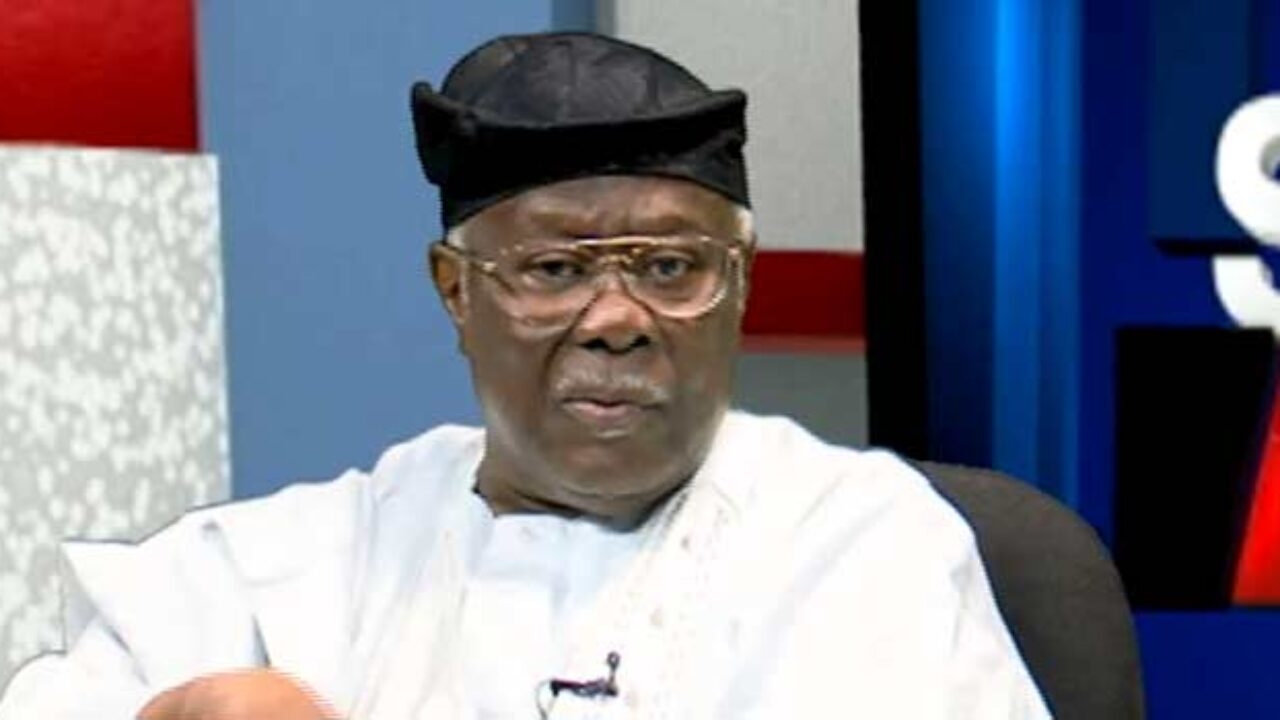
Former INEC Resident Electoral Commissioner Mike Igini captured the concern succinctly. Speaking on national television last Thursday, he warned that this decision risks undoing years of incremental progress.
He recalled that the Electoral Act 2022 empowered INEC to deploy technology for accreditation, voting, and transmission of results. Since then, the Commission has steadily expanded its technological capacity in collaboration with telecommunications stakeholders. This new “reform” introduces reverse momentum.
Civil society groups, professional bodies, and ordinary Nigerians spoke with unusual clarity at public hearings: electronic transmission must be mandatory. Lawmakers heard them — and proceeded in the opposite direction. That disconnect speaks volumes about the widening gap between representation and responsibility.
Curiously, neither chamber formally sought the institutional position of INEC nor that of the NCC during final deliberations. Those bodies could have illuminated the technical realities. Instead, lawmakers framed the debate, defined its limits, and drove it to a predetermined conclusion. Nigerians were led into a blind alley.
The Senate leadership framed its decision as pragmatism — a safeguard against technical failure. The President added his voice, praising lawmakers for preventing “potential hacking.” With respect, that argument stretches credulity. Manual processes have historically proven more vulnerable to manipulation. At a moment when the conversation should have been about strengthening safeguards, the nation settled for compromise.
The implications are profound. By making electronic transmission optional, the law places enormous discretion in the hands of individual officials. In a political culture where electoral manipulation has repeatedly eroded trust, discretion without firm safeguards invites suspicion. Connectivity challenges may now become the convenient justification for reverting to manual collation — reopening pathways Nigerians believed reforms had begun to close.
Nigeria has walked a long and uneven road toward electoral credibility. Each reform was meant to seal loopholes that once undermined the sanctity of the ballot. To reopen those doors — even partially — is to gamble recklessly with public confidence at a time when democratic faith is already fragile.
The 2027 elections are approaching. But the shape of that future is already being drawn. Whether it reflects the will of the people or the comfort of political actors will determine not only the credibility of the next vote, but the durability of Nigeria’s democracy.
Impunity appears to have taken centre stage. If the people’s voice can be heard and then ignored, what message does that send about the value of participation? If safeguards can be weakened in the name of convenience, what should Nigerians expect in 2027?
Your guess may well be as good as mine. But one thing is clear: the 2027 elections is likely to turn out far worse than the previous ones in terms of transparency and credibility.