
Dangote Refinery Hits Record 650,000 bpd Output
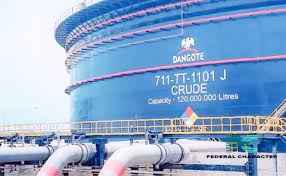
In a historic turning point for Africa’s industrial landscape, the Dangote Petroleum Refinery has officially reached its full nameplate capacity of 650,000 barrels per day (bpd). This milestone, announced on February 11, 2026, makes it the first refinery globally to achieve such a feat in a single-train facility of this scale. The achievement marks the culmination of a decade-long, $20 billion gamble by Aliko Dangote to secure Nigeria’s energy sovereignty and dismantle its decades-long dependence on imported fuel.
The refinery’s Chief Executive, David Bird, confirmed that the milestone followed the successful optimization of the Crude Distillation Unit (CDU) and the Motor Spirit (MS) production block. These units are now operating steadily, enabling the facility to deliver up to 75 million litres of petrol (PMS) daily to the domestic market—a massive leap that far exceeds Nigeria’s current daily consumption. This surge in output is a critical “macro-stabilizer,” expected to save the nation over $10 billion annually in foreign exchange and significantly ease the “liquidity gap” in the energy sector.
From a macroeconomic perspective, the “Dangote Effect” is already being felt across the financial markets. Billionaire investor Femi Otedola hailed the achievement as “transformational,” projecting that the drastic reduction in fuel imports could strengthen the Naira to below ₦1,000/$1 before the end of 2026. For an economy targeting a $1 trillion GDP, the refinery serves as the ultimate “infrastructure of distribution,” providing the consistent energy supply needed to power industrialization and reduce the “cost of doing business” for millions of SMEs.
Historically, Nigeria’s four government-owned refineries have remained moribund, creating a “logistics bottleneck” that fueled inflation and perennial fuel queues. The Dangote Refinery’s transition to full capacity effectively erases this “legitimacy gap.” Furthermore, the group has already announced a $12 billion Phase 2 expansion to increase capacity to 1.4 million bpd, which would make it the largest refining hub in the world, surpassing India’s Jamnagar facility.
The fiscal implications are profound. By producing high-quality Euro-V grade fuels, the refinery is not only ensuring the security of the person through cleaner air but also positioning Nigeria as a net exporter of petroleum products to the West African sub-region. This shift enhances the nation’s technological sovereignty and provides the “liquidity of opportunity” required to stimulate the petrochemical and fertilizer industries, further diversifying the economy away from raw crude exports.
As the 2026 fiscal year progresses, the focus remains on the “verifiability of results” during the current 72-hour performance test runs conducted with technology licensor UOP. With the “security of supply” now firmly established, the refinery stands as a testament to operational realism and a cornerstone of the “Renewed Hope” agenda. Ultimately, Dangote’s $20bn bet has not just paid off for his shareholders; it has secured a more resilient and transparent energy future for over 200 million Nigerians.