
Buhari’s refusal to exploit goodwill in 2015 responsible for economic downturn
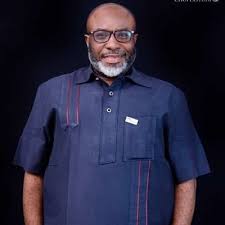
Dr. Chiwuike Uba is a developmental economist. In this interview with MOSES OYEDIRAN, he linked the downturn in the nation to President Muhammadu Buhari’s refusal to capitalise on the goodwill he enjoyed at the inception of his administration in 2015.
As an economic expert, how will you rate the performance of the economy under President Muhammadu Buhari?
The economy under the present administration has some flashes of positive impact; but more of a debilitating economy with unmanageable and increasing poverty rate, unemployment rate, high insecurity, weak local currency and exchange volatility, harsh business environment among other economic misfortunes.
It is unarguable that the present administration inherited an economy that was on the brink of collapsing.
Unfortunately, instead of bettering the economy, despite the feeble, adhoc, and incoherent initiatives and policies of this administration, little or nothing has been achieved.
In 2015 when the new administration came in, the economy was growing at 3% with a GDP of over USD$500m.
Instead of capitalising on the massive goodwill the President enjoyed, the administration was carried away by the euphoria of populism; hence, jettisoned key economic decisions that ought to be taken.
Despite the calls to the CBN float the naira (market-based exchange rate), the CBN decided to protect the Naira with the foreign reserve; created multiple foreign exchange rates which promoted round-tripping, a black market for forex, and put increased strain on local and foreign businesses.
The exchange rate moved from ₦155/$1 to ₦168/$1, and subsequently to ₦199/$1, and the current exchange rate hovering between N470 and N500/$1.
Most manufacturing and services businesses closed shops because they were either unable to access foreign exchange or got it at very high and unsustainable rates.
Nigeria overtook India to become the country with the largest number of people living in extreme poverty in the world with about 87 million Nigerians, or half the population, living on less than US$1.90 per day.
Since coming into office in 2015, the Buhari administration has lost more jobs than any other administration in the country’s history.
The unemployment rate more than doubled, from 10.4% in January 2016 to a record 27 percent in the second quarter of 2020 and projected to reach 33% before the end of the year 2020.
Market capitalization moved from USD$49.9bn in 2015 to USD$ 31.5bn in 2018.
The Global X Nigeria (NGE) exchange-traded fund is down 27.7per cent over the last 12 months and the Nigeria ETF which was blown up in the last five years is now down by over 74.5per cent.
Foreign direct investment has also witnessed a decrease in the current administration.
FDI inflows in 2013 totaled $5.6 billion, but this has flattened to $2 billion and equity investment fallen from around $2.9 billion in 2013 to just $139 million in 2018.
More worrisome is the unsustainable public debt that has exceeded the pre-1999 amount and has exposed Nigeria to an external debt crisis.
Under Buhari, Nigeria’s external debt increased by about $20 billion in five years. In 2015, the external debt is less than $10 billion, but is over $29 billion in the year 2020.
Our debt service to revenue is above 66%. In fact, the 2020 Q1, it was over 90%, leaving nothing for capital investments.
Painfully, there is nothing on the ground to show and justify the huge public debts. In addition, prices of staple food and other basic needs of the people have witnessed unjustifiable increases during the current administration.
For instance, before this administration came into office, a 50kg bag of rice cost on the average N8, 000 against N28, 000 under Buhari, a liter of fuel cost N87 against 162 under Buhari and a bottle of Coke cost N60 under the last administration as against N150 today.
Under the previous administration, the average cost of a tin of peak milk was N80 against the current prices of N170 and N260.
The situation is the same for under food items.
These are in addition drastic reduction in the purchasing power of the Naira as a result of naira depreciation and devaluation.
Whereas Nigeria’s Misery index is very high, Nigeria recently became the capital of under 5 mortality rate the world and ranked 152 of 157 countries in the World Bank’s 2018 Human Capital Index. No economy thrives under high insecurity.
As a country, we witnessed improved security in the North East and other northern parts of the country in the first year of the administration.
We were informed that the dreaded Boko Haram was technically defeated; following the release of some of the Chibok girls by the Boko Haram after the government allegedly paid some ransom to them.
Going by the newspaper reports, many communities occupied by Boko haram were freed and they purportedly returned to their homes.
Notwithstanding the claimed successes recorded against the Boko Haram, security in Nigeria worsened under this administration.
The nation witnessed rampant killings; ‘sacking’ of communities and incessant kidnappings by the alleged Fulani herdsmen.
People and communities now live in perpetual fear. Traveling on Nigerian roads is worse than being on war fronts.
People’s fears are made worse going by their perception of the government’s inaction to deal with the menace.
The unresolved killing of the members of the IPOB and Shiites by the security personnel has also contributed to heightened insecurity in Nigeria.
Painfully, even Boko Haram and Fulani headmen which were classified by the international community among the deadliest terrorist organisations in the world, the efforts being made by the government are not yielding any meaningful results, causing some Nigerians to conclude that no real efforts are made by the government to deal with the issue.
Nigerians are polarized along ethnic and religious divides, leaving the real monster confronting us.
As promised, President Buhari’s administration provided some level of the needed leadership to fight corruption as soon as he took over the government.
Nigeria was gradually regaining her respect among the comity of nations, until recently when the country became worse under the corruption index.
The fight against corruption should be seen to be ‘boundless. Currently, most of the persons undergoing prosecution are from the opposition and it is casting doubt on the sincerity of the government.
Some of the judgements from the courts were not obeyed; hence, portraying the government as one averse to the rule of law.
The government must be seen to respect the laws to avoid anarchy.
Nigerians should be allowed to air their views on national issues without the fear of being molested / intimidated by the government’s security apparatus.
Whereas the government prides itself with the recovering of looted resources, issues bordering on transparency and accountability cast a huge credibility on the government in the last 5 years.
Even agencies of the government responsible for the fight against corruption are enmeshed in corruption. Nigerians should be in the know how much has been recovered, from whom and from which country (ies).
Most importantly, the use of the recovered funds should be in the public domain as part of the commitments to the open government initiative.
To the credit of this administration, significant progress was made in the implementation of the Treasury Single Account, increased budgetary allocations for capital expenditure, improvement in the ease of doing business, and development of a blueprint to jumpstart the economy.
However, it was evident that the economic blueprint codenamed the Economic Recovery and Growth Plan (ERGP) was hastily put together.
The newspapers reported that the government engaged the services of foreign consultants from Malaysia to conduct a forensic study that will boost the implementation of the Economic Recovery and Growth Plan (ERGP).
Whereas this government promised to reduce the cost of governance; in reality, the cost of governance increased so much during the last 5 years without any tangible economic results.
Is the nation’s economy sliding into recession? Obviously, Nigeria is destined for another round of recession less than six years after the most recent one.
Remember that Nigeria went into recession as soon as the current administration came into power.
According to the latest World Bank Nigeria Development Update (NDU), Nigeria is expected to go into ‘a severe economic recession, the worst since the 1080s’. Before COVID-19, Nigeria’s economy was expected to grow by 2.1% in 2020; but, all that has changed following the ravaging impact of COVID-19 on the economy.
Recently, the Minister of Finance informed Nigerians that government revenue dropped by over 65%. Nigeria’s revenue is 90% from oil and oil prices were seriously affected by the COVID-19.
In addition to job losses, closure of industries, and shutdown of general economic activities at the national level, Nigeria is witnessing a reduction in diaspora remittances, low performance in the stock market, and an increase in poverty, inflation, and insecurity among others.
Currency volatility and uncertainties have also led to a fall in private investment and divestment of existing investments from Nigeria.
The 2020 second-quarter report of the NBS shows that Nigeria has already witnessed negative growth and this is expected to continue till the end of the year, at the minimum.
The data shows that the real growth rate at basic price has a negative growth of -6.10%, real growth rate at market prices was -6.04%, non-oil growth was -6.05% and oil growth was -6.63%.
The industries and services sector have -12.05% and -6.78% negative growths respectively.
We may not be able to spend our way out of recession so fast because, in addition to dwindling revenue, Nigeria lacks the credibility to access more additional external loans in the face of the impending debt crisis.
What does the increase in fuel pump price and electricity bring to the people and the economy with COVID-19 in mind?
Permit me to state that the removal of subsidies on fuel and electricity are bold and commendable economic decisions taken at the wrong time.
Agreed that subsidies on the two items are parasites depleting the national economy, but I am pained that the All Progressives Party (APC), in 2012, mobilised Nigerians against the administration of President Goodluck Jonathan for removing fuel subsidy, due to ‘roadside’ politics and crave for populism.
The adverse effects of the fuel subsidy removal would have been minimised had it been allowed in 2012 or even effectuated in 2015 when the current administration came into power.
Recognising that electricity consumption and fuel purchases are necessary for most households and critical to economic growth and quality of life, any increase in their prices always have immediate direct and indirect effects on the people and the economy.
Whereas the removal is needed, it is more important to address the underpinning fundamentals for the electricity deregulation which were anchored on availability, accessibility, and affordability.
The continuing resort to an increase in electricity tariff and grants to the electricity companies by the government is not the solution to the problems.
The trillions of naira given to GENCOs and DISCOs should have been deployed to other productive sectors of the economy.
First, the disposable income of families as a larger share of households’ budgets is likely to be spent on electricity and fuel, which leaves them with less to spend on other goods and services.
In addition to a reduction in demand for other goods as a result of a reduction in wealth, uncertainty about the future is induced.
There will be a significant increase in the already unmanageable unemployment rate, also. In addition, most businesses will not be able to continue in business because of an increase in the cost of production and a decrease in the disposable income of consumers.
Nevertheless, if the power is stable, accessible, affordable, and available, it would help to reduce unemployment because many of the unemployed persons in Nigeria are creative and would leverage the stable and affordable power to be self-employed.
The road transport sector will be the largest sector the imposing of fuel price hike policy will affect. Expectedly, the recent increase would contribute to over 30% of the cost of road transport.
In addition, there will be also an indirect impact on the road transport sector by about 10% by the changes in other sector product usage due to the altering of fuel price.
Bus, taxi, tricycle, and motorcycle depend on fuel price as well as depend on the changes of spare part price and vehicle services price (which the price can also mount due to the fuel price hikes).
The price increase in road transport will trigger the rise of price in the other related sectors, for instance, the raises of the transportation tariffs will induce food price hike, as a result of a higher distribution cost from the seller to the customers.
The skyrocketing of basic food prices will lead to an increase in the number of poor people.
The fuel price soaring will either directly or indirectly result in the increase of production costs which will affect the increases in electricity prices.
Imposing fuel price hike should be observed carefully by the government since the impact of this policy would inflate other sector production costs.
As one of the strategic commodities inputs for other sectors, imposing a less appropriate policy in electricity will result in a deteriorating of the purchasing power and the overall economic situation.
The manufacturing sector is another place that would get the direct impact of the increase in fuel and electricity price increase.
READ ALSO: Nigeria needs N100bn annually to eliminate open defecation — CNC
The increase in fuel and electricity process would lead to an almost 30% increase in the cost of production and an additional 15% on the cost of distribution.
The fuel and electricity price hike impact on the increasing cost of production in each economic sector will aggregately impact on the increase in the price at each sector and jointly led the national inflation.
Inflation will rise in line with the rise in fuel and electricity prices.

EDITORIAL: Okonjo-Iweala’s candidacy at WTO
Related to this topic: