
BENUE @50: FROM RESILIENCE TO RENEWAL – GOV. ALIA’S DEFINING CALL FOR A NEW ERA

Donald Kumun
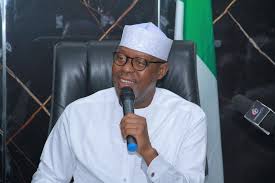
Benue State’s Golden Jubilee is not merely a ceremonial landmark; it is a historic reckoning. At exactly 50 years, the state stands at a crossroads between memory and momentum, between the sacrifices of yesterday and the responsibilities of tomorrow. In a deeply reflective and forward-looking address at Government House, Makurdi, the Benue State Governor, Rev. Fr. Dr. Hyacinth Iormem Alia, delivered what can best be described as a defining manifesto for Benue’s next half-century.
From the outset, the Governor framed the anniversary not as a self-congratulatory celebration but as a solemn moment of renewal and resolve. Benue, he reminded the audience, was conceived with hope in its heart and abundance in its soil. The dream of the founding fathers — a land that would feed the nation, unite its people, and raise resilient generations — remains alive, though tested by decades of trials.
In paying tribute to the architects of Benue’s creation, Governor Alia anchored the present firmly in history. He saluted political visionaries, military administrators, civilian governors, and unsung heroes, whose collective labour laid the foundation of the state. By acknowledging both the celebrated and the forgotten, the Governor reinforced a central message: progress is cumulative, and leadership is a relay, not a solo race.
Yet, nostalgia was never allowed to overshadow honesty. The Governor confronted Benue’s painful realities head-on — insecurity, economic pressure, social dislocation, and moments when the people felt abandoned by leadership. But in perhaps the most resonant line of the address, he declared what has become a defining creed of the Benue spirit: “We bend, but we do not break.”
Through hardship, farmers farmed, workers persevered, youths dreamed, and communities endured. Survival, he argued, is itself an achievement — but it is not the destination.
Governor Alia’s administration, he insisted, is built on responsibility rather than rhetoric. Rejecting the illusion of perfect leadership, he reaffirmed a commitment to sincerity, discipline, and action. People over politics. Progress over excuses. These were not slogans but guiding principles shaping policy direction.
Central to that direction is economic rebuilding. The Governor made it clear that agriculture is no longer to be treated as subsistence tradition but as strategic business. By supporting farmers with inputs, extension services, and market access while promoting agro-processing and value addition, the state is deliberately reclaiming its identity as Nigeria’s food basket and agro-industrial hub.
Crucially, this push is being matched with reforms to strengthen internally generated revenue without suffocating citizens. Healthcare and education received equally forceful attention. From revitalized primary healthcare centres to a repositioned teaching hospital, cancer centre, and pharmacy, the Governor framed health investment as a moral duty, not a budgetary burden. In education, the recruitment of over 9,700 teachers, rehabilitation of schools, and establishment of a new university at Ihugh, signal a long-term strategy to raise solution-driven citizens rather than job seekers.
On workers’ welfare, Governor Alia struck a tone of partnership. Regular salary payments, transparency, and restored dignity in public service, he said, are non-negotiable. A government that neglects its workforce, he warned implicitly, sabotages its own progress.
Security — the most existential challenge — was addressed with candour and resolve. While acknowledging persistent threats, the Governor reaffirmed collaboration with federal security agencies, traditional institutions, and community-based peace initiatives. His objective is unambiguous: farmers must return safely to their lands, communities must live without fear, and peace must cease to be negotiable.
Perhaps most striking was the emphasis on infrastructure and digital governance. With over 400 kilometres of roads rehabilitated, rural access improved, and urban renewal ongoing, the administration is visibly altering daily life. Simultaneously, investments in ICT, e-governance, and digital literacy, signal Benue’s intention to compete in the 21st-century digital economy.
To the youths, Governor Alia issued a clear declaration: they are not footnotes in Benue’s history, but the headline of its future. Opportunity, innovation, and inclusion, he promised, will define the next chapter.
At 50, Benue is not closing a book; it is turning a page. Governor Alia’s message was unmistakable: the next 50 years will be shaped by strong institutions, resilient economics, peace, empowered citizens, and leadership that listens and acts. This is not a plea for blind trust, but for earned trust — grounded in accountability, and shared responsibility.
Benue at 50, therefore, is not an end. It is a new beginning — bold, deliberate, and unapologetically forward-looking.