
Bandits Attack Kwara Community, Killing Forty Residents
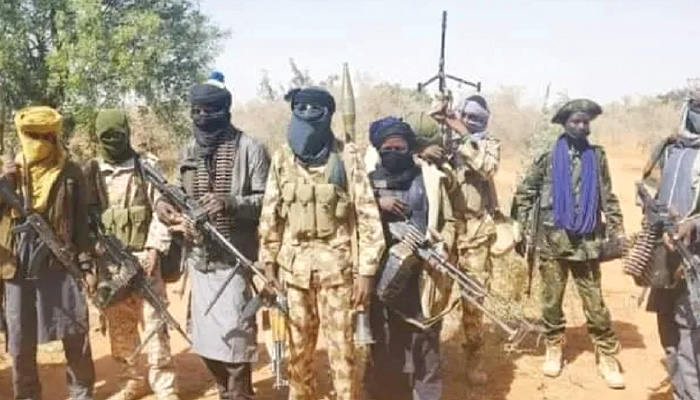
A violent incursion by armed bandits in the early hours of February 4, 2026, has left at least 40 people dead in a rural community within Kwara State. The casualties include several Nigerian Army personnel who were stationed in the area to provide security for local infrastructure and farming settlements. The attackers reportedly moved through the border forests linking Kwara with neighboring Niger and Kogi states, launching a coordinated strike that overwhelmed local defenses before security reinforcements could arrive.
The Nigerian Army and the Kwara State Police Command have confirmed the incident, stating that a joint tactical operation is currently underway to track the assailants into the expansive forest reserves that characterize the region’s topography. This attack marks one of the most significant security breaches in Kwara in recent months, a state that had previously been considered a relatively stable “buffer zone” compared to the high-intensity banditry observed in the Northwest geopolitical zone.
The economic implications of this attack are particularly acute for Nigeria’s agricultural sector. Kwara State is a critical component of the nation’s “food basket,” contributing significantly to the production of maize, cassava, and yams. The affected area is home to several large-scale commercial farms and smallholder cooperatives that supply urban markets in Ilorin and Lagos. Historically, such surges in rural insecurity lead to “farm abandonment,” where growers flee to urban centers, resulting in a direct contraction of local food supplies and a subsequent spike in food inflation.
From a fiscal perspective, the persistent need for emergency security deployments continues to place a strain on both state and federal budgets. In the 2025 fiscal year, Nigeria allocated a record N3.25 trillion to the defense and security sector, representing over 11% of the total national expenditure. However, the transition from conventional warfare to managing asymmetric threats like banditry requires heavy investment in “soft” infrastructure, including community policing and advanced surveillance technology. The Kwara State government has frequently advocated for increased federal support to secure its porous borders, which are often used as transit routes by criminal elements moving between the northern and southern parts of the country.
The incident also highlights the ongoing challenges facing the “Blue Economy” and inland logistics. Kwara serves as a vital transit corridor for goods moving from the ports in Lagos to the northern hinterlands. Security analysts note that a rise in banditry near major road networks can lead to increased haulage costs, as logistics companies may require armed escorts or choose longer, alternative routes to avoid high-risk zones. These additional costs are typically passed on to consumers, further complicating the federal government’s efforts to moderate headline inflation, which has remained a central focus of the Central Bank of Nigeria’s (CBN) monetary policy.
Historically, the North-Central region has dealt with complex farmer-herder dynamics, but the recent evolution toward organized banditry suggests a shift in the security landscape. Unlike traditional communal clashes, these attacks are often characterized by high-caliber weaponry and the targeting of state actors, such as the soldiers killed in this latest encounter. The loss of military personnel is a significant setback for the “Operation Safe Haven” initiative, which was designed to foster civil-military cooperation and restore confidence in rural investment.
As the state government assesses the damage, Governor AbdulRahman AbdulRazaq has called for a high-level security meeting to review the state’s intelligence-gathering mechanisms. The administration has emphasized that the revitalization of the local economy, particularly through the Special Agro-Industrial Processing Zones (SAPZ), is contingent on a stable and predictable security environment. Without such stability, the state’s efforts to attract foreign direct investment into its burgeoning agro-processing industry remain at risk.
The federal government is expected to deploy additional air assets to survey the forest corridors as part of a broader strategy to prevent the establishment of permanent bandit camps in the region. For now, the focus remains on humanitarian assistance for the displaced residents and the formal identification of the deceased, as the nation monitors the impact of this latest security challenge on its broader goals of economic recovery and social stabilization.