
Amadi vs Dickson: Explosive clash over e-transmission throws Nigeria’s electoral future into question

By Lillian Okenwa
A fierce confrontation between two influential voices in Nigeria’s policy and political circles has thrust the country’s fragile electoral credibility back into the national spotlight, raising urgent questions about whether Africa’s largest democracy is moving toward greater transparency or drifting into familiar uncertainty.
The Senate’s sudden reversal on electronic transmission of election results has triggered a high-stakes debate that goes far beyond legislative procedure. For many analysts, the dispute cuts to the heart of Nigeria’s democratic stability: Can future elections be trusted?
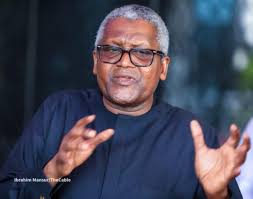
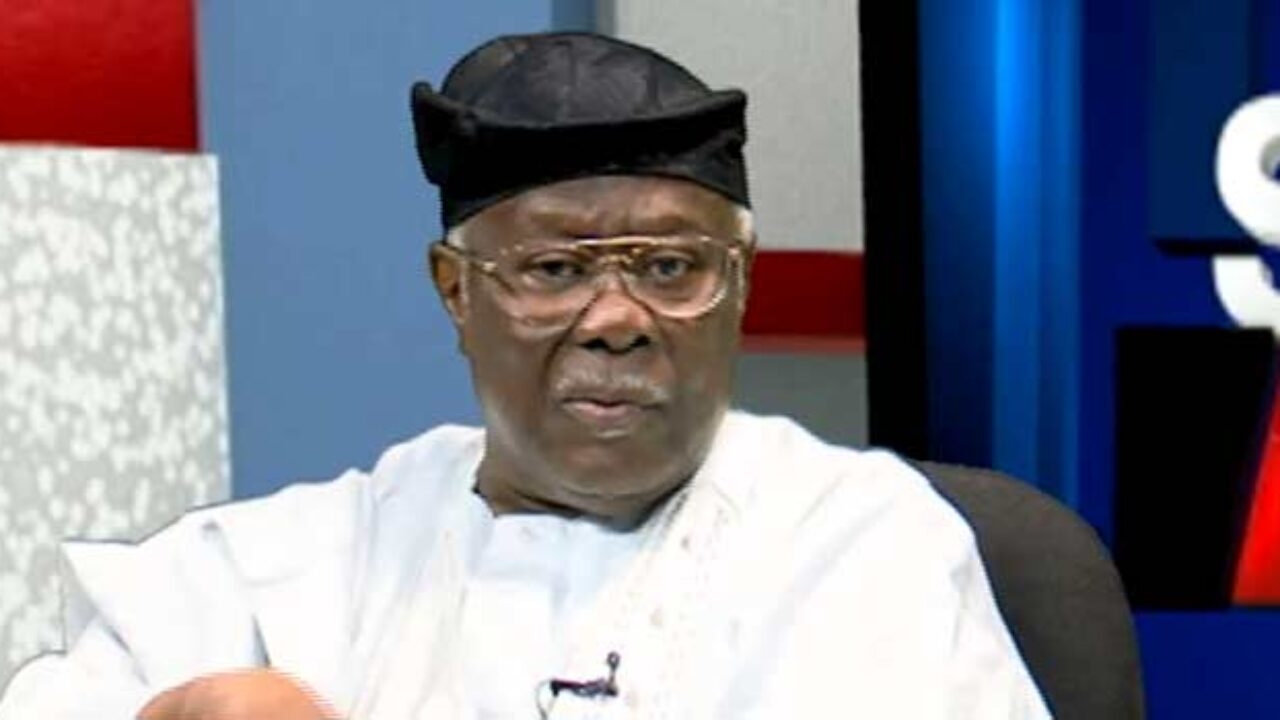
At the centre of the storm are governance expert Dr Sam Amadi and former Bayelsa State governor Senator Seriake Dickson, whose sharply divergent positions reveal deep fractures within Nigeria’s political establishment over the role of technology in safeguarding the ballot.
On Tuesday, the Senate rescinded its earlier rejection of electronic transmission to the Independent National Electoral Commission’s (INEC) Result Viewing Portal (IREV), re-amending the Electoral Act to permit digital uploads — but notably stopping short of making them mandatory. Lawmakers inserted a fallback to manual collation using Form EC8A in cases of network failure, a provision critics warn could reopen old pathways to manipulation.
“There Is No Technical Obstacle”
Dr. Amadi, Director of the Abuja School of Social and Political Thoughts and former chairman of the National Human Rights Commission, dismissed claims that Nigeria lacks the infrastructure for real-time transmission.
“There is no confusion. There is no technical obstacle,” he said. “INEC transmitted governorship election results electronically before 2023 without problems.”
According to Amadi, the failure to upload presidential results during the 2023 elections reflected institutional unpreparedness rather than technological limitations.
“INEC failed to prepare for the presidential upload. There are no nine states where transmission was impossible. That claim is simply false.”
He warned that granting discretion in transmission risks dragging Nigeria back into an era synonymous with electoral manipulation.
“If you weaken electronic transmission, you return us to fake results declared at gunpoint, altered figures at collation centres, and midnight declarations. That’s how democracies collapse.”
In an unusually blunt criticism, Amadi also accused Senate President Godswill Akpabio of misleading the public.
“Akpabio is lying — the IREV and B-VAS don’t even require internet. What they use is coded.”
Dickson Pushes Back: “We Are Not There Yet”
Senator Seriake Dickson, who represents Bayelsa West, offered a sharply different perspective, cautioning against what he described as a widespread misunderstanding of “real-time” transmission.
Speaking to ARISE News, the former governor argued that Nigeria has not reached the level of technological maturity required for fully digital voting.
“What is the meaning of real time? We are not voting electronically in Nigeria. We are not at the point where you press a button and your vote is instantly added to a portal,” Dickson said.
He dismissed the phrase as largely rhetorical.
“The concept is superfluous. It does not in itself guarantee transparency.”
Dickson’s stance reflects a more cautious school of thought within the political class, one that fears overreliance on technology without systemic readiness could spark fresh disputes rather than resolve them.
Senate Explains Its Dramatic Reversal
The legislative about-face followed a motion by Senate Chief Whip Tahir Monguno, who said the amendment was necessary to align electoral law with public expectations.
“This amendment is to bring our laws to make it a replica of the wishes and aspirations of the people,” Monguno stated.
Seconded by Minority Leader Abba Moro, the motion passed via voice vote.
The reversal effectively acknowledges that the Senate had earlier approved an amendment without any provision for electronic transmission — a development that alarmed civil society groups and election observers who view digital reporting as critical to preventing result tampering.
New Controversy Over PVC Penalties
The transmission debate is not the only issue raising concerns.
Columnist Suyi Ayodele, in his article “The Senate Coup Against Nigerians,” highlighted what he described as a troubling reduction in penalties for Permanent Voter Card (PVC) trading , a practice widely linked to vote-buying.
“In addition to rejecting the all-time electronic transmission of results, Akpabio also rejected the 10-year jail term for PVC traders and opted for a two-year imprisonment term,” Ayodele wrote.
“In essence, the Senate is saying that a 10-year jail term is too harsh for anyone caught either selling or buying PVC.”
For reform advocates, the move risks signalling tolerance for electoral malpractice at a time when public trust is already precarious.
Haunted by History
Nigeria’s unease over election transparency is rooted in a long trail of contested polls.
The 2007 general election, widely condemned by international observers, became synonymous with ballot stuffing, missing result sheets, and logistical chaos. Even the eventual winner, President Umaru Musa Yar’Adua, admitted the process was flawed — an extraordinary acknowledgement that triggered reform efforts.
In 2011, post-election violence across northern Nigeria left hundreds dead and thousands displaced, demonstrating how disputed outcomes can quickly escalate into national crises.
Although the 2015 election was celebrated after an incumbent conceded defeat, it exposed systemic weaknesses, including card reader failures that forced reliance on manual accreditation in several areas.
By 2019, allegations of militarisation at polling units, delayed voting, and widespread vote-buying again clouded the process.
Then came 2023 — arguably Nigeria’s most technologically anticipated election. INEC had promised seamless electronic transmission through the Bimodal Voter Accreditation System (BVAS) and the IREV portal. When presidential results failed to upload in real time, opposition parties rejected the outcome, courts were flooded with petitions, and public confidence suffered a significant blow.
For many analysts, the psychological damage from that episode still lingers.
Trust: The Currency Nigeria Keeps Losing
Election credibility in Nigeria is more than a procedural concern; it is a cornerstone of national stability.
Each disputed poll has historically deepened voter apathy, triggered protests, and pushed political battles into prolonged legal warfare. Security experts warn that when citizens lose faith in ballots, they may shift their trust away from democratic institutions altogether.
Against this backdrop, the Senate’s latest amendment is being interpreted not merely as a legislative adjustment but as a defining signal of Nigeria’s democratic trajectory.
A Democracy at a Defining Moment
The clash between Amadi’s urgency and Dickson’s caution reflects a deeper national dilemma: Should Nigeria accelerate technological safeguards to prevent manipulation, or proceed more deliberately to avoid unintended consequences?
With memories of the fiercely contested 2023 presidential election still fresh, analysts warn that ambiguity, not just fraud, can erode confidence in democratic outcomes.
For millions of Nigerians, the stakes extend beyond legal clauses or technical jargon. What they seek is simple but fundamental: certainty that their votes will count — and be counted correctly.
As the country edges toward future election cycles, one question now dominates political discourse:
Is Nigeria reinforcing the guardrails of democracy, or quietly loosening them?