
Akin Alabi calls for strong advocacy to secure passage of women’s Reserved Seats Bill
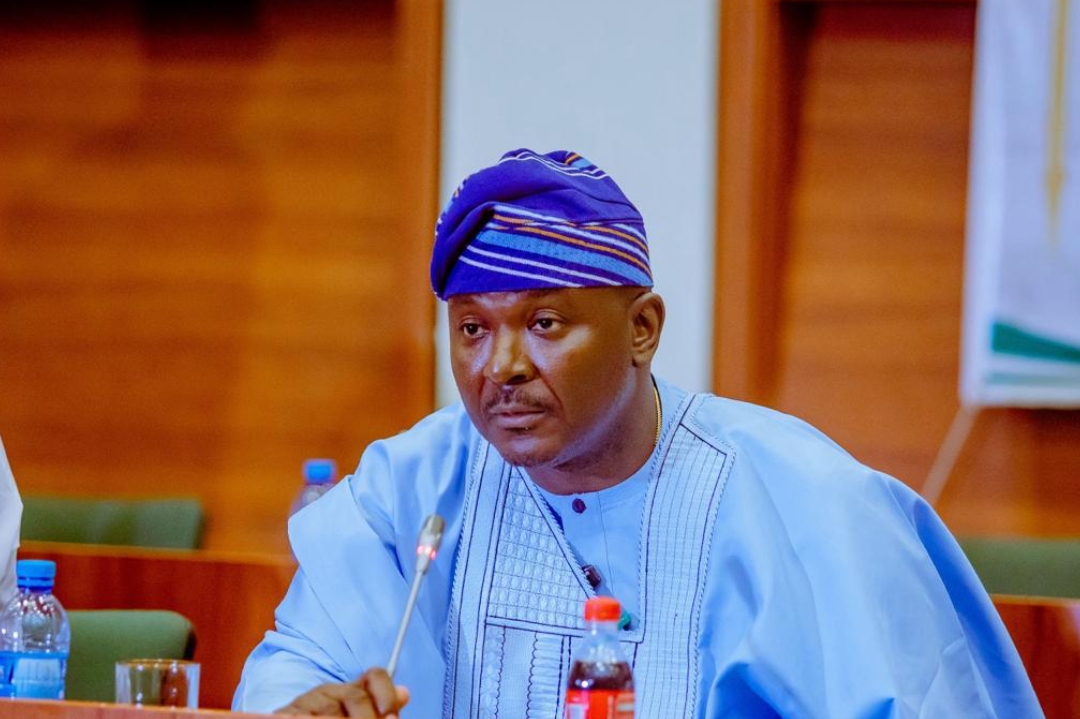
Akin Alabi, a member of the House of Representatives, has described the bill seeking to create reserved seats for women in Nigeria’s parliament as a positive development, but one that will require strong advocacy to ensure its passage.
Alabi, who represents the Egbeda/Ona-Ara Federal Constituency of Oyo State, made the remarks on Wednesday during an X Space discussion organised by TheCable Newspaper, titled “The Debate on Reserved Seats for Nigerian Women.”
The lawmaker said that although the bill enjoys considerable support among members of the National Assembly, some lawmakers still have concerns about its feasibility and implementation.
“Generally, I think it’s positive (the bill), but we have to understand that we deal with hundreds of bills at a time,” he said. “So, while this is a priority for some, other members are also pushing issues important to their constituencies.”
Alabi noted that one of the main challenges would be securing approval from state houses of assembly after passage in the National Assembly.
“We can pass it in the house, but when it goes to the states’ house of assemblies, you need 24 of them to vote in favour,” he said. “That’s where the real test lies.”
He also pointed out that while the proposal would undoubtedly increase the number of women in parliament, its implementation must be carefully managed to avoid unintended consequences.
“Yes, it will automatically increase the number of women in parliament,” he said. “But there’s also the risk that in some constituencies, people might tell women who want to contest, ‘Go and take the reserved seat.’ That’s where strong advocacy will be needed.”
Alabi expressed his commitment to supporting the bill and seeing it through.
“It’s easy to keep talking about problems, but someone has come up with a solution,” he said. “So, what I want to do now is to support you guys to make sure it sees the light of day.”
While acknowledging general goodwill towards the proposal, he cautioned that the final vote may not be unanimous.
“Not every bill gets 100 percent support,” he said. “When it’s time to vote, it won’t be a voice vote—each person will vote privately on their computer. So we have to convince people now, not just assume they’ll say yes.”
Addressing concerns over the replacement of the late Deputy Whip, Adewunmi Onanuga, with Ibrahim Isiaka, a male lawmaker, Alabi dismissed suggestions that it contradicted the push for gender inclusion.
He explained that Onanuga held the position based on merit and zoning arrangements, not gender.
“She was there because of her quality and competence, and because the position was zoned to the south-west, and micro-zoned to Ogun state,” he said. “Sadly, when she passed, it was natural that the replacement would still come from the same zone.”
According to him, the decision followed legislative tradition.
“Leadership positions are typically given to ranking members with experience,” he said. “It wasn’t about replacing a woman with a man — it was simply about following the structure already in place.”
Alabi urged advocates of the bill to sustain their engagement with lawmakers at all levels to ensure its passage.
“Passing a bill is like an election,” he said. “Even if people support you, you still need to mobilise and get them to act. That’s the work ahead of us.”
The proposed legislation seeks to create additional seats for women in the Senate, House of Representatives, and state assemblies.
Some versions of the bill suggest that each state and the Federal Capital Territory (FCT) should elect extra female lawmakers, while others propose the creation of regional special interest seats for women and persons with disabilities.