
African Minerals Ministers Re-elect Alake to Drive Value Addition Agenda

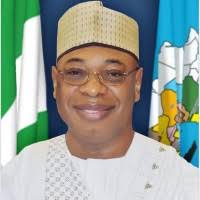
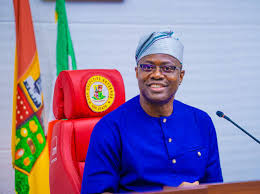
African ministers responsible for solid minerals have re-elected Nigeria’s Minister of Solid Minerals Development, Dr Dele Alake, as Chairman of the Africa Minerals Strategy Group (AMSG), reinforcing continental efforts to deepen value addition and beneficiation across Africa’s vast mineral resources.
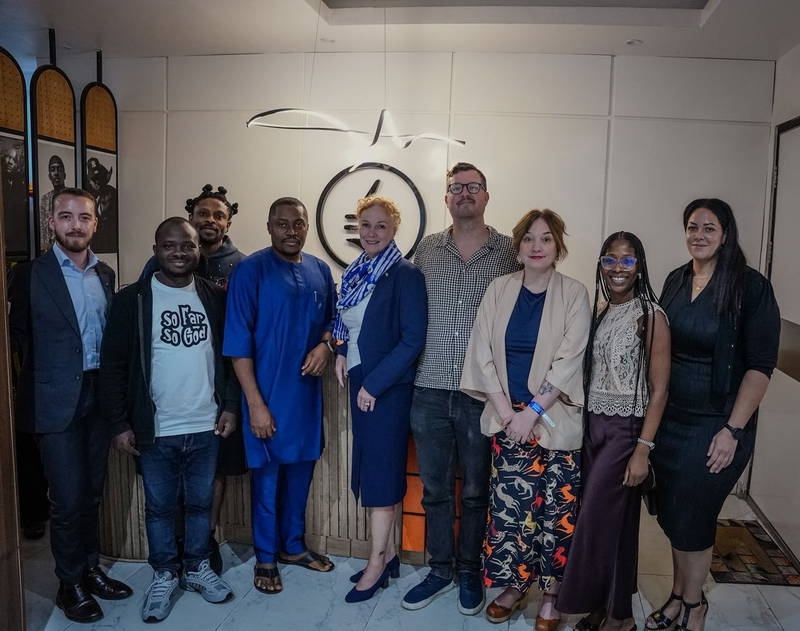
Dr Alake was unanimously returned as chair at the 2026 Annual General Meeting of the 24-member forum, held on the sidelines of the Future Minerals Forum in Riyadh, Saudi Arabia. He was first elected pioneer chairman of the group in 2024.
The ministers also approved a new leadership structure to strengthen the AMSG’s institutional capacity, creating additional positions of Vice-Chairman, Deputy Secretary-General and Financial Secretary, with equitable distribution across Africa’s sub-regions. Under the revised structure, Nigeria retains the chairmanship representing West Africa, while the Minister of Mines of the Democratic Republic of Congo, Hon. Louis Watum Kabamba, was elected Vice-Chairman for Central Africa. Uganda remains Secretary-General for East Africa, Mauritania was appointed Deputy Secretary-General for North Africa, and South Africa was appointed Financial Secretary.
The AGM ratified a two-year tenure for the executive committee and agreed that zoned positions belong to member countries, ensuring continuity where ministerial changes occur.
In his acceptance remarks, Dr Alake urged African countries to intensify collaboration to unlock economic growth through solid minerals development, stressing that fragmented national approaches weaken the continent’s bargaining power in global value chains.
He called for agreement on minimum financial contributions by member states and a more robust budgeting framework to improve accountability, transparency and operational effectiveness.
The ministers also resolved to hold quarterly meetings, establish standing committees covering areas such as legal and institutional affairs, sustainability and responsible mining, and finance and resource mobilisation, and advance plans to host a global minerals conference in Africa.
Speaking earlier at a leadership roundtable on unlocking infrastructure funding for copper-belt production, Dr Alake said mineral extraction alone cannot deliver lasting economic transformation without coordinated infrastructure, harmonised policies and deliberate value-addition strategies.
He cited the Lobito Corridor as a practical example of how rail, ports, energy systems and policy alignment can work together, while pointing to similar opportunities along the Lagos–Abidjan, Walvis Bay, Dar es Salaam and Central corridors.
He stressed that Africa’s challenge is not the absence of corridors but the need to structure financing, governance and regulation to attract private capital, reduce risk and support industrial growth.
According to him, addressing bankable offtake arrangements, cross-border regulatory predictability, and alignment of transport, power and industrial planning is critical to building competitive mineral value chains.
Dr Alake said the AMSG’s broader objective is to ensure Africa’s mineral infrastructure is responsibly financed and strategically managed to support long-term stability, transparency and shared prosperity, positioning the continent to capture greater economic value from its mineral endowment.