
A Leadership Failure of Epic Proportions: When excuses become indictments
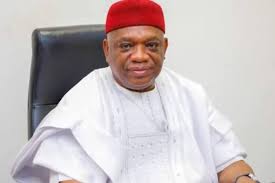
Kachi Okezie
When a sitting senator argues against the electronic transmission of election results because his own village lacks network coverage, he is not merely making a policy point. He is delivering an indictment—of himself.
Senator Orji Uzor Kalu’s recent statement opposing electronic transmission on the grounds that there is no network in his village, Igbere, is more than a curious argument. It is a stunning confession. Here is a man who governed Abia State for eight years and has spent six more in the Senate, publicly acknowledging that in all that time, he could not—or did not—ensure something as basic as telecommunications access for his own community.
Leadership is not tested by rhetoric but by results. And when a leader cites infrastructural decay as justification for resisting progress, he reveals more than he intends.
In today’s world, network connectivity is not a luxury. It is infrastructure as essential as roads, electricity, and clean water. Former US President Joe Biden made that clear to the whole world when he presented his first budget to the US Congress. He argued that broadband infrastructure powers commerce, education, healthcare, civic participation, and democratic transparency. To then argue that elections should not be modernised because connectivity is lacking is to normalise failure. Worse, it is to weaponise that failure as an excuse to stall reform.
The deeper question is this: how can a leader preside over years of public office and then point to the absence of basic infrastructure as though it were an act of God?
The outrage that followed the senator’s remarks is not merely about electronic voting. It reflects a broader frustration with a political class that often seems insulated from the everyday realities of its citizens. If a village lacks network coverage after more than a decade of representation at the highest levels, what does that say about priorities? About performance? About accountability?
There is something profoundly troubling about the casualness of the admission. It suggests a political culture in which underdevelopment is so routine that it no longer shocks those responsible for addressing it. Instead of embarrassment, there is deflection. Instead of urgency, there is justification. This is how stagnation becomes institutionalised.
Electronic transmission of results is not a silver bullet for Nigeria’s electoral challenges. But it represents an effort to strengthen transparency and restore public confidence in a system that has long been plagued by suspicion. To resist such reform on the basis of infrastructural inadequacy is to concede that governance has failed—and then to accept that failure as permanent. Leaders are elected to solve problems, not to cite them as reasons for inaction.
The senator’s argument inadvertently reinforces a perception that many Nigerians already hold: that too often, those in power are more invested in preserving political advantage than in expanding public good. When reform threatens established interests, deficiencies suddenly become insurmountable obstacles. When elections are at stake, the conversation shifts from development to delay.
But development and democracy are intertwined. A country that cannot ensure basic connectivity for its communities will struggle to build credible institutions. Conversely, a country that resists modernising its democratic processes because of infrastructural gaps (which it created or sustained) risks perpetuating those very gaps.
The irony is sharp. Electronic transmission requires network coverage. Network coverage requires investment and political will. Political will is what elected officials are meant to provide. When the absence of progress is cited as justification for resisting change, the circle of dysfunction closes.
The issue at hand is larger than one village or one senator. It is about a standard of leadership. Public office is not an entitlement; it is a trust. That trust demands measurable improvement in the lives of citizens. Roads built. Schools funded. Hospitals equipped. Networks expanded. When those basics remain elusive after years in office, explanations ring hollow. What Nigerians deserve is not eloquent defence of inadequacy but determined correction of it.
The most troubling aspect of this episode is not that a village lacks network coverage. It is that such a reality can be invoked without visible urgency or accountability. In thriving democracies, leaders scramble to fix deficiencies before they become public embarrassments. Here, deficiency becomes an argument. History is unkind to leaders who mistake excuses for governance.
Senator Kalu’s statement may fade from headlines, but the questions it raises will linger. How do we measure leadership? By tenure or transformation? By title or tangible change? And at what point do citizens demand that those who cannot deliver step aside for those who can?
Nigeria stands at a crossroads where credibility in public institutions is fragile. Strengthening democracy requires more than laws; it requires leaders who understand that progress is non-negotiable. Infrastructure gaps are challenges to overcome, not shields against reform.
If a community lacks network coverage in 2026, the response should be immediate mobilisation—not legislative retreat. Nigerians crave (and deserve) leaders who see problems as mandates, not alibis. They deserve representation that translates into development, not declarations of helplessness. They deserve officials who understand that every public admission of failure carries a moral obligation to correct it.
Anything less is not merely disappointing. It is a betrayal of trust. And trust, once squandered, is far harder to rebuild than a network tower.


Related to this topic:
Leadership Institute Partners UNILAG for Student Leadership Training