
2017 budget: ECOWAS spent $197m on money laundering, parliament, others

The Economic Community of West African States (ECOWAS) has spent $197 million out of its $230.2 million expenditure for 2017. Its total income for the year budget stood at $267.9m.
Of the expenditure, the Commission spent $146m, its parliament spent $19.86m; the Community Court of Justice $17.2m; West African Health Organisation, $33.1m; and the Intergovernmental Action Group Against Money Laundering in West Africa, $13.65m.
The 2017 budget year has not ended yet, as the community was in the fourth quarter and 65 per cent of the budget implemented so far.
The way ECOWAS generates funds from the Community Levy and it comes either on a quarterly or monthly basis depending on who is paying at a particular time.
Up till date, ECOWAS has not received the full amount (of the levy) as expected, but the budget performance, though has not been encouraging, it has picked up.
The parliament has, however, begun the review of the bloc’s 2018 draft budget of $284.9m.
The draft budget was presented before the parliament by the Administration and Finance Committee (AFC) at the parliament’s on-going Second Ordinary Session in Abuja, on Wednesday.
The parliament’s Adhoc Committee on the consideration of the draft 2018 community budget of the parliament convened to begin consideration of the budget.
The committee was, however, unable to make progress as members of parliament insisted on more details of the budget from the AFC before considering it.
This is the first time that the parliament is reviewing the overall budget of the ECOWAS community.
The parliament’s review of the community budget is a new mandate of the parliament following the adoption of the Supplementary Act by the Authority of Heads of State in December 2016.
Mr. Edwin Snowe, a member of the Administration, Finance and Budget Control Committee of the parliament, however, said that the parliament could currently give its opinion on the budget.
”The way the text (Supplementary Act) is written for now we (the parliament), can only render an opinion; nothing from the parliament is binding.
“We render an opinion that goes to the council of ministers, that opinion is subject to the council’s opinion; in other words, they (council of ministers) can or decide they won’t take that opinion.’’
He said that the council would give the final approval for the budget, as informed by the Head of States.”
Snowe, who is also a member of the parliament’s Adhoc Committee on the consideration of the draft 2018 community budget, said that that 65 per cent of the 2017 budget had been so far implemented.
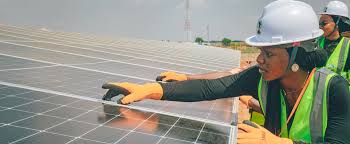
Meanwhile, due to the strategic importance of energy in achieving sustainable development and poverty reduction in the ECOWAS and Sahel region, the World Bank and ECOWAS Centre for Renewable Energy and Energy Efficiency (ECREE), have designed a regional renewable energy project, to help get to the people.
The project, is the Regional Off-Grid Electrification Project (ROGEP), is aimed at increasing access to sustainable electricity supply, most especially in the rural areas of member states.
This was made known at a One- Day Workshop organized by ECOWAS and the World Bank, supported by the Ministry of Power, Works and Housing in Abuja, with the theme: “Promoting Private Investment Standalone Solar Systems in West Africa and the Sahel”.
Permanent Secretary, Louis Edozien, who represented the Minister of Power, Works and Housing, Babatunde Raji Fashola SAN, at the event, disclosed that stakeholders in the power sector should move from policy formulation and focus more on policy implementation in the electricity value chain, emphasizing, that this would improve the living standards of rural dwellers in the ECOWAS sub -region.
The Minister said the Regional off -Grid Electrification Projects (ROGEP) was designed by ECOWAS and World Bank to increase access to sustainable electricity services in the ECOWAS region for household, commercial enterprises and public facilities.
The main objectives of the workshop was to create awareness and improve information on ROGEP and the national stakeholders, to share experience where we are on electricity, especially solar power system, identify challenges and proffer solutions in the electricity industry in the ECOWAS region, among others.
Ganiyu Obaaro, with Agency report, Idu Jude, Abuja