
10th NASS ‘ll intensify reforming of electoral regime, governance structure – Senate Leader

Senator Opeyemi Bamidele, Leader of the Senate has assured the nation of renewed efforts at enriching the nation’s electoral regime and governance structure during the last 16 months of 10th National Assembly.
The next 16 months, he said, though will be challenging as the last 32 months, the parliament has resolved to consider and conclude legislative initiatives that directly touch our nation’s electoral regime and governance structure.
In an address welcoming senators to the chamber after the yuletide holidays added that the 10th National Assembly
has also resolved to consolidate and perfect diverse reforms which were initiated with a view to making public governance more efficient and people-centric than it has ever been in the history of the nation.
“Now that we have resumed plenary, we will devote quality time to the scrutiny and passage of the 2026 Appropriation Bill valued at ₦58.47 trillion. In both chambers, our committees are already looking deeply into the estimates of revenues and expenditures that President Bola Ahmed Tinubu, GCFR laid before the joint session of the National Assembly on December 18, 2025.
The proposal is crucial to the growth, prosperity and stability of our economy this year and even beyond given its emphasis on consolidating the gains of the previous years.
“The budget, when it finally becomes effective, will further reinforce our collective resolve to guarantee our nation’s macro-economic stability, deepen her global competitiveness and translate economic growth to decent jobs, rising incomes and a better quality of life across the federation.
“This will help us restore and maintain a budget cycle that annually starts from January and ends in December. Achieving these ends might be tough, perhaps unattainable given the bottlenecks we have experienced before now.
“Unlike previous years, we have significantly reformed our fiscal space to reflect our socio-economic realities. This process culminated in the enactment of the 2025 Tax Reform Act. We now operate a progressively recalibrated fiscal regime that eases tax burden off the shoulders of low-income earners and places more responsibilities upon the high-income earners.
“From the reforms of our fiscal space, we believe funding our budget will no longer be a challenge, and our budget deficit will definitely begin to shrink year by year.
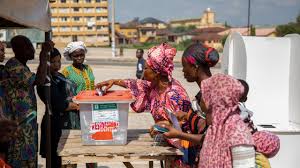
“Apart from the 2025 Appropriation Bill, we are prioritising the delivery of an electoral governance framework that will guarantee a credible and transparent process in 2027 general elections. We have started the review of the Electoral Act, 2022 clause by clause to achieve this end.
“With the Electoral Bill, 2025, we have achieved quite a lot to improve how we manage our elections; enhance the credibility of the process and ensure the political parties are accountable. This vision is in line with the sustained public demands for an electoral system that will guarantee the security of votes.
“The Electoral Bill, 2025 introduces no fewer than 20 defining highlights that will eventually differentiate it from the previous electoral regimes. First, under Section 12(1-2), the Bill recognises the voting rights of prisoners and the obligations of the Independent National Electoral Commission to register all eligible inmates in all correctional facilities nationwide.
“Also, under Section 3(3), the Bill mandates that funds for general elections must be released at least one year before the day of the elections. Obviously, this reduces uncertainty that often clogs the operation of the INEC and strengthens its independence.
“Under Section 47(1a), the Bill introduces an electronically generated voter identification, including a downloadable voter card with a unique QR code while Section 60 (5)) mandates presiding officers to transmit polling unit results including the total number of accredited voters to the next level of collation.
“Unlike the 2022 Electoral Act, the Bill proposes the standardisation of delegates for indirect primaries. In detail, it now recommends who qualifies as a delegate. The provision ends the practice in which the leadership of political parties determine the criteria for delegates.”
Among others, Bamidele said the Bill introduces stricter identification for voter registration in Section 10(2), extended publication period for candidates’ details, early verification of party symbols and names in Section 42(3), enhanced regulations of party conventions in Section 82, determination of the exclusion of the candidates by the judiciary in Section 89(3), higher campaign spending and donation limits in Section 93, harsher penalties for electoral malpractices in Section 22 as well as tougher sanctions for electoral offences in Sections 62, 71(2) and 74(2).
“The Bill introduces a system of consequence to our nation’s electoral regime. This suggests that any form of breach will not attract just sanctions. With respect to vote buying, the sanctions range from a fine of ₦5 million to a two-year imprisonment and 10-year ban from contesting elections.
“The Bill recommends mandatory jail terms and higher fines for such electoral offences as vote buying, result falsification and obstruction of election officials. This provision forecloses the possibility of impunity when electoral offences are established.
“These proposals are quite far-reaching, clearly deterrent in nature. If the majority of my colleagues approve them, they will significantly improve the credibility of our electoral process starting from the 2027 general elections. We are conscious of the values the proposals will add to our electoral process.
“Now that we have resumed, the Committees on INEC in both chambers will submit their reports to the plenaries. After the submission, we will accordingly consider, debate and vote the Bill clause by clause before transmitting it to the President,” he said.
On the review of the 1999 Constitution, he said it is at its peak, adding that the technical sessions have completed, while the reports of public hearings, too, have been turned in.
“We have concluded multi-tiered engagements with critical stakeholders. Before the first quarter elapses, the Deputy President of the Senate and Chairman, Senate Committee on the Review of the 1999 Constitution, Senator Barau I. Jibrin will lay the report of the exercise before the Senate. In the coming days, as well, we will consider, debate and vote on each of the proposals to complete the cycle.
“The process of the review does not end with the National Assembly. Under Section 9 of the 1999 Constitution, the National Assembly is under obligation to transmit its report to the 36 State Houses of Assembly for consideration and voting. Specifically, Section 9(3) requires not-less-than two-thirds approval by all the State Houses of Assembly before the alteration of the1999 Constitution can be effected.
“Consequently, the role of the state legislatures is as significant as that of the federal legislature . As we round off the process, the onus now rests upon the state legislatures to consider the proposals on their merit and approve them accordingly,” he added.
The Leader said these are just brief highlights of what lies ahead of in the coming weeks, even for the rest of this year.
However, he said the last 32 months have been devoted to far-reaching reforms that cut across all the sectors of the economy aiming at recalibrating Nigeria from being an extraction-dependent state to an economically diversified state, now enabled for optimal productivity and repositioned for global competitiveness.


Diezani Alison-Madueke’s London Ordeal
Related to this topic:

Leadership Institute Partners UNILAG for Student Leadership Training